A gas line usually fails the pressure test because of a small leak at a joint, a temperature swing during the test, or a faulty gauge — not a catastrophic break. Most failures trace to a loose flare fitting, a bad threaded joint, or a hairline crack, and a licensed pro can pinpoint it without tearing out walls.
What "failing" actually means — the pressure-drop thresholds
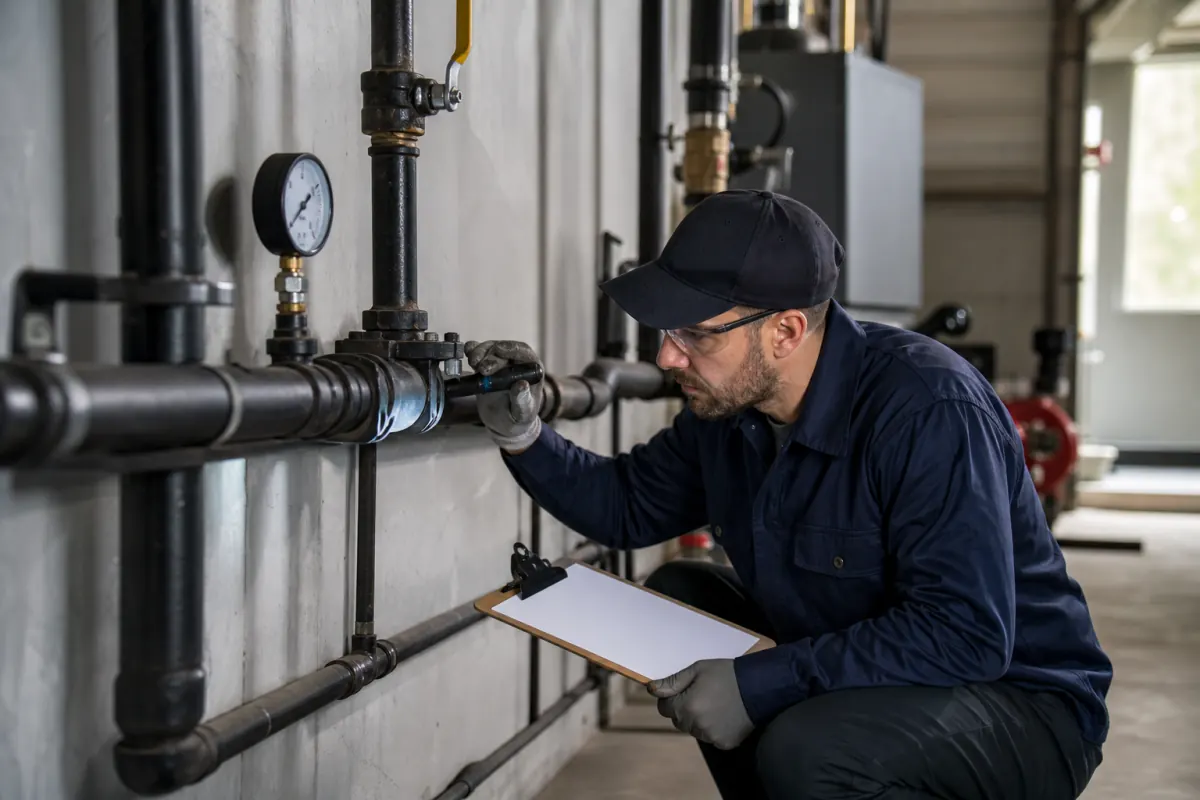
When your inspector or technician pressurizes the gas piping, they're not looking for a hiss or a smell. They're watching a gauge over a set window of time — usually somewhere from 15 minutes to an hour, depending on the jurisdiction and whether it's new work or a re-test. The pipe is charged with air (or sometimes inert gas) to a test pressure that's well above your normal household pressure, and then it just has to hold.
The line "fails" when the needle drops below the allowed threshold during that window. A truly tight system shows essentially no movement. In Chicago and the collar counties, inspectors generally want to see the pressure hold steady with no measurable loss — even a small, slow drop counts as a fail, because air molecules are smaller than the natural gas molecules that will eventually run through that pipe. In plain terms: if air can sneak out, gas definitely can. A failed test isn't a verdict on your whole house. It's the system telling you there's a tiny path to the outside somewhere, and the test did exactly what it's supposed to do.
The 5 most common causes (and what each one really is)
After thousands of tests across Cook, DuPage, Lake, and Will counties, the same handful of culprits show up again and again. Here are the five we see most:
- A loose flare fitting. Flare connections — the kind often used on the yellow flex line or appliance connector running to your stove, dryer, or furnace — seal by metal pressing against metal. If one wasn't torqued quite right, or it backed off slightly during installation, it leaks. This is the single most common cause, and often the easiest fix.
- A bad threaded joint. Black iron pipe threads together with joint compound (pipe dope) or yellow gas-rated tape. Too little sealant, the wrong tape, or a joint that's cross-threaded or under-tightened will weep air. A drip leg or tee with one imperfect thread can sink the whole test.
- A temperature swing during the test. Air expands when it's warm and contracts when it's cold. If the sun hits an exposed line or the furnace kicks on mid-test, the reading can move even with zero leaks — more on this below.
- A faulty or wrong-range gauge. A worn, dropped, or incorrectly scaled test gauge can show a drop that isn't real. A good tech rules this out before condemning the piping.
- A hairline crack. Less common but real — a stress fracture in a fitting, an over-tightened joint, or corroded older pipe can develop a crack too fine to see. It often shows up as a slow, steady decline rather than a fast drop.
One important note before you chase any of these: if you actually smell gas — that rotten egg smell comes from mercaptan, an odorant added to naturally odorless gas — treat it as an active leak. Leave the house, and from somewhere safe call 911 or your gas utility (Peoples Gas in the city, Nicor in most suburbs) first. The private-side repair happens only after the area is confirmed safe.
Why a test can "pass" warm and "fail" cold (and vice versa)
This one frustrates a lot of homeowners, and it's pure physics. The pressure inside a sealed pipe rises and falls with temperature, even when the pipe is perfectly tight. A line tested in a warm basement at 2 p.m. and re-checked in a cold garage at 7 a.m. can read completely differently. We see it constantly in Naperville and Arlington Heights homes where part of the run is in an unheated crawlspace or attached garage.
So a test can appear to "fail" simply because the building cooled during the window, or "pass" because the furnace warmed everything up and masked a tiny leak. That's exactly why a careful technician notes the temperature, isolates the line from heat sources, and watches the trend rather than a single snapshot. A real leak loses pressure steadily and keeps going; a temperature artifact rises and falls and tends to settle. Knowing the difference is what separates a quick fix from a frustrating afternoon of re-testing the same good pipe.
How a pro narrows it down without ripping out drywall
Here's the reassuring part: pinpointing the leak almost never means demolition. A licensed tech works methodically to shrink the search before touching a wall:
- Verify the gauge. Swap or re-zero the test gauge to confirm the drop is genuine, not an instrument error.
- Isolate sections. By capping and testing one branch at a time, the tech can tell whether the problem is in the line going to your stove, the furnace run, or the main, instead of suspecting everything at once.
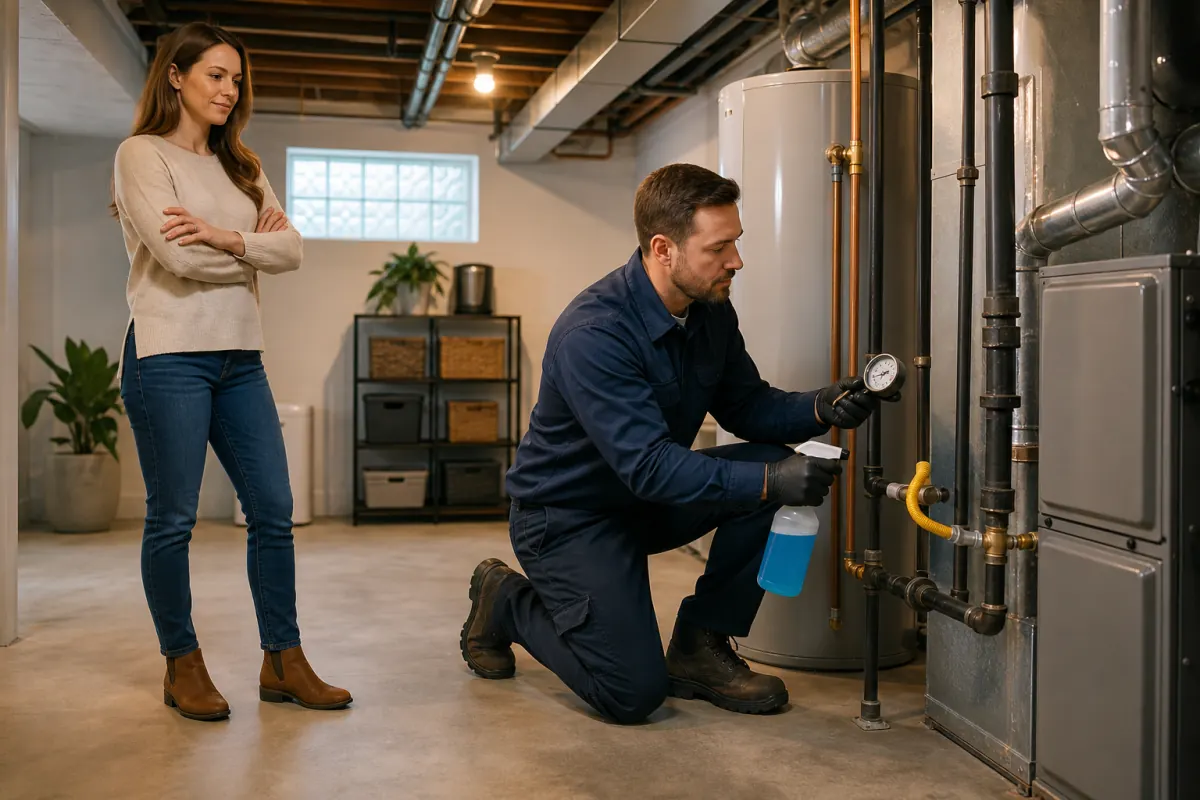
- Bubble-test the joints. A leak-detection solution brushed onto accessible fittings — flares, threaded joints, the drip leg — bubbles wherever air escapes. It's old-school and remarkably effective.
- Use an electronic sniffer. For tighter spots, a gas detector narrows the location down to inches.
Most failures live at accessible connection points near appliances, not buried inside finished walls. That's why proper gas pressure testing usually ends with a small, targeted repair rather than a remodel. If you've already failed once and aren't sure what comes next, our guide on what to do after a failed gas pressure test walks through the steps in order.
Re-test cost and how to get the city inspector back out
Costs vary with what failed and where the line runs, so think in ranges. A simple flare-fitting or single-joint repair plus a re-test sits at the lower end; a hairline crack inside a wall, a section of corroded pipe in an older Oak Park or Berwyn two-flat, or work that requires JULIE / 811 dig-locating for an outdoor run lands higher. If CSST (the flexible corrugated stainless tubing) is involved, bonding and grounding may factor in too. Whether any of it is reimbursable is a separate question — our sibling piece on whether insurance covers the repair covers that in detail. Get a written quote — every house is different.
Getting the inspector back out follows the local permit process. Typically the licensed contractor who made the repair requests a re-inspection through the same permit, and the municipality (or City of Chicago) schedules the inspector to verify the line now holds. Because a licensed pro pulls the permit and signs off on the work, the re-inspection usually moves faster than homeowners expect.
A failed pressure test is the system catching a problem before it ever became dangerous. That's a good day — you just need it fixed right and re-tested clean.
If you've got an inspector waiting, you don't have to sort this out alone. A licensed tech can usually be on site in 30 to 60 minutes, find the leak, repair it, and get you lined up for a clean re-test — call (708) 381-2959 any time, day or night.
Frequently Asked Questions
My gas line failed the pressure test — does that mean it's dangerous?
Not necessarily. A failed test means there's a small leak path or a test artifact like a temperature swing, not a catastrophic break. The test is designed to catch tiny issues before gas ever flows. Still, if you smell rotten egg odor (mercaptan), leave and call 911 or your gas utility first.
What is the most common reason a gas line fails a pressure test?
A loose flare fitting, usually on the flex line or appliance connector going to a stove, dryer, or furnace. Bad threaded joints come in a close second. Both are common and typically quick to fix without opening walls.
Can a gas line pass the test once and fail the next day?
Yes. Air inside the pipe expands and contracts with temperature, so a line tested in a warm room and re-checked when it's cold can read differently even with no leak. A good technician isolates the line from heat sources and watches the trend, not a single reading.
How much does it cost to re-test a failed gas line in Chicago?
It depends on what failed and where the line runs. A single-joint or flare repair plus re-test is at the lower end; a hairline crack in a wall, corroded pipe, or an outdoor run needing JULIE/811 locating costs more. Get a written quote — every house is different.
How do I get the city inspector to come back out after a repair?
The licensed contractor who made the repair requests a re-inspection through the same permit, and the municipality or City of Chicago schedules the inspector to confirm the line holds pressure. Using a licensed pro who pulls the permit usually speeds this up.
Will the technician have to tear out my drywall to find the leak?
Usually not. Most leaks are at accessible connection points near appliances. A pro verifies the gauge, isolates sections, then bubble-tests joints or uses an electronic sniffer to pinpoint the spot — demolition is rarely needed.
Need a licensed gas pro in Chicagoland?
Licensed, insured, 24/7. Call now or request a callback and a dispatcher will route your job.