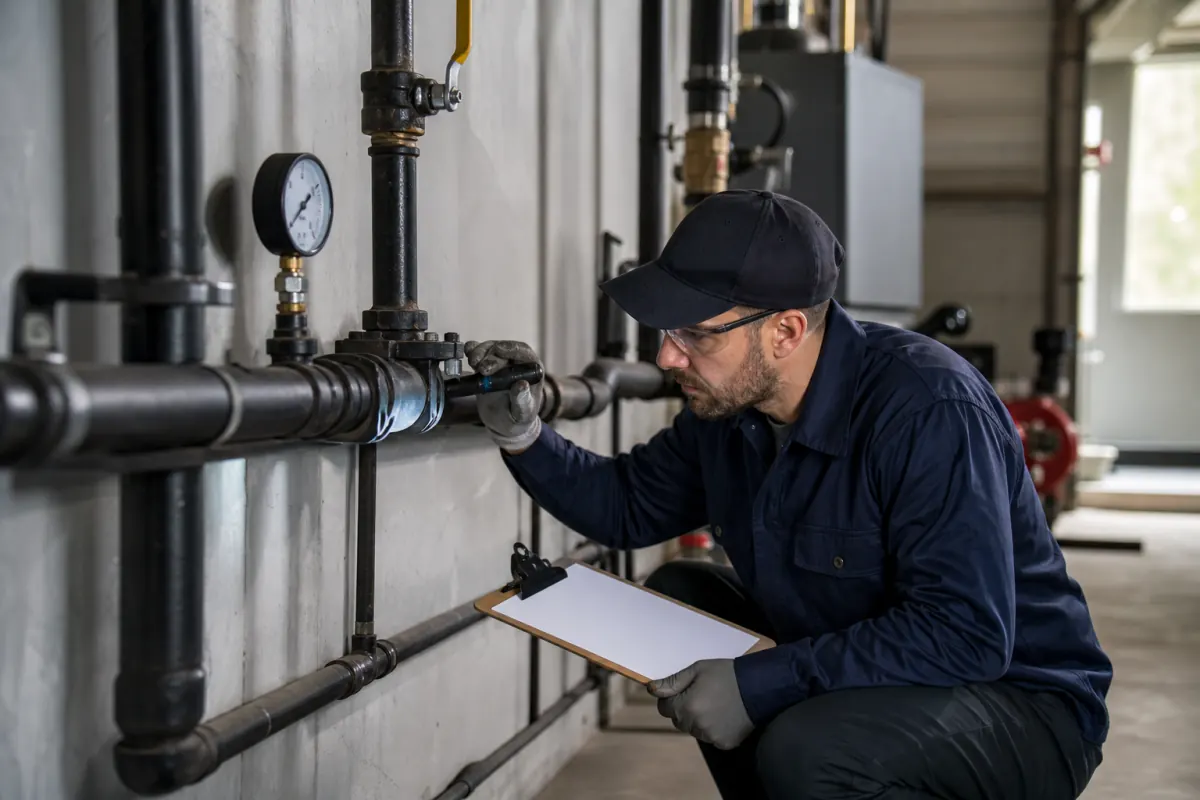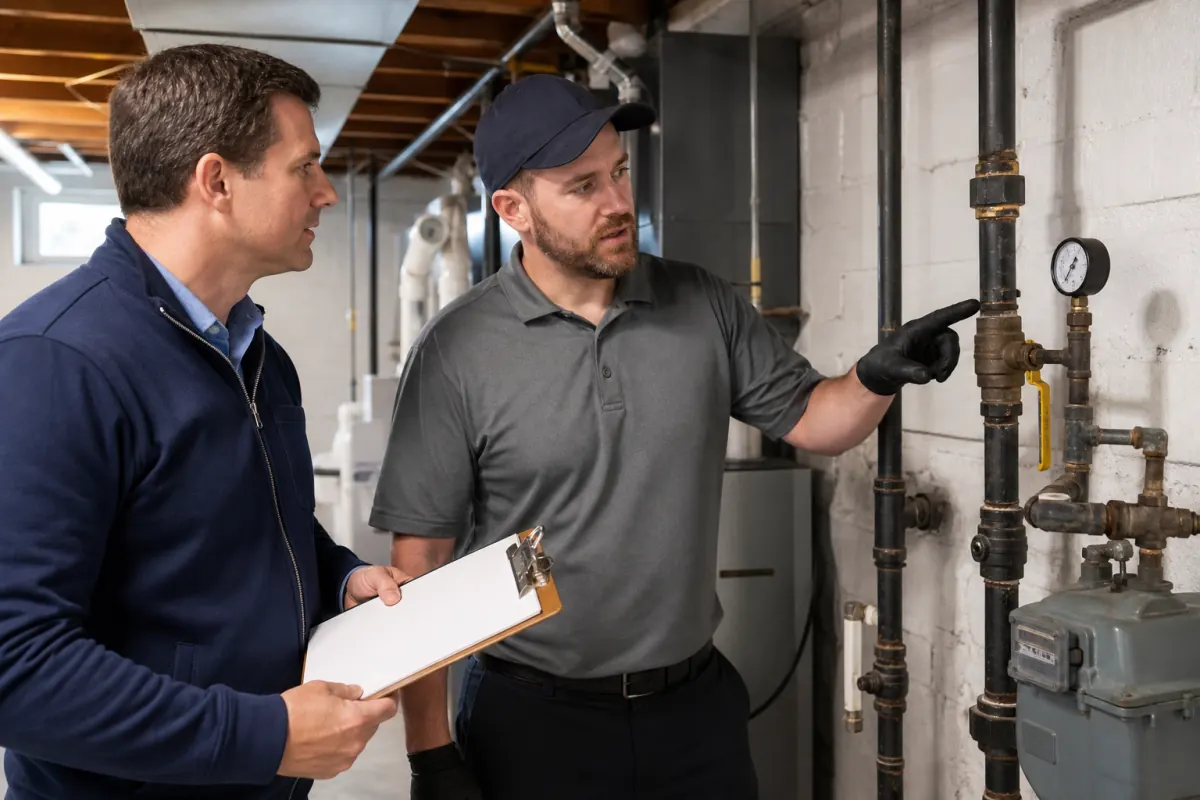
Usually, no — a standard Illinois homeowners policy won't pay to fix the gas pipe itself, because the pipe wearing out is considered maintenance. But here's the big exception: if a sudden event like a fire or explosion damages your home, your policy almost always covers that resulting damage.
🚨 Gas Problem in Chicago? Talk to a Licensed Pro
24/7 dispatch across Chicago and the suburbs. If you smell gas right now, leave first and call 911 or your gas utility.
The short answer (and the one big exception)
If you're staring at a repair quote and wondering whether your insurance will help, here's the honest answer: most of the time, no — not for the pipe itself. A standard Illinois homeowners policy treats a corroded or aging gas line the same way it treats a worn-out water heater. It's seen as maintenance, and maintenance is the homeowner's job. So the cost of digging up and replacing the line going to your stove or furnace usually comes out of your pocket.
Now the exception, and it's a big one. Insurance is built to cover sudden, accidental events — not slow decay. If a gas leak leads to a fire or an explosion, the damage to your home, your belongings, and your structure is almost always covered. The line that failed may not be paid for, but the destruction it caused often is. That single distinction — sudden event versus gradual wear — decides nearly every gas-related claim in Cook, DuPage, Lake, and Will counties.
Before anything else: if you smell that sharp rotten egg smell right now (that's mercaptan, the odorant utilities add to natural gas), don't read on. Get everyone out of the house, leave the door open, and call 911 or your gas utility — Peoples Gas in the city, Nicor in most suburbs — from outside. Don't flip switches, don't light anything. The private-side gas line repair happens only after the area is confirmed safe.
What's covered, what's not: the fire-and-explosion line
Insurers draw a hard line between damage that happens all at once and damage that builds up over years. Knowing which side your situation falls on tells you almost everything.
Typically covered:
- Fire or explosion damage to your home and contents from a gas event
- Sudden, accidental physical damage — say a contractor's auger strikes your buried line and ruptures it
- Smoke and soot damage to walls, ceilings, and belongings after a fire
- Additional living expenses if your home is unlivable while repairs happen
Typically NOT covered:
- The gas pipe itself when it fails from age, rust, or corrosion
- Wear-and-tear on a CSST line (that yellow flex line, the corrugated stainless tubing) or an old black-iron run
- A worn appliance connector — the flexible hose linking your stove or dryer to the wall valve
- Code upgrades the inspector requires, like adding a missing drip leg (the little capped pipe that catches moisture and debris before it reaches the appliance)
- Repairs you needed because the line simply got old
That code-upgrade gap surprises a lot of homeowners in older Oak Park and Berwyn houses. When we open a wall, Chicago and Cook County code often requires bringing the whole run up to current standards — and your policy almost never pays for those upgrades, even if the original damage was covered. It's worth asking your adjuster about "ordinance or law" coverage, which some policies add specifically for this.
Service-line endorsements (Nicor and Peoples Gas line-protection plans): worth it or not?
You've probably seen those line-protection plans on your gas bill or in the mail — buried-line or in-home pipe coverage offered through programs tied to Nicor and Peoples Gas, usually underwritten by a third party like HomeServe. For a small monthly fee, they promise to cover certain gas-line repairs your homeowners policy won't touch.
Are they worth it? It depends on your house. For an older home in Evanston or Cicero with original piping, a modest monthly plan can soften the blow of an unexpected repair, and that peace of mind has value. But read the fine print carefully — these plans cap payouts, exclude pre-existing problems, and may not cover code upgrades or the very corrosion that's most likely to fail. A plan that maxes out below the cost of a real repair doesn't help much.
One practical caveat: a protection plan dispatches their contractor, not yours. If you'd rather choose a licensed local pro who pulls the permit and coordinates the JULIE / 811 dig-locate, factor that in. We're happy to give you a straight read on whether a plan makes sense for your specific setup — no pressure either way.
What to document before you file
Whether you're filing on your homeowners policy or a protection plan, documentation is what gets claims paid. Adjusters approve what they can verify. Before any repair work covers up the evidence, gather:
- Photos and video of the damage from several angles — the failed section, surrounding area, and any fire, smoke, or water damage
- Our written diagnosis — a licensed tech's report stating what failed and, crucially, whether the cause was sudden or gradual. This is the single most important document, because it speaks the adjuster's language
- The permit record — Chicago, Naperville, and most Cook and DuPage municipalities require a permit for gas work; a pulled permit proves the repair was done to code by a licensed contractor
- The JULIE / 811 dig-locate ticket if any digging was involved
- Receipts and the itemized repair quote — keep everything, including any emergency response or temporary housing costs
If your situation started with a failed gas pressure test, hold onto those results too. A documented pressure failure is strong, objective proof of when and how the problem surfaced.
How to phrase the claim so the adjuster pays the related damage
Wording matters more than most homeowners realize. The goal isn't to exaggerate — it's to describe events accurately in the terms a policy actually responds to. Insurance pays for "sudden and accidental" events, so anchor your claim there.
Lead with the triggering event, not the old pipe. Instead of "my gas line was old and finally gave out," describe what happened: "there was a sudden gas leak that resulted in [fire / smoke / damage]." You're not hiding anything — you're focusing the claim on the covered event rather than the excluded cause.
The pipe failing might be excluded, but the fire it caused usually isn't. Frame the claim around the damage, document it cleanly, and let the written diagnosis do the technical talking.
A few more tips that help in real Illinois claims:
- Submit our written diagnosis alongside your description so your account and the technical findings line up
- Separately list the resulting damage — drywall, flooring, contents — since that's frequently covered even when the pipe isn't
- Be precise about timing; "sudden" is a covered concept, "for years" usually isn't
- If a code upgrade was required, ask directly whether your ordinance-or-law coverage applies
If you'd like to understand the technical side before you talk to your adjuster — including why a gas line fails a pressure test in the first place — that background helps you describe the failure accurately and confidently.
What does this actually cost?
Because insurance often won't cover the pipe itself, the out-of-pocket question is real. Gas-line repairs range widely depending on access, length of the run, and whether digging is involved — a simple appliance-connector swap sits at the low end, while excavating and replacing a buried line in an older Schaumburg or Joliet home runs much higher. Code upgrades, permits, and the JULIE / 811 locate add to it. We give every homeowner a clear, itemized estimate up front so there are no surprises. Get a written quote — every house is different.
Frequently Asked Questions
Does homeowners insurance cover gas line repair in Illinois?
Usually not for the pipe itself, because age and corrosion are treated as maintenance. However, if a gas leak causes a sudden fire or explosion, the resulting damage to your home and belongings is almost always covered, even if the failed line is not.
Will insurance pay if a contractor accidentally hits my gas line?
Often yes. Sudden, accidental physical damage — like a digging tool striking and rupturing your buried line — is the kind of event most homeowners policies are built to cover. Document it with photos and a written diagnosis, and note that a JULIE / 811 locate should have been called first.
Are Nicor and Peoples Gas line-protection plans worth it?
It depends on your home. For older Chicago-area houses with original piping, a low monthly plan can offset repair costs. But check the payout caps and exclusions carefully — many plans don't cover code upgrades or pre-existing corrosion, and they dispatch their own contractor rather than one you choose.
What should I do first if I smell gas?
Leave the house immediately, leave a door open, and call 911 or your gas utility (Peoples Gas in the city, Nicor in the suburbs) from outside. Don't flip switches or light anything. Private-side repair happens only after the area is confirmed safe.
How do I file a gas-line claim so the adjuster pays?
Anchor the claim on the sudden, accidental event rather than the old pipe — for example, 'a sudden gas leak that resulted in fire damage.' Submit photos, a licensed tech's written diagnosis, the permit record, and itemized receipts so your account matches the technical findings.
Does insurance cover required code upgrades during a gas repair?
Generally no. Standard policies exclude code upgrades like adding a missing drip leg or replacing an old run to meet current Chicago or Cook County standards. Ask your insurer whether you carry 'ordinance or law' coverage, which is designed for exactly this gap.
Need a licensed gas pro in Chicagoland?
Licensed, insured, 24/7. Call now or request a callback and a dispatcher will route your job.