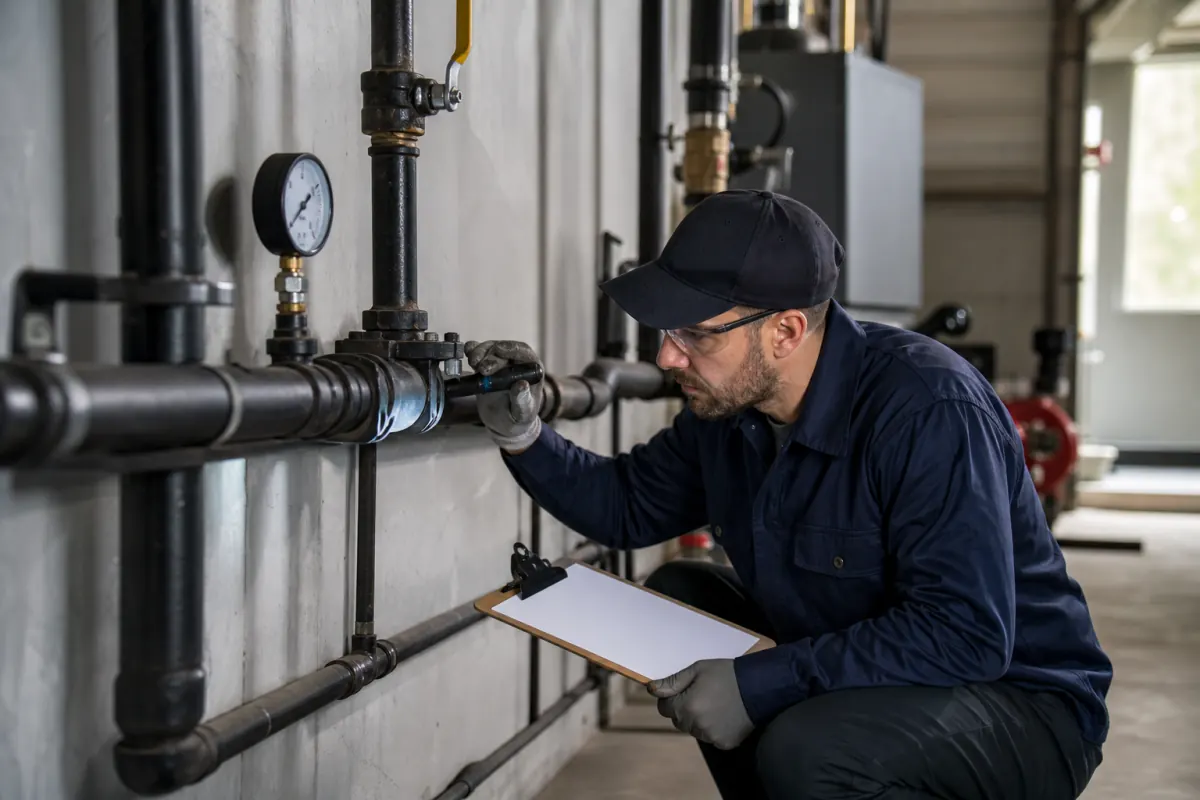
In Chicago and its suburbs, a gas pressure test is required whenever a licensed plumber opens, alters, or extends your gas piping under a permit. The four common triggers are a new gas line, a repair, a meter change, and many home sales. The test proves the system holds pressure and is leak-free.
🚨 Gas Problem in Chicago? Talk to a Licensed Pro
24/7 dispatch across Chicago and the suburbs. If you smell gas right now, leave first and call 911 or your gas utility.
The 4 Triggers: New Install, After a Repair, After a Meter Change, and at Sale
Most homeowners only hear about a pressure test when an inspector or utility asks for one. In plain terms, a pressure test is a controlled check that seals off your gas piping, pumps it up with air to a set pressure, and watches a gauge to confirm nothing leaks out. Here are the four moments it usually comes into play in the Chicago area.
- New gas line install. Any time new piping is run, whether it's black iron or flexible CSST (corrugated stainless steel tubing), the permit requires a test before the line is connected and covered.
- After a repair. If a plumber cuts into the line to fix a leak, replace a corroded section, or swap a worn flex connector, the repaired run must be re-tested. If you've already been through this, our guide on what to do after a failed pressure test walks you through next steps.
- After a meter change. When Peoples Gas (in the city) or Nicor (in the suburbs) sets a new or relocated meter, the private-side piping past the meter is often tested before gas is turned back on.
- At sale or major remodel. Adding a new appliance like a range, dryer, or pool heater means extending the line and adding a sediment trap (also called a drip leg) to catch debris before it reaches the burner, which triggers a permit and a test.
If you ever smell that rotten-egg odor, that's mercaptan, the scent added to natural gas so you can detect a leak. Leave the building immediately and call 911 or your utility from outside first. Private-side testing and repair come after everyone is safe.
Chicago vs. the Suburbs: Cook, DuPage, Lake, and Will
The city of Chicago runs its own permit and inspection process through the Department of Buildings, and the rules can be stricter than surrounding towns. Suburban work falls under each municipality's building department, so requirements vary block to block even within the same county.
- Cook County: In Chicago proper and inner-ring suburbs like Oak Park and Evanston, expect a permit and a witnessed test for nearly any line alteration.
- DuPage County: Towns such as Naperville, Hinsdale, and Oak Brook each set their own thresholds for what needs a permit, though most piping changes do.
- Lake County: Communities like Arlington Heights and Glenview generally follow Illinois plumbing code, with the local inspector confirming the test.
- Will County: In Joliet, Bolingbrook, and nearby areas, permits are required for new lines and additions.
One rule holds everywhere: before any digging for an underground line, your contractor must call JULIE (811) to locate buried utilities. That's the law statewide, and skipping it is dangerous.
The Pressure-Test Affidavit: What It Is and Who Signs It
In many Chicago-area jurisdictions, the licensed plumber who performs the work signs a pressure-test affidavit. This is a sworn document stating that the gas piping was tested at the required pressure for the required time and held without loss. It puts the plumber's license behind the result.
You, the homeowner, typically don't sign it, and you shouldn't be asked to perform or certify the test yourself. That responsibility belongs to a licensed professional, which protects you if a question ever comes up later. The affidavit, along with the permit and inspection sign-off, becomes part of your home's record, useful at resale time. If you're curious about the mechanics behind a failed result, our companion piece on why gas lines fail the test explains the usual culprits, from loose fittings to a missing bond on CSST.
How Long the Test Takes and What the Inspector Watches
For a typical home, the actual test is usually quick once the system is isolated, often a matter of minutes to a couple of hours depending on the size of the line and local hold-time requirements. Larger systems or higher-BTU appliance loads can stretch that out. Here's what's happening and what the inspector looks for.
- Isolation. The plumber caps the section being tested and disconnects appliances so only the piping is under pressure.
- Pressurization. Air is pumped in to a set pressure, well above normal operating pressure, to stress every joint.
- The hold. The gauge is watched over a fixed window. A steady needle means no leak; a dropping needle means gas would escape under real conditions.
- The witness. The inspector confirms the gauge reading, checks that bonding and the sediment trap are correct, and verifies the work matches the permit.
Costs vary with line length, access, and whether repairs are needed first, so figures generally range from a modest service-call rate for a simple test up to several hundred dollars when new piping is involved. Repairs start from $199, but every situation differs. Get a written quote — every home is different.
When You Don't Need a Test (and Contractors Who Do Them Anyway)
Not every gas-related task triggers a pressure test. Swapping a like-for-like appliance using the existing connection, relighting a pilot, or having your meter read are not, by themselves, occasions for a permitted test. If no piping is opened, altered, or extended, there's usually nothing to certify.
Some contractors will still recommend a test as a safety check, and that isn't always a bad thing, especially in an older home or when you suspect a slow leak. The honest move is transparency: a reputable plumber explains whether the test is required by code or simply offered for peace of mind, and quotes it either way. If you'd like a professional, code-correct gas pressure testing done by a licensed and insured team, that's exactly the kind of work we handle across Chicago and the suburbs.
The goal isn't to test for the sake of testing. It's to prove your gas system is tight and safe before anyone relies on it.
If you're unsure whether your project needs a permit and a test, the safest first step is a quick conversation with a licensed pro who knows your town's rules. We dispatch licensed technicians 24/7, usually arriving within 30 to 60 minutes for emergencies. Reach us anytime at (708) 381-2959, and remember: if you smell gas right now, get out first, then call 911 or your utility.
Frequently Asked Questions
When is a gas pressure test required in Chicago?
A test is required whenever a licensed plumber opens, alters, or extends your gas piping under a permit. The four common triggers are a new gas line, a repair to existing piping, a meter change by Peoples Gas or Nicor, and many home sales or major remodels that add an appliance.
Who signs the pressure-test affidavit?
The licensed plumber who performed the work signs the affidavit, swearing the piping was tested at the required pressure and held without loss. Homeowners generally don't sign or perform the test themselves, which keeps a licensed professional accountable for the result.
How long does a gas pressure test take?
For a typical home, the test is often a matter of minutes to a couple of hours once the system is isolated. Larger lines or higher appliance loads can take longer because of extended hold-time requirements set by your local jurisdiction.
Are the rules different in the suburbs versus Chicago?
Yes. The city of Chicago runs its own stricter permit process, while suburbs in Cook, DuPage, Lake, and Will counties each follow their municipality's building department. Towns like Naperville, Oak Park, and Joliet may set different thresholds, so always confirm locally.
Do I always need a test for gas work?
No. Like-for-like appliance swaps using the existing connection, pilot relights, and meter readings usually don't trigger a permitted test if no piping is opened. Some contractors still offer one as a safety check, which can be wise in older homes.
What should I do if I smell gas before any test?
Leave the building immediately and call 911 or your gas utility from outside first. Mercaptan, the rotten-egg odor added to natural gas, is your warning sign. Private-side testing and repairs come only after everyone is safely out and the situation is reported.
Need a licensed gas pro in Chicagoland?
Licensed, insured, 24/7. Call now or request a callback and a dispatcher will route your job.
Related Reads
Failed Gas Pressure Test in Chicago? Next Steps
Pressure Testing