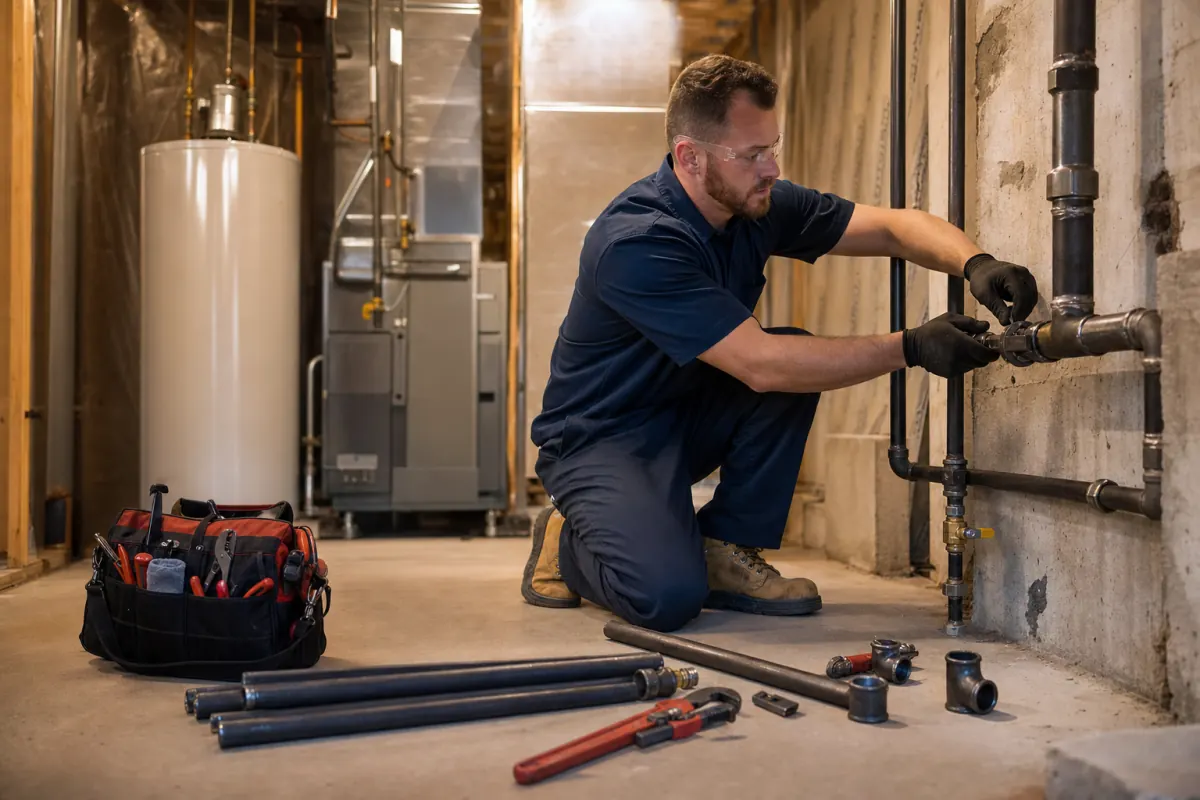
How much does it cost to run a gas line for a generator? In the Chicago area, most standby-generator gas-line jobs land in a wide range driven by distance from your meter, routing, and unit size. Smaller installs sit at the low end; long underground runs to a 22kW unit cost the most.
🚨 Gas Problem in Chicago? Talk to a Licensed Pro
24/7 dispatch across Chicago and the suburbs. If you smell gas right now, leave first and call 911 or your gas utility.
Why a generator needs a bigger gas line than your grill
A backyard grill sips fuel. A whole-home standby generator gulps it. When the power drops and your generator fires up, it has to feed a large engine instantly while your furnace, fridge, and sump pump may all be calling for gas at the same moment. That sudden demand is called surge load, and it is the reason a generator almost never runs on the same skinny line that serves a grill or a single appliance.
The size of a gas line is measured by how much fuel it can carry, expressed in BTU. A generator can need 150,000 to 250,000 BTU on its own, which often means a dedicated 1-inch or larger line back to the meter rather than the half-inch branch a grill is happy with. If the line is undersized, the generator starves under load, runs rough, or trips offline right when you need it. Getting the sizing right up front is the whole job, and it is why a proper install costs more than tapping a nearby branch.
Your installer will also confirm the gas meter and regulator can supply the extra demand. In some homes Peoples Gas (in the city) or Nicor (in the suburbs) needs to upsize the meter first, which is a separate utility step we coordinate for you.
Distance from the meter: the single biggest cost variable
If you remember one thing, make it this: how far the generator sits from your gas meter drives the price more than anything else. Pipe, fittings, labor, and trenching all scale with that distance. A generator tucked 10 feet from the meter is a short, tidy run. A generator on the far side of the house, 60 or 80 feet away, means more material, more labor, and often a larger pipe diameter to keep pressure up over the longer run.
Every elbow and turn also adds resistance, so a straight shot costs less than a path that weaves around a patio, a deck, or a finished basement. When we quote a job in Naperville or Oak Park, the first thing we measure is that meter-to-generator distance and the route the pipe has to take. Two homes with the same generator can land at very different numbers purely because of where the meter is.
Most installs use black iron pipe for the main run, sometimes with corrugated stainless steel tubing (CSST) where flexibility helps. The connection at the generator gets a flex connector and a sediment trap, also called a drip leg, which catches debris and moisture before it reaches the unit.
Underground vs. above-ground routing in Chicago yards
How the pipe gets from the meter to the generator matters too. An above-ground run, strapped along the foundation, is faster and less expensive because there is no digging. It is a common choice when the generator sits close to the house and the path is clean.
An underground run costs more because someone has to trench across the yard, lay the pipe at the right depth, and restore the sod afterward. It is often worth it: buried lines stay out of sight and out of the way of mowers and snow. Chicago winters and clay-heavy soil make depth and proper bedding important, so this is not a shovel-and-hope job. Underground gas piping has to meet code for material, depth, and bonding, which is the safety grounding that protects the line. In yards around Evanston and Schaumburg we see both approaches, and we will walk you through the trade-off for your specific lot.
Permits and the JULIE 811 dig-locate timeline
Running a new gas line for a generator is permitted work in Cook, DuPage, Lake, and Will counties. A licensed installer pulls the permit and schedules the inspection so the line is signed off and safe. Skipping the permit can haunt you at resale and is never worth it on a fuel line.
If any part of the run is underground, the law requires a dig-locate through JULIE (the Illinois 811 service) before a shovel touches the ground. You or your contractor file the request and the utilities come out to mark buried electric, water, and gas lines. JULIE asks for a couple of business days of notice, so we build that window into the schedule. Add permit review at the village or county and a typical generator gas-line project runs a few days to a couple of weeks from go-ahead to inspection, depending on how quickly your municipality turns permits around. We handle the JULIE ticket and the paperwork so the timeline is one less thing on your plate. For the bigger picture, see our gas line installation guide.
Sample ranges for 14kW, 18kW, and 22kW Generac and Kohler installs
Here is the honest part: there is no flat price for this work, because no two homes share the same meter location, route, and yard. What we can share are realistic patterns. A 14kW unit close to the meter, run above ground, sits at the lower end. An 18kW unit at a moderate distance lands in the middle. A 22kW Generac or Kohler on a long underground run to the far corner of the lot sits at the top end, especially if the meter needs upsizing first.
- 14kW (Generac/Kohler): lower range, short above-ground run near the meter.
- 18kW: mid range, moderate distance, often a mix of above- and below-ground pipe.
- 22kW: upper range, longer or underground run and possible meter upsizing.
Note these figures cover the gas line only, not the generator, the concrete pad, or the electrical hookup, which your electrician handles. For how a generator line fits alongside other projects, our guide to overall gas line installation costs puts it in context. The cleanest way to know your number is to have a licensed pro look at your meter, your unit, and your yard, then put it in writing. When you are ready, we install the gas line for generators across Chicago and suburbs like Arlington Heights, Hinsdale, and Glenview. Repairs and new runs start from $199, and our licensed crews dispatch quickly. Get a written quote — every home is different.
If you ever smell gas, that rotten-egg odor from an additive called mercaptan, do not try to find or fix the leak yourself. Leave the house and call 911 or your gas utility from outside first. Private-side line work comes after the area is confirmed safe.
Frequently Asked Questions
How much does it cost to run a gas line for a generator in Chicago?
It depends most on how far the generator sits from your gas meter, whether the line runs above or below ground, and the size of the unit. Short above-ground runs to a smaller generator cost the least; long underground runs to a 22kW unit cost the most. Get a written quote, every home is different.
Why does a generator need a bigger gas line than a grill?
A standby generator demands a large amount of fuel the instant it starts, often 150,000 to 250,000 BTU, on top of whatever your furnace and other appliances are using. That surge load usually requires a dedicated 1-inch or larger line back to the meter, where a grill is fine on a small half-inch branch.
Do I need a permit to run a gas line to a generator in Illinois?
Yes. New gas-line work is permitted in Cook, DuPage, Lake, and Will counties, and a licensed installer pulls the permit and schedules the inspection. If any part of the run is underground, a JULIE 811 dig-locate is also required by law before digging.
How long does a JULIE 811 dig-locate take?
JULIE, the Illinois 811 service, asks for a couple of business days of notice so utilities can mark buried lines. With permit review added, a typical generator gas-line project runs from a few days to a couple of weeks from go-ahead to final inspection, depending on your municipality.
Does the cost include the generator and electrical hookup?
No. The gas-line ranges cover the fuel line only. The generator unit, the concrete pad, and the electrical connection are separate. The electrical work is handled by an electrician. We focus on sizing and installing a safe, code-compliant gas line to feed the unit.
Can you run the gas line underground in my yard?
Yes. Underground routing keeps the line out of sight and out of the way of mowers and snow. It costs more than an above-ground run because of trenching, proper depth, bonding, and sod restoration, and it requires a JULIE 811 locate first. We will walk you through the trade-off for your lot.
Need a licensed gas pro in Chicagoland?
Licensed, insured, 24/7. Call now or request a callback and a dispatcher will route your job.