The average gas line installation cost in Chicago typically runs from a few hundred dollars for a short, simple appliance run to a few thousand for a long run with permits, fittings, and a utility tie-in. The real number depends on distance, pipe material, and your home's existing gas system.
🚨 Gas Problem in Chicago? Talk to a Licensed Pro
24/7 dispatch across Chicago and the suburbs. If you smell gas right now, leave first and call 911 or your gas utility.
Cost per linear foot vs. cost per appliance run (and why per-foot quotes mislead)
When you start calling around, you'll hear two very different ways of pricing the same job. Some contractors quote a price "per linear foot" of pipe. Others quote the whole "appliance run" — meaning the complete path from your gas meter or existing main to the new appliance, including every fitting, valve, and shutoff along the way.
Here's why a per-foot number can fool you. The pipe itself is one of the cheaper parts of the job. The cost lives in the labor and the fittings: every elbow, tee, and coupling where the line changes direction, plus the shutoff valve and the appliance connector (the short flexible piece that links the rigid line to the appliance). A 20-foot run with six turns through finished walls costs far more than a 30-foot straight shot across an open basement ceiling — even though the longer run has "more feet."
A straight, exposed run in a Naperville basement is quick work. The same footage snaking up through a finished Oak Park two-flat, around joists and behind drywall, is a different job entirely. That's why an honest quote prices the run, not the ruler. If someone gives you a firm price over the phone without seeing the path, treat it as a rough guess.
Stove / dryer / water heater — typical install ranges
Most homeowners call us for one of three appliances. Here's how the typical ranges shake out for a standard install where there's already gas service to the home:
- Gas range or cooktop: Often in the low hundreds to around a thousand dollars, depending on how far the kitchen is from an existing line and whether walls have to be opened.
- Gas dryer: Usually a similar range to a stove. If the laundry area already sits near a gas line, it's on the lower end; running new pipe across a basement or up a floor pushes it higher.
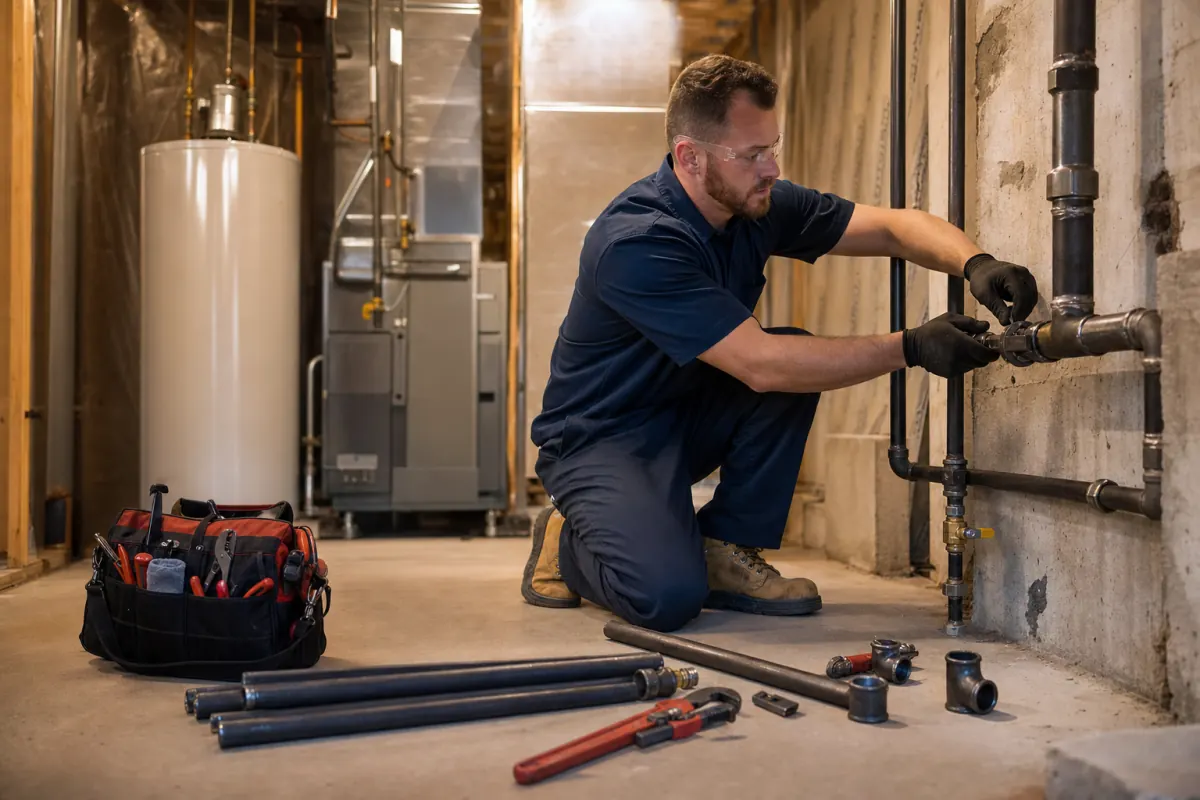
- Water heater (tank or tankless): Typically the most involved of the three. Tankless units in particular often need a larger-diameter line to carry enough gas, plus a drip leg (a short downward pipe that catches moisture and debris before they reach the appliance). That added work lands it in the higher hundreds to low thousands.
Two things move these numbers: distance from your existing gas system, and whether the work is exposed or hidden. An open utility room is cheap to work in. Fishing pipe through finished ceilings on the way to a third-floor unit in Evanston is not.
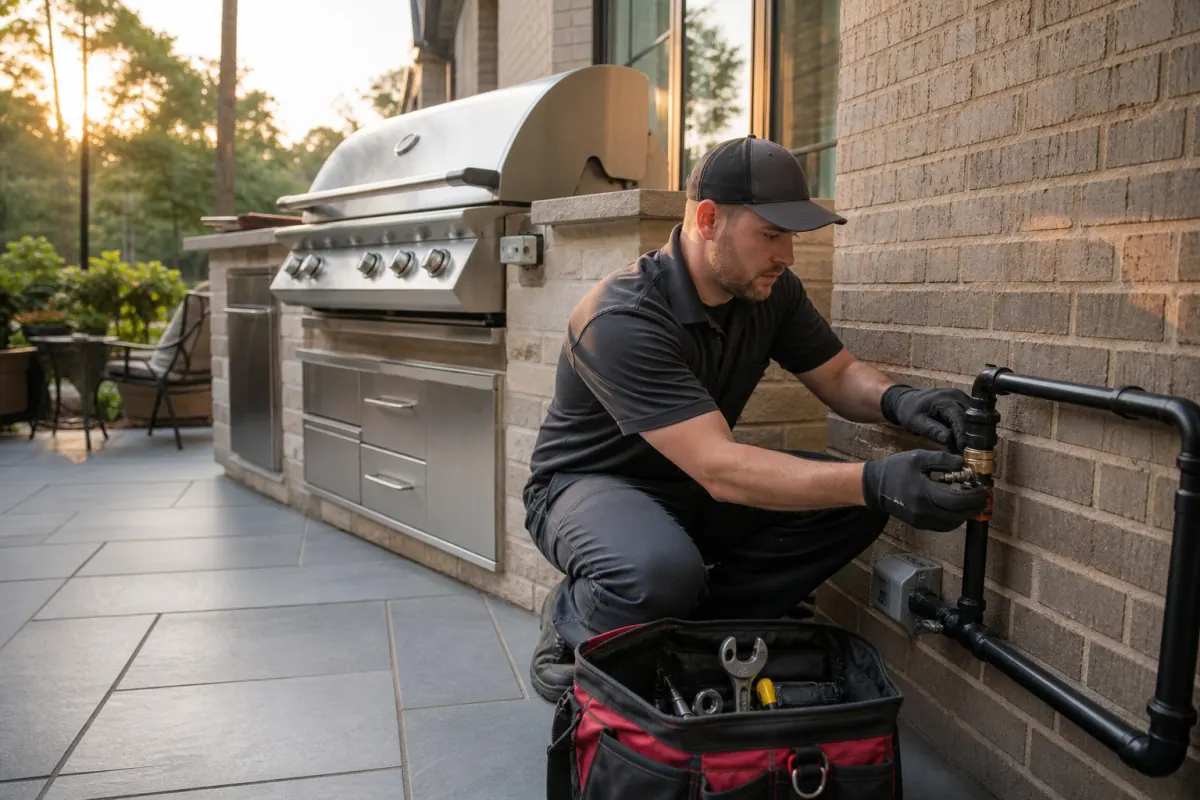
Outdoor runs — grill, fire pit, generator, pool heater
Outdoor gas lines are some of the most popular upgrades we install, and they're usually the longest runs — which means cost is driven by distance and by whether we have to trench underground.
- Built-in grill: A short run to a patio off the kitchen is modest. A line out to the far corner of the yard costs more, mostly because of trenching and weather-rated pipe.
- Fire pit or fire table: Similar to a grill, with cost rising as the distance from the meter grows.
- Standby generator: Often the priciest outdoor run. Generators draw a lot of gas, so they frequently need a larger line, and the unit usually sits away from the house near where it ties in.
- Pool heater: Comparable to a generator — high demand, often a long run to the pool equipment pad.
Any outdoor or underground run means a dig, and in Illinois that means calling JULIE (811) to locate buried utilities before a shovel goes in the ground. It's free, it's the law, and a licensed contractor handles that call for you. Trenching, restoring the yard, and the locate window are all part of what an outdoor quote should cover.
Why CSST (yellow flex) and black iron quotes differ
You may notice two contractors propose two different materials. Both are code-approved when installed correctly; they just carry different labor and material costs.
Black iron pipe is the rigid steel pipe most people picture. It's durable and inexpensive as a material, but every joint is cut and threaded by hand, so labor on a long or twisty run adds up.
CSST — corrugated stainless steel tubing, the yellow (or sometimes black) flexible line — costs more per foot as a material but installs faster because it bends around corners without dozens of threaded fittings. On a long, winding run through finished space, CSST can actually come in lower overall thanks to the labor it saves. CSST also has specific bonding and grounding requirements in our area, which a licensed pro builds into the job.
There's no single "right" choice — it depends on your run. A good contractor will tell you why they picked the material they did. If you want the full rundown on materials and code, our Chicago gas line installation guide walks through it in plain English.
Permit, inspection, and gas-company tie-in fees Chicago contractors leave off the quote
This is where a too-good-to-be-true quote falls apart. Gas work is permitted and inspected work, and those costs are real:
- Permit fees: The City of Chicago and suburban towns each set their own permit costs and rules. Cook, DuPage, Lake, and Will counties don't all do it the same way, so the permit line varies by where you live — a job in Schaumburg may be permitted differently than one in Cicero.
- Inspection: A municipal inspector typically signs off on the finished work, and sometimes on a pressure test before walls close up. That's a feature, not a hassle — it's your proof the line is safe.
- Utility tie-in: When new service or a meter change is involved, Peoples Gas (in the city) or Nicor (in most suburbs) has to do the connection on their side. Their scheduling and fees are separate from your contractor's labor.
A reputable quote either lists these line items or tells you clearly which ones are pass-through costs. A quote that simply ignores permits and the tie-in isn't cheaper — it's incomplete, and an unpermitted gas line can come back to bite you when you sell.
If you ever smell gas — that rotten-egg odor comes from mercaptan, a scent added to naturally odorless gas — don't troubleshoot it. Leave the home and call 911 or your utility from outside first. Private-side repair comes after everyone is safe.
The honest answer to "what will I pay" is that a short, simple appliance hookup sits in the low hundreds, while a long outdoor run with a larger line, trenching, permits, and a utility tie-in can reach a few thousand. Your home's age, your existing gas system, and where you live in the Chicago area all move the needle. Get a written quote — every house is different.
Planning the project? We handle licensed, permitted gas line installation across Chicago and suburbs from Hinsdale to Arlington Heights, and if you're weighing a fix versus a fresh run, here's what gas line repair costs. For a real number on your job, call (708) 381-2959 — a licensed pro can be out in 30 to 60 minutes for emergencies.
Frequently Asked Questions
What is the average gas line installation cost in Chicago?
It depends heavily on the job. A short, simple appliance hookup where gas service already exists often runs in the low hundreds of dollars, while a long outdoor run needing a larger line, trenching, permits, and a utility tie-in can reach a few thousand. Distance, pipe material, and your home's existing system drive the price, so get a written quote.
Do I need a permit to install a gas line in Chicago?
Yes. Gas line work is permitted and inspected in the City of Chicago and in suburban towns across Cook, DuPage, Lake, and Will counties. A licensed contractor pulls the permit and schedules the inspection. An unpermitted gas line can cause problems when you sell your home, so it's not worth skipping.
Is CSST or black iron pipe cheaper for a gas line?
Black iron is cheaper as a material but takes more labor because every joint is cut and threaded by hand. CSST (the yellow flexible tubing) costs more per foot but installs faster around corners, so on long or winding runs it can come in lower overall. The best choice depends on your specific run, which is why an in-person quote matters.
How much does it cost to run a gas line for an outdoor grill or generator?
A short grill line off the kitchen patio is modest, while a long run to a far corner of the yard or to a standby generator costs more because of trenching and a larger pipe size. Any underground run also requires a free JULIE (811) utility locate before digging, which your contractor handles.
Who connects the gas at the meter, Peoples Gas or Nicor?
The utility handles the tie-in on their side. In the city that's Peoples Gas; in most suburbs it's Nicor. When new service or a meter change is needed, their scheduling and fees are separate from your contractor's labor, and a good quote will flag those as pass-through costs.
What should I do if I smell gas before any work is done?
Leave the home immediately and call 911 or your gas utility from outside. The rotten-egg smell comes from mercaptan added to otherwise odorless gas, and it means a possible leak. Don't flip switches or try to find the source yourself. Private-side repair only happens after everyone is safe.
Need a licensed gas pro in Chicagoland?
Licensed, insured, 24/7. Call now or request a callback and a dispatcher will route your job.