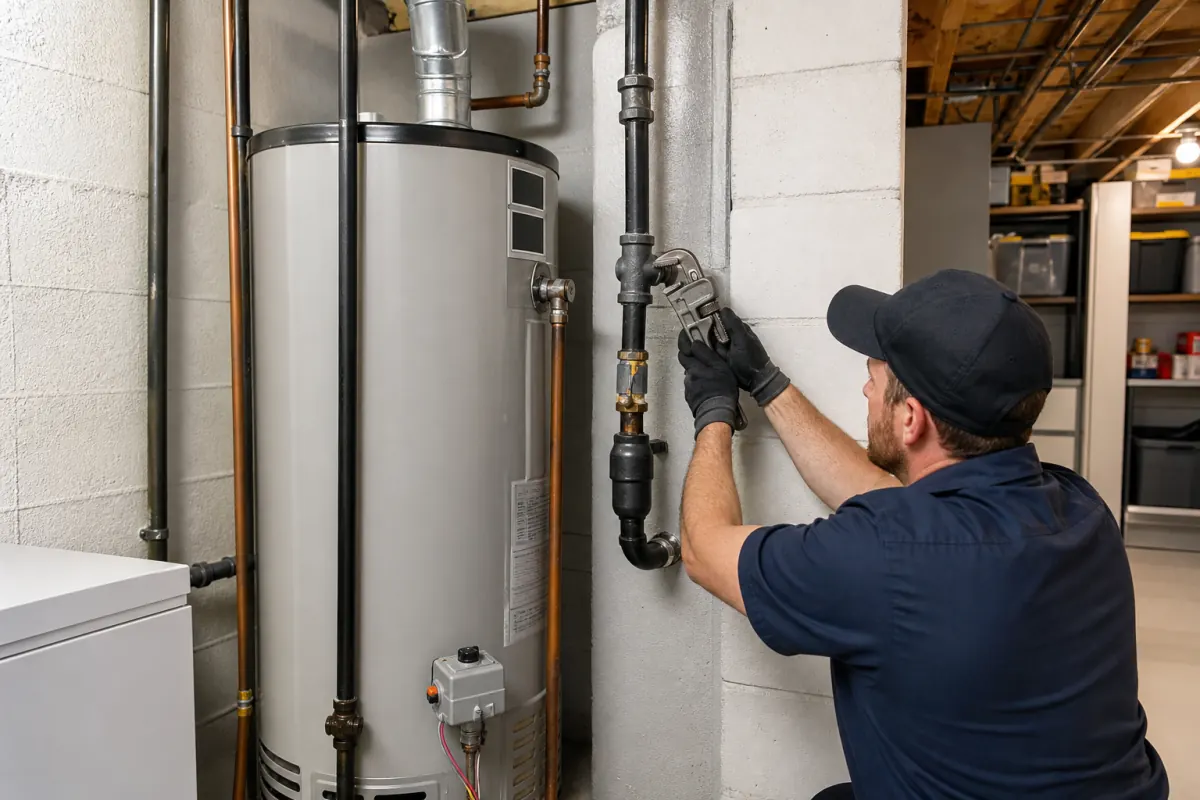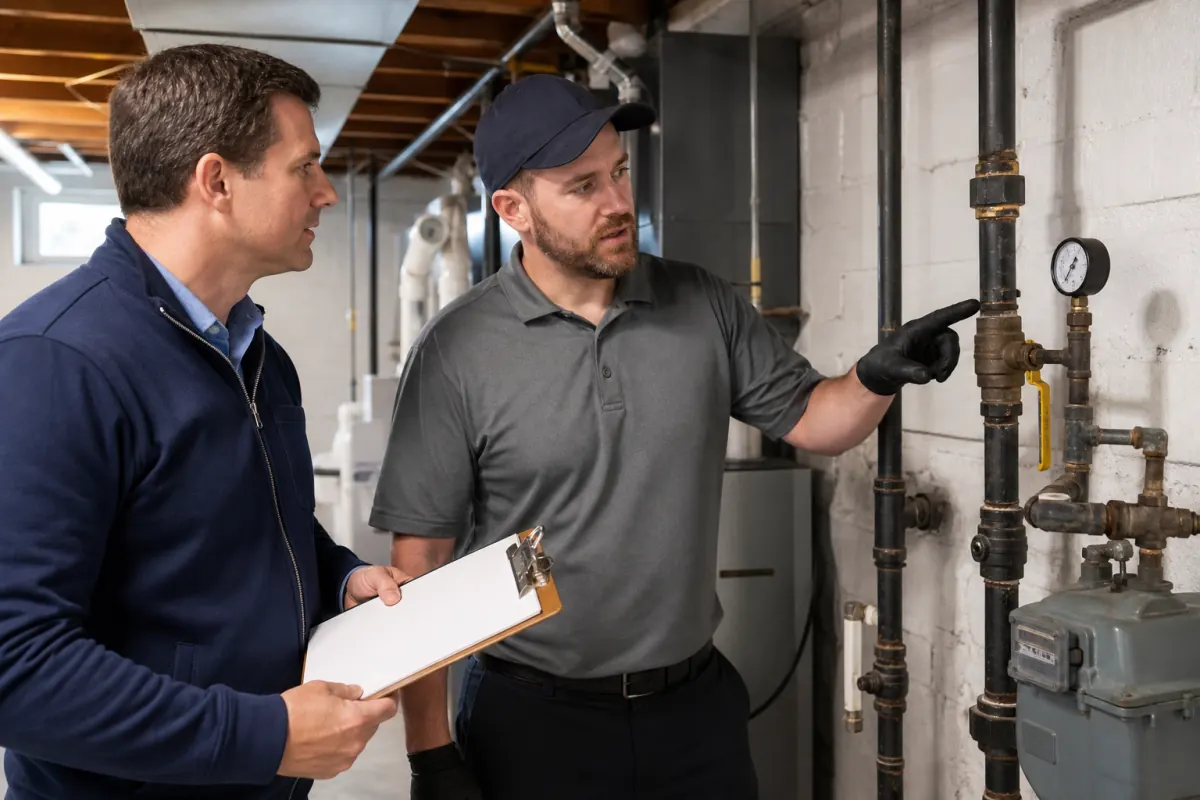
Most Chicago gas line repairs run from a few hundred dollars for a single leaking joint to a few thousand for replacing a full run, with whole-home re-pipes higher still. Your final price depends on how easy the pipe is to reach, how long it is, the material used, and the city or county permit.
🚨 Gas Problem in Chicago? Talk to a Licensed Pro
24/7 dispatch across Chicago and the suburbs. If you smell gas right now, leave first and call 911 or your gas utility.
The 4 things that actually move the price
Before any honest plumber gives you a number, they're sizing up four things. Once you understand them, every quote you get will make a lot more sense.
- Accessibility. A pipe running along an open basement joist is quick. The same pipe buried in a finished wall, under a slab, or behind your laundry room means cutting, crawling, and more labor hours — which is the single biggest swing in any quote.
- Length. Tightening one connection is a different job than replacing twenty feet of pipe. More footage means more material, more fittings, and a longer pressure test at the end.
- Material. Traditional black iron pipe is sturdy but labor-heavy to thread and fit. Flexible CSST (corrugated stainless steel tubing, the yellow or black coated line you may have seen) installs faster in tight spots. The right choice depends on your home and local code.
- Permit. Most gas work in our area is permitted. The City of Chicago and suburban towns in Cook, DuPage, Lake, and Will counties each set their own fees and inspection rules — a real line item we'll come back to below.
One safety note before numbers: if you smell that rotten-egg odor (it's mercaptan, an additive utilities mix in so leaks are noticeable), don't troubleshoot it yourself. Leave the house, then call 911 or your gas utility — Peoples Gas in the city, Nicor out in the suburbs. Private-side repair comes after the area is confirmed safe.
Small repairs: single joints, flares, and drip legs
The good news is that a lot of what scares homeowners turns out to be a small, contained fix. These are the most common calls we run in neighborhoods from Oak Park to Arlington Heights.
- One leaking threaded joint. A single fitting that's weeping gas is often re-sealed or re-made in a single visit — typically a few hundred dollars including the diagnostic and a leak check.
- Flare or appliance connector tightening. The flexible connector behind a stove, dryer, or water heater can loosen or wear. Replacing one is usually one of the lower-cost repairs, again in the low hundreds.
- Drip-leg replacement. The drip leg (a short capped pipe that catches moisture and debris before it reaches your appliance) can corrode or get knocked loose. Swapping it is a modest, well-defined job.
Small repairs feel like the obvious money-saver, and often they are. But if a tech finds corrosion in one spot, it sometimes signals the rest of that run is aging too — worth asking about while they're already on site.
Replacing a section: basement runs, risers, and branch lines
When the problem isn't one fitting but a stretch of compromised pipe, you're into section replacement. Cost scales mostly with length and how buried the pipe is.
- A basement run. Replacing an exposed horizontal run along the ceiling is the friendliest version of this job. A finished basement in a Naperville or Evanston home, where drywall has to come down first, lands higher.
- A vertical riser. The line feeding gas up to a second floor or rooftop unit often threads through walls, so labor climbs with the difficulty of the path.
- A branch line. Adding or replacing the line to a single appliance — a new range, a garage heater, a pool heater — is a contained project priced by distance and routing.
Section work generally runs from several hundred into the low thousands, depending on those four cost drivers. This is also the stage where a failed test changes the math: if your home recently flunked a failed gas pressure test, the inspector may require replacing a whole section rather than patching one spot, so factor that into your planning. A licensed gas line repair visit will tell you exactly which camp you're in.
Whole-home re-pipe: what it costs and when you truly need it
A full re-pipe replaces all the gas piping in the house. It's the largest project in this guide and runs into the thousands — but here's the honest part: most homes don't need one. We talk plenty of Berwyn and Cicero homeowners out of a re-pipe they were quoted elsewhere.
A whole-home replacement genuinely makes sense when:
- Multiple sections fail a pressure test, not just one isolated spot.
- The piping is old, widely corroded, or undersized for appliances you've added over the years.
- You're gutting and remodeling anyway, so the walls are already open and access is essentially free.
If only one run is bad, replacing that run is the smarter spend. When replacement clearly beats repeated patching, our gas pipe replacement service is scoped to do exactly the footage you need and no more. Either way, a re-pipe should come with a permit and a fresh whole-house pressure test, not a handshake.
The costs nobody puts on the first quote
This is where surprise charges hide. A trustworthy quote names these up front; a cheap one often leaves them off so the total looks smaller.
- Permit fees. Pulling a gas permit is required for most work beyond minor repairs. Chicago and each suburb set their own fee, and an inspection is usually part of it.
- Dig-locate (JULIE / 811). Any underground line — out to a detached garage or yard appliance — requires a free locate request through JULIE (811) before digging. Skipping it is both unsafe and illegal in Illinois.
- Pressure test. After the repair, the system is pressurized and watched to confirm it holds. On larger jobs this can add time, and the utility may want to witness it.
- Drywall and finish repair. If walls or ceilings were opened to reach the pipe, patching, taping, and painting are often a separate trade and a separate cost.
- Gas-company reconnect. When service was shut off, Peoples Gas or Nicor must come relight and restore it after the city inspection passes. That's on their schedule, which can affect your timeline as much as your budget.
One more money question worth chasing down before you pay out of pocket: it's worth checking whether homeowners insurance covers the repair, since some policies help with sudden damage even though they rarely cover ordinary wear.
The cheapest quote that skips the permit and pressure test isn't cheaper — it just moves the cost to your next inspection or your home sale.
Use these ranges to sanity-check what you're told, not as a final bill. A weeping joint in an open Hinsdale basement and a buried branch line in a finished Joliet rec room are different worlds. Get a written quote — every house is different.
If you want a real number for your home, we're licensed, insured, and on call 24/7 across Chicago and the suburbs. Call (708) 381-2959 and we'll send a licensed pro out, usually within 30 to 60 minutes for emergencies.
Frequently Asked Questions
How much does gas line repair cost in Chicago?
A single leaking joint or loose appliance connector is often a few hundred dollars. Replacing a section or run typically lands in the high hundreds to low thousands, and a whole-home re-pipe runs higher. The exact figure depends on accessibility, length, material, and your local permit. Always get a written quote — every house is different.
Do I need a permit to repair a gas line in Chicago or the suburbs?
For most gas work beyond a minor fix, yes. The City of Chicago and suburban towns across Cook, DuPage, Lake, and Will counties require a permit and usually an inspection. A licensed contractor pulls it for you and should list the fee on your quote rather than tacking it on later.
Why is one company's gas repair quote so much cheaper?
Often because it leaves out the permit, the post-repair pressure test, drywall patching, or the utility reconnect. Those costs don't disappear — they resurface at your next inspection or when you sell. A complete quote names them up front, which can make the honest bid look higher even when it's the better value.
What should I do if I smell gas before calling for a repair?
Leave the house first. That rotten-egg smell is mercaptan, added so leaks are noticeable. Once you're safely outside, call 911 or your utility — Peoples Gas in the city, Nicor in the suburbs. Don't flip switches or hunt for the source yourself. Private-side repair happens only after the area is confirmed safe.
Is it cheaper to repair one section or re-pipe the whole house?
If only one run is bad, replacing that run is almost always the smarter spend. A full re-pipe makes sense when multiple sections fail a pressure test, the piping is widely corroded or undersized, or you're already remodeling and the walls are open. A licensed inspection tells you which situation you're actually in.
Does Midwest Gas Pipe Repair serve my suburb?
Yes — we cover Chicago and surrounding suburbs including Naperville, Oak Park, Evanston, Schaumburg, Joliet, Cicero, Berwyn, Hinsdale, Arlington Heights, and Bolingbrook. We're licensed, insured, and available 24/7, with emergency response typically in 30 to 60 minutes. Call (708) 381-2959.
Need a licensed gas pro in Chicagoland?
Licensed, insured, 24/7. Call now or request a callback and a dispatcher will route your job.