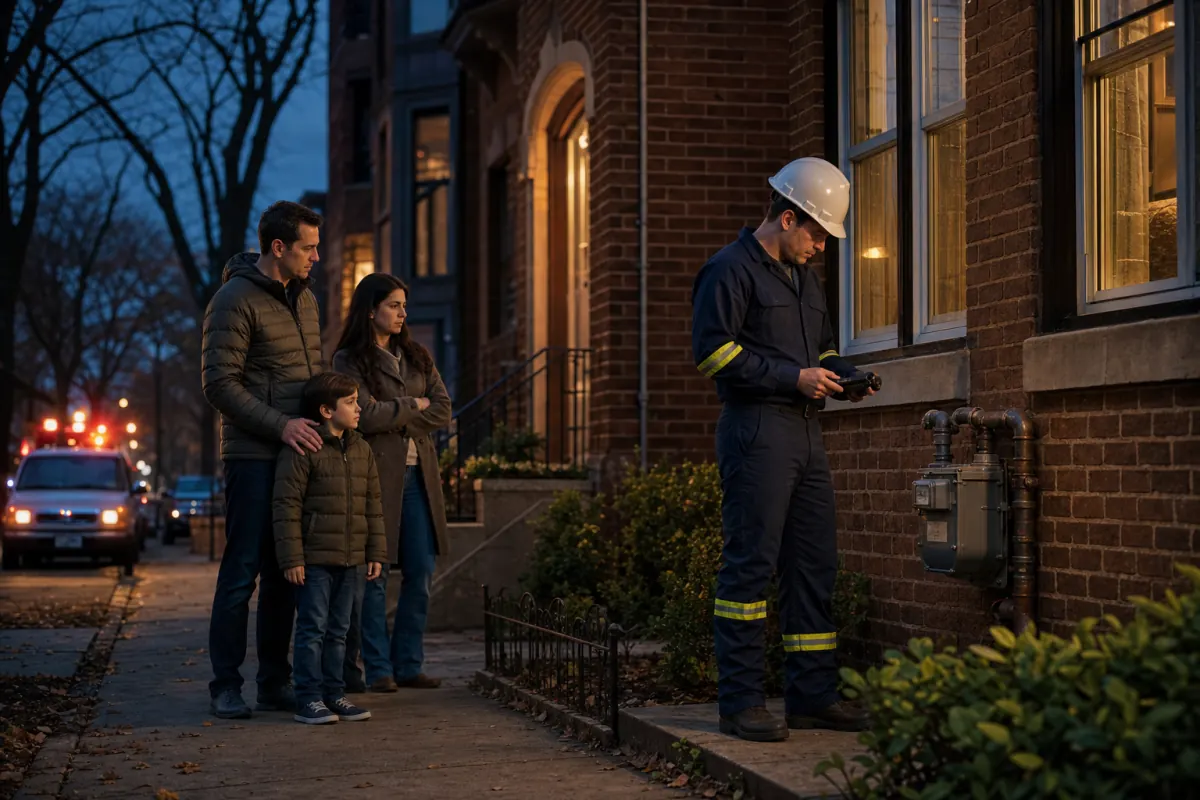
If you smell that rotten-egg odor, get everyone outside first, then call 911 or your gas utility (Peoples Gas in Chicago, Nicor in the suburbs). They'll find the leak and shut off your gas for free. A licensed gas fitter repairs the actual line afterward.
🚨 Gas Problem in Chicago? Talk to a Licensed Pro
24/7 dispatch across Chicago and the suburbs. If you smell gas right now, leave first and call 911 or your gas utility.
First call always: 911 or the utility (Nicor / Peoples Gas) — what they actually do
When you catch that sharp, rotten-egg smell, your first move isn't to figure out who's responsible for the repair. It's to get yourself, your family, and your pets out of the house. That sulfur odor comes from mercaptan, a chemical the gas company adds on purpose so an otherwise odorless gas is impossible to miss. Once you're safely outside and a good distance away, make the call.
If you're in the city of Chicago, your utility is Peoples Gas — their 24/7 emergency line is 866-556-6002. In most suburbs (Naperville, Schaumburg, Arlington Heights and beyond), it's Nicor Gas at 888-642-6748. When in doubt, or if anyone feels dizzy or the smell is strong, just dial 911. The fire department and the utility coordinate on serious calls.
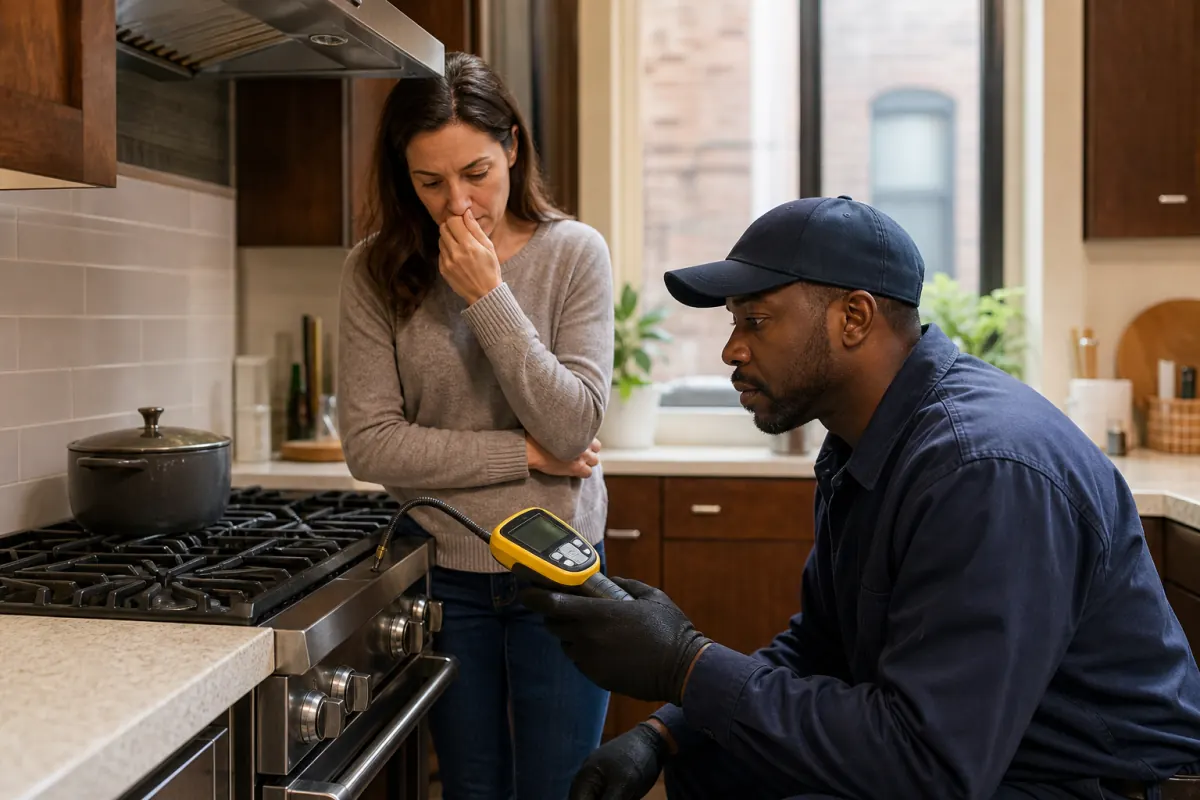
Here's what the utility actually does when they roll up: they bring a combustible-gas detector, sniff out where the gas is coming from, and if there's a confirmed leak, they shut your gas off at the meter to make the home safe. That part is free. What they do not do is fix your pipe. For a step-by-step on those first frantic minutes, read our guide on what to do in a gas leak emergency.
What the gas company will NOT fix (and why your responsibility starts after the meter)
This is the part that surprises most homeowners. The gas company owns and maintains everything up to and including your meter. Once gas passes the meter and travels into your home, it's on the customer side — and that piping is your responsibility, not the utility's.
So if the leak is on the line running to your furnace, the yellow flex line behind your dryer, or the line going to your stove, Nicor or Peoples Gas will red-tag it and lock off your service, but they'll leave the repair to you. The same goes for a leaking appliance connector (that flexible metal hose connecting your range or dryer), corroded black pipe in the basement, or a bad fitting at a drip leg — the little capped pipe that catches moisture and debris before they reach your appliance.
That dividing line at the meter is why you can do everything right, get your gas shut off safely, and still be sitting in a cold house wondering who you're supposed to call next. Sometimes the utility even tells you they didn't find anything on their side — if that's happened to you, here's what to do when the gas company said there is no leak.
Who fixes the leak after the utility shuts off your gas
Once your home is safe and your gas is locked off, the repair belongs to a licensed gas fitter — a contractor licensed and insured to work on fuel-gas piping. This is who you call to actually find the bad section, replace it, pressure-test the system, and get your service restored.
At Midwest Gas Pipe Repair, this is the bulk of what we do. A typical visit looks like this: we isolate and pinpoint the leak, repair or replace the failed pipe or connector, run a pressure test to prove the system holds, and coordinate the relight with your utility. If a permit is required — and in Cook, DuPage, Lake, and Will counties many gas repairs do need one — we pull it and arrange the inspection. We're mobile across Chicago and the suburbs, with emergency response typically in the 30-60 minute range. You can see the full scope of our emergency gas leak repair service for what's included.
On cost: a small connector or single-fitting repair usually lands in the lower hundreds, while re-piping a corroded run, replacing buried CSST (the flexible corrugated stainless-steel tubing common in newer homes), or a job that needs a permit and inspection can climb well into four figures. Pressure testing and the permit fee add to that. Every situation is different, so don't trust a phone quote as gospel. Get a written quote — every house is different.
Licensed gas fitter vs. plumber vs. HVAC tech — who is allowed to do gas work in Illinois
People use "plumber" as shorthand for anyone who works on pipes, but gas piping is its own trade with its own rules. Here's how the three roles actually shake out in Illinois:
- Licensed gas fitter / plumber with gas credentials: This is the right call for a leak on your gas line. In Illinois, a licensed plumber can do gas piping, but not every plumbing outfit is set up or insured for fuel-gas work — so ask. A dedicated gas-fitting company lives in this work every day.
- General plumber: Great for water and drain lines. Many also handle gas, but a plumber who mostly does fixtures and sewers may sub the gas portion out or decline it. Confirm before they show up.
- HVAC technician: Allowed to connect and service the appliance itself — your furnace, boiler, or water heater — and the connector right at it. They generally are not the people to re-pipe a leaking gas line running through your walls or under the floor. That's gas-fitting territory.
The practical takeaway: a leak in the fixed gas piping of your home should be handled by someone licensed and insured specifically for gas work. Whoever you hire also has to coordinate with Peoples Gas or Nicor to get your meter unlocked and service restored — the utility won't relight for just anyone.
One more Illinois-specific note: if your repair involves any digging — say, a leak on a buried line out to a garage in Oak Park or a patio grill stub in Evanston — state law requires a JULIE (811) dig-locate before anyone breaks ground. A reputable gas fitter handles that call for you.
What to ask before you let anyone in the house
You're stressed, your gas is off, and someone's offering to come right over. Slow down for sixty seconds and ask these questions first. The right contractor will answer them without flinching.
- "Are you licensed and insured for gas work in Illinois?" Ask for the license, and ask specifically about gas — not just a general contractor's license.
- "Will you pull the permit and handle the inspection if one's needed?" In most of Chicagoland, real gas repairs are permitted work. A pro who wants to skip the permit is a red flag.
- "Will you pressure-test the system and coordinate the relight with my utility?" A repair isn't finished until the line proves out under test and Peoples Gas or Nicor turns your service back on.
- "Can I get the quote in writing?" Verbal numbers have a way of growing. A written quote protects you both.
- "How soon can you actually be here?" If you're without heat or hot water, response time matters. Ask for a real window, not "later today."
The gas company makes you safe. A licensed gas fitter makes you whole. Knowing which is which is the difference between a long cold night and a problem solved before dinner.
If you've already got your gas shut off and need the line repaired, we serve Chicago and suburbs from Berwyn and Cicero out to Naperville and Joliet, around the clock. Call (708) 381-2959 and we'll walk you through what happens next.
Frequently Asked Questions
Who do I call first for a gas leak in Chicago?
Get everyone out of the house first. Then call 911 or your gas utility — Peoples Gas (866-556-6002) in the city, or Nicor (888-642-6748) in the suburbs. They'll find the leak and shut your gas off for free. A licensed gas fitter handles the actual pipe repair afterward.
Will Nicor or Peoples Gas fix my gas line for free?
No. The utility owns and repairs everything up to your meter. Anything past the meter — the lines to your stove, dryer, furnace, and the connectors — is the homeowner's responsibility. The utility will locate the leak and shut off your gas safely, but a licensed gas fitter does the repair.
Can a regular plumber fix a gas leak in Illinois?
A licensed plumber can legally do gas piping in Illinois, but not every plumbing company is set up or insured for fuel-gas work. Always ask specifically whether they're licensed and insured for gas before hiring. A dedicated gas-fitting company does this work daily.
How much does gas leak repair cost in Chicago?
It varies widely. A single connector or fitting repair often runs in the lower hundreds, while re-piping a corroded run or a permitted job with inspection can reach well into four figures. Pressure testing and permit fees add to the total. Get a written quote — every house is different.
Who turns my gas back on after a repair?
Your utility — Peoples Gas or Nicor — restores and relights service after the repair passes a pressure test and any required inspection. They won't relight for just anyone, so your gas fitter coordinates the relight as part of finishing the job.
Do I need a permit to repair a gas line in Chicago or the suburbs?
Often, yes. In Chicago and surrounding Cook, DuPage, Lake, and Will counties, many gas repairs require a permit and inspection. Any digging also requires a JULIE (811) dig-locate by law. A reputable gas fitter pulls the permit and makes the JULIE call for you.
Need a licensed gas pro in Chicagoland?
Licensed, insured, 24/7. Call now or request a callback and a dispatcher will route your job.