If you still smell gas after Peoples Gas or Nicor said there's no leak, trust your nose. Utilities check their own equipment and large leaks — not small private-side ones at appliances, joints, or connectors. A licensed plumber with a combustible gas indicator can find the tiny leak the utility's sniffer missed.
Why your nose can be right when the utility's sniffer says no
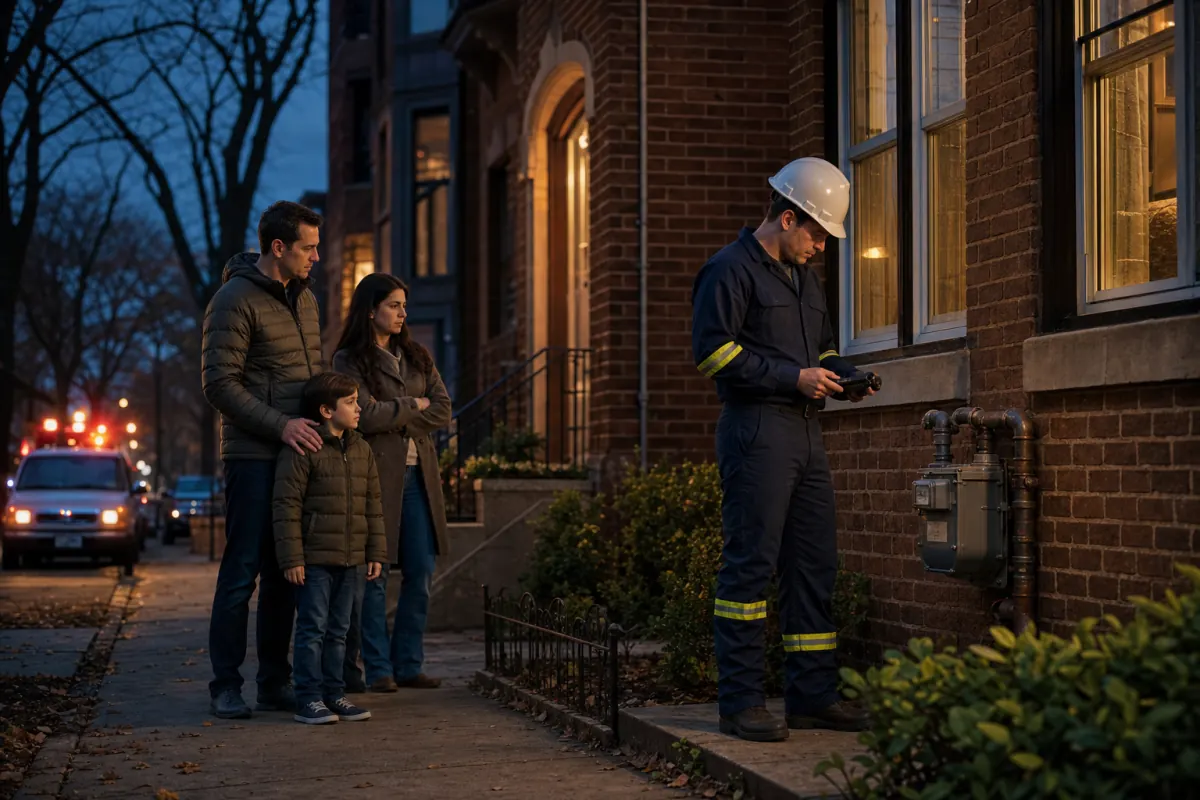
Here's the part nobody explains when the gas company packs up and leaves: the utility tech and a private gas-line plumber are not looking for the same thing. When Peoples Gas or Nicor rolls a truck, their job is to protect the public and the system they own — the meter and the line out to the street. They sweep for leaks big enough to be a hazard, and if their instrument doesn't trip, they clear the call and move on. That's the right call for them, but it leaves a gap.
Everything past the meter is "private side" — the piping running through your basement, the line going to your stove, the connector behind your dryer. Most utility crews won't chase a faint smell through your house unless the gas reaches a level their meter flags. So a small leak can be absolutely real and still get a "no leak found." Your nose, meanwhile, can pick up mercaptan — the rotten-egg odorant added to naturally odorless natural gas — at concentrations far below what triggers a clear safety alarm. You are not imagining it.
One important note before we go further. If the smell is strong, you hear hissing, or anyone feels dizzy or nauseous, leave the house and call 911 or your gas utility from outside first. Don't flip switches, don't light anything. Private-side detection and repair happen after the area is confirmed safe — never before.
The 4 most common "ghost leaks" pros find after the utility leaves
When we get the second-opinion call from a homeowner in Oak Park or Naperville who's been told there's nothing wrong, these are the four culprits we find most often. None of them is exotic. All of them are easy to miss without the right tools and a slow, methodical sweep.
- A loose flare or appliance connector. That yellow flex line — the appliance connector — feeding your stove or dryer threads onto a flare fitting. Bump the range cleaning behind it, and the flare can loosen just enough to weep gas. The leak is tiny, intermittent, and easy for a quick sweep to miss.
- A cracked or sediment-clogged drip leg. The drip leg (sometimes called a sediment trap) is the little capped pipe pointing down near an appliance that catches debris. A hairline crack at its cap or threads leaks slowly and low to the floor, right where natural gas tends to rise away from a handheld meter held at chest height.
- A hairline leak at a threaded joint. Every threaded black-iron or CSST (corrugated stainless steel tubing) joint relies on pipe dope or tape for its seal. Decades of heating and cooling, or a joint that was never quite torqued right, can open a weep so small it only shows under a proper bubble test.
- Sewer gas from a dry P-trap. This one isn't even natural gas — and it's the most common false alarm of all. A floor drain or a guest bathroom nobody uses dries out, and the P-trap that normally holds a water seal lets sewer gas drift up. It smells foul, so people assume "gas leak," but the utility's meter reads nothing because there's no methane there.
Rotten-egg gas vs. sewer gas — how to tell them apart in 60 seconds
Before you panic, you can do a quick gut check. Natural gas with mercaptan smells like sulfur or rotten eggs — sharp, chemical, and usually strongest near an appliance, a pipe, or the meter. Sewer gas smells more like a backed-up drain or a musty, swampy funk, and it's usually worst near a floor drain, a rarely-used sink, a basement bathroom, or a laundry standpipe.
Try this: pour a couple cups of water down any drain you haven't used in a while, including basement floor drains. If the smell fades over the next hour, you likely had a dry P-trap, not a gas leak — refilling that water seal blocked the sewer gas. If the smell hangs near an appliance or pipe no matter what you do with the drains, treat it as a possible gas leak and keep going. When in doubt, it's worth reading up on what a gas leak actually smells like so you can describe it accurately to whoever you call next.
What a pro brings that the utility tech doesn't
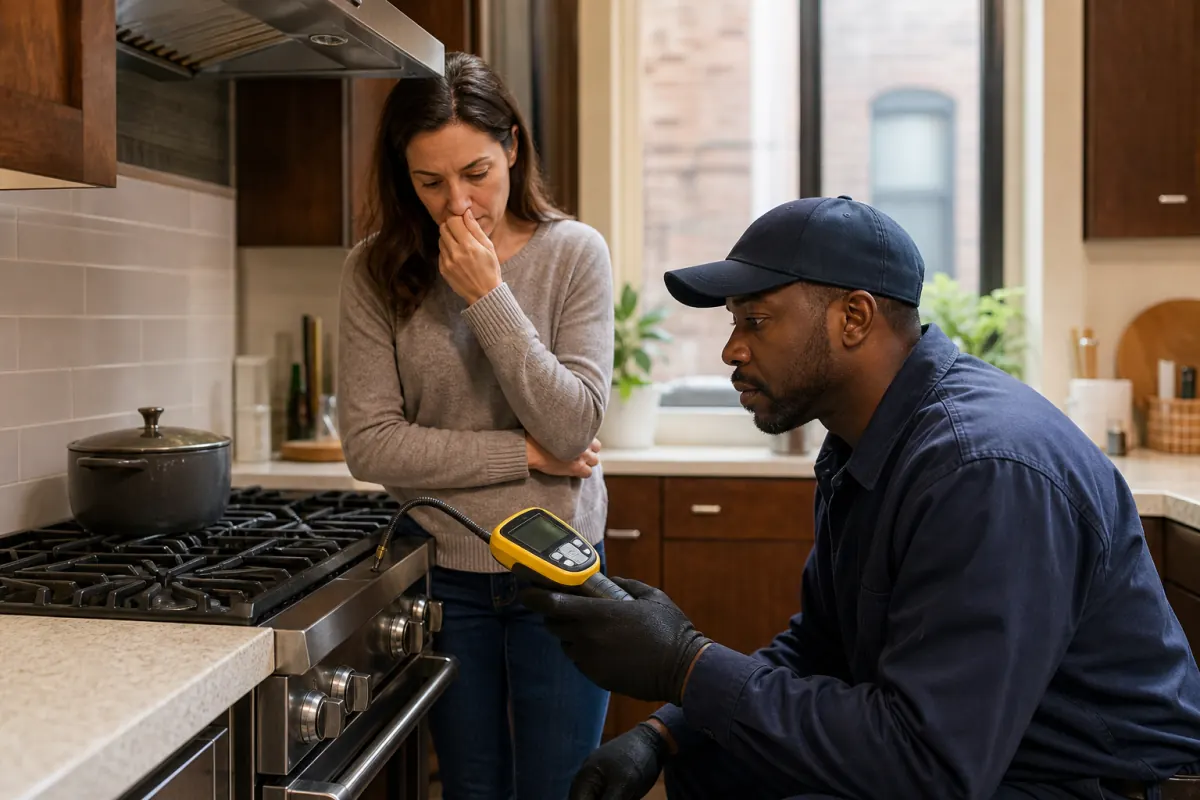
The difference between "no leak found" and "found it in twenty minutes" usually comes down to tools and patience. A licensed gas plumber doing real gas leak detection shows up with gear built to chase the small stuff:
- A combustible gas indicator (CGI). A sensitive electronic sniffer that's slowly walked along every joint, valve, and connector — not just waved near the meter. It picks up trace concentrations a quick safety sweep skips.
- A bubble test. The old-school proof. A leak-detecting solution gets brushed onto a suspect fitting; if gas is escaping, it blows tiny bubbles. Cheap, dead reliable, and it pinpoints the exact thread that's weeping.
- A manometer pressure test. We isolate a section of pipe, pressurize it, and watch the gauge. If pressure drops over time, there's a leak in that run — even one we can't smell yet. This is also what proves the repair actually held.
That combination is how a pro can confirm what your nose already suspected, then point to the exact fitting. A utility tech clearing a call simply isn't dispatched to do this level of work on your side of the meter.
The utility protects the street. We protect the line going to your stove. Both matter — they're just different jobs.
When to call us vs. when to call the utility back
Use this simple split. Call the utility back (Peoples Gas in the city, Nicor in most suburbs) if the smell gets stronger, you hear hissing, the odor seems to come from outside or near the meter, or anyone has symptoms. Those are emergencies and possible street-side or meter issues — their territory. Always get to fresh air and call from outside.
Call us — a licensed, insured private gas-line contractor — when the utility has cleared the area as safe but you still smell something faint indoors near an appliance or pipe. That's the classic ghost-leak scenario, and it's exactly what our 24/7 crews handle across Chicago, Cicero, Evanston, Schaumburg, and the surrounding suburbs, typically with a 30–60 minute emergency response. If you want to know which household clues are worth acting on, our guide to the warning signs of a gas leak is a good companion read.
On cost: a focused leak-detection visit generally runs in the lower hundreds, while a repair depends entirely on what we find — a single loose connector is at the low end, while re-piping a corroded run that needs a permit and a JULIE (811) dig-locate for any outdoor work sits higher. Permit norms vary by jurisdiction across Cook, DuPage, Lake, and Will counties, and that factors in too. Rather than guess, we give you a number before any work starts. Get a written quote — every house is different.
The bottom line: a "no leak found" from the utility answers their question, not necessarily yours. If your nose keeps telling you something's wrong, it usually is. Get the safe-side confirmed, then let a licensed pro find the small thing the sniffer missed.
Frequently Asked Questions
The gas company said no leak but I still smell gas. Is that possible?
Yes. Utilities like Peoples Gas and Nicor primarily check their own equipment and large hazards. A small private-side leak at an appliance connector, threaded joint, or drip leg can be real and still pass their sweep. A licensed plumber with a combustible gas indicator can find it.
How do I tell sewer gas from a natural gas leak?
Natural gas smells like sharp sulfur or rotten eggs and is strongest near appliances, pipes, or the meter. Sewer gas smells musty or like a backed-up drain and is worst near floor drains or unused sinks. Pour water down dry drains — if the smell fades, it was likely a dry P-trap, not gas.
Should I call the utility or a private plumber?
Call the utility (or 911) first if the smell is strong, you hear hissing, or anyone feels ill — leave the house and call from outside. Once they've cleared the area as safe but you still smell a faint odor indoors near an appliance, call a licensed private gas-line contractor to find and fix the small leak.
What tools find a leak the gas company missed?
A licensed pro uses a combustible gas indicator (a sensitive electronic sniffer), a bubble test with leak-detecting solution on suspect fittings, and a manometer pressure test that confirms a leak in a pipe run and proves the repair held.
How much does private gas leak detection cost in the Chicago area?
A focused leak-detection visit typically runs in the lower hundreds; repairs depend on the cause, from a single loose connector at the low end to re-piping a corroded run with a permit and JULIE 811 dig-locate at the higher end. Get a written quote — every house is different.
How fast can you get to my home?
We dispatch licensed pros 24/7 across Chicago and the suburbs — including Oak Park, Naperville, Evanston, Cicero, and Schaumburg — with a typical 30–60 minute emergency response. Call (708) 381-2959.
Need a licensed gas pro in Chicagoland?
Licensed, insured, 24/7. Call now or request a callback and a dispatcher will route your job.