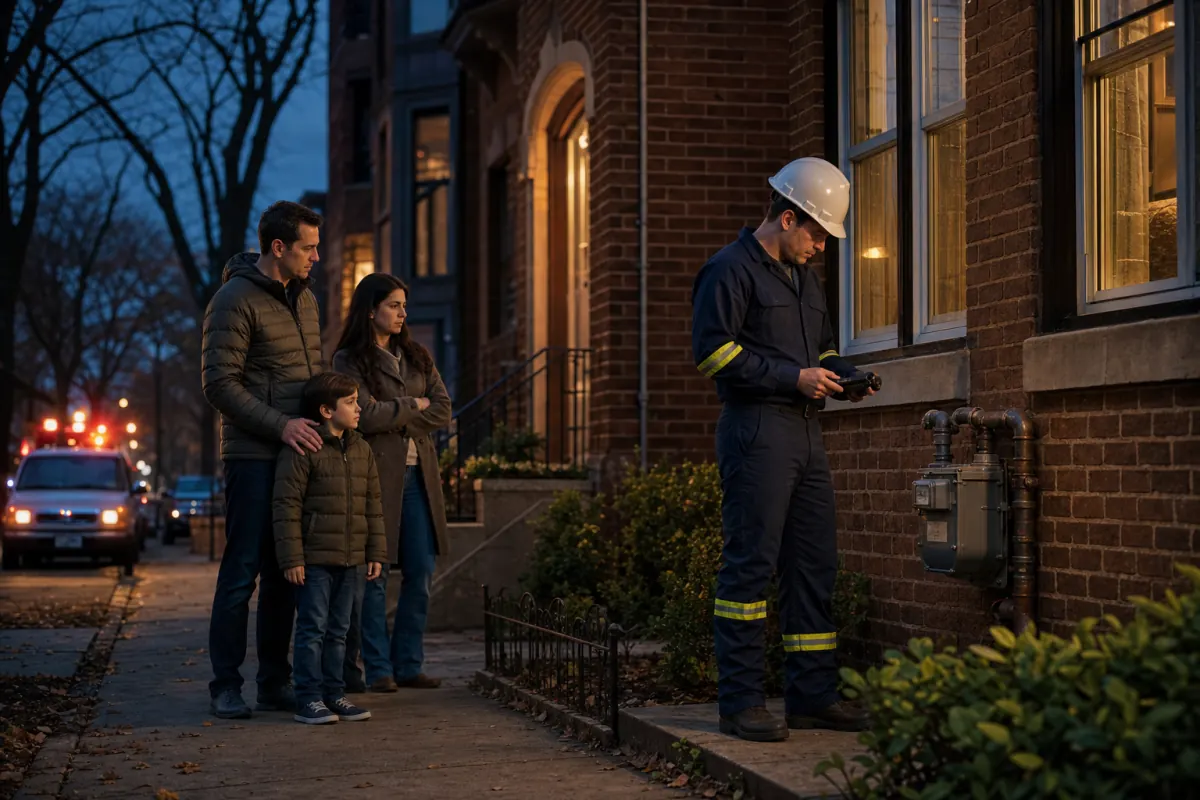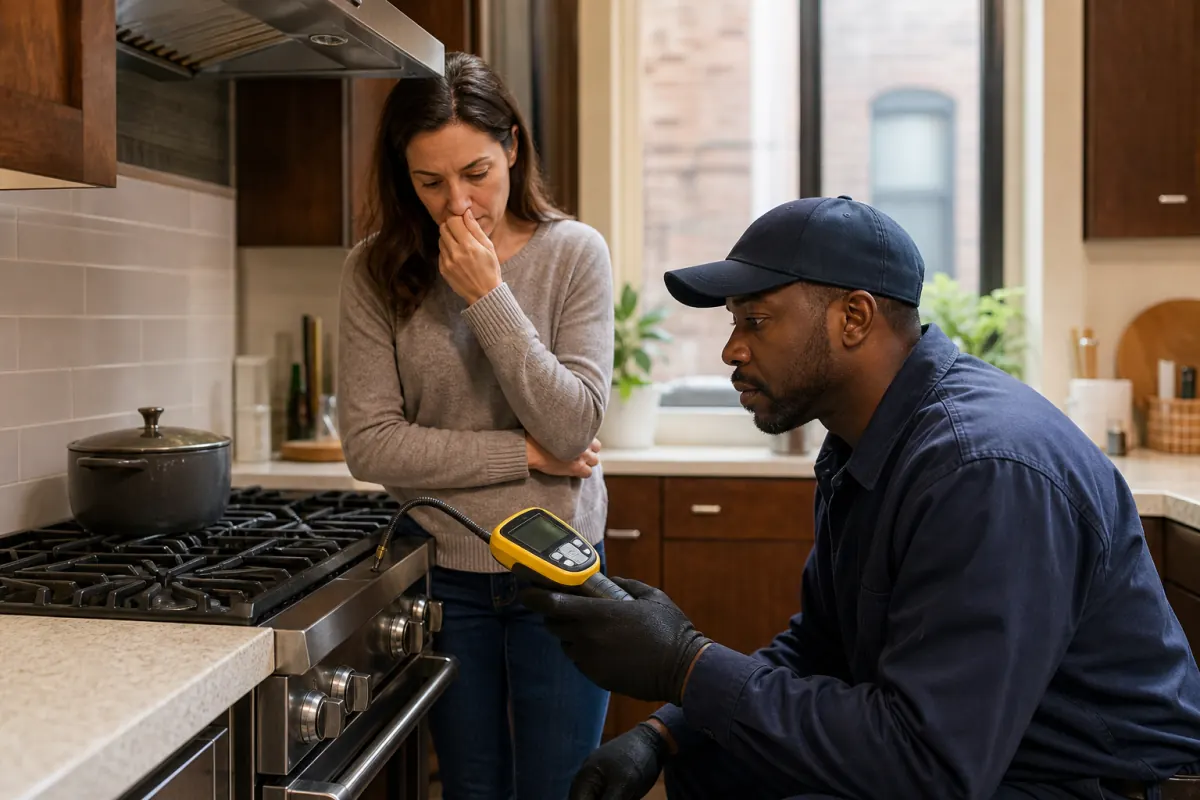
A gas leak smells like rotten eggs or sulfur. Natural gas is naturally odorless, so utilities add a harmless chemical called mercaptan to give it that unmistakable stink. If you catch even a faint rotten-egg odor indoors, treat it as real, get everyone outside, and call your gas company or 911. Once outside, use the Chicago gas leak emergency checklist for the next safety steps.
🚨 Gas Problem in Chicago? Talk to a Licensed Pro
24/7 dispatch across Chicago and the suburbs. If you smell gas right now, leave first and call 911 or your gas utility.
The "rotten egg" smell — why utilities add it and what it actually is
Here's something most homeowners never learn until they go looking: natural gas, on its own, has no smell at all. It's colorless and odorless coming out of the ground. That's a real safety problem, because a leak could fill a room without anyone noticing. So gas companies fix it on purpose.
Before the gas ever reaches your home, providers like Peoples Gas in the city and Nicor out in the suburbs add a tiny amount of a chemical called mercaptan (sometimes called an odorant). Mercaptan is what gives gas that sharp, sulfur-like "rotten egg" punch. Most people describe it as rotten eggs, but you'll also hear it called skunky, like sulfur, or like a struck match. It's intentionally unpleasant so your nose flags it instantly, even at very low concentrations.
The takeaway: that smell isn't the gas itself, it's a built-in warning system. If you catch it, the system is doing exactly what it was designed to do. Don't talk yourself out of it. A surprising number of leaks get ignored because someone assumed it was "just the garbage" or a one-off whiff. For the full picture of what else a leak looks and sounds like, see the 7 warning signs of a gas leak.
Faint vs. strong — what the intensity tells a pro about severity
Homeowners often ask whether a faint smell is "less dangerous" than a strong one. The honest answer is: not necessarily, and the intensity can be misleading.
- A faint, occasional whiff might mean a very small seep, a loose appliance connector (the flexible line behind your stove or dryer), or odor pooling in a low, still spot. It can also mean a bigger leak that's venting outdoors before it builds up inside.
- A strong, persistent smell usually means gas is actively accumulating faster than the room can clear it. This is the one to act on immediately, without hunting for the source yourself.
One more wrinkle: noses get tired. It's called olfactory fatigue, and it means that if you sit in a smelly room long enough, you literally stop noticing the odor, even as gas keeps building. That's a big reason we tell people to step outside the moment they smell something rather than lingering to "see if it gets worse." When a licensed tech arrives, they don't rely on their nose at all. They use a calibrated combustible-gas detector that reads the actual concentration in the air, which is the only reliable way to judge severity.
4 things people confuse for gas
Not every bad smell is a gas leak, and knowing the impostors saves you a panicked night. Here are the four we hear about most from homeowners in Naperville, Oak Park, and across Chicagoland:
- Sewer gas. A dried-out floor drain or a P-trap that's lost its water seal lets sewer odor back into the room. It smells rotten too, but it's more of a musty, "outhouse" funk than the sharp chemical sulfur of mercaptan. Often shows up in basements and bathrooms after a fixture sits unused.
- Propane. Propane is also odorized with mercaptan, so it smells nearly identical to natural gas, but it's heavier than air and sinks to the floor. If you have a propane appliance or grill tank, treat any propane smell with the same urgency.
- Cleaning chemicals. Bleach, ammonia, and some drain products give off sharp fumes that can register as "chemical" and put people on edge. The giveaway: the smell tracks with whatever you just used and fades once the room airs out.
- A dead animal in the wall. Mice and squirrels do die inside walls, especially after a cold Chicago winter. That's a heavy, rotting odor that gets worse over days, not a sulfur sting that comes and goes near an appliance.
When you genuinely can't tell, don't gamble. The safe move is to assume it could be gas and let your utility's free leak check rule it out. If they come, sniff around, and leave saying everything's fine while you still smell something, that's its own situation, and we wrote a whole guide for it: when the gas company finds nothing.
Smell by location — what each spot usually means
Where you smell it is a real clue. Here's what a tech is thinking when you say the odor is strongest in a particular place.
In the basement
Basements are where buried supply lines enter the house, and where the meter, water heater, and furnace often live. A smell down here can point to a fitting on the incoming line, a corroded section of old black-iron pipe, or a loose connection on the appliance side. Because basements are enclosed and low-traffic, gas can quietly accumulate, so a basement odor deserves prompt attention.
Near the meter
A faint smell right at the meter, outdoors, is sometimes normal during gas flow changes and usually clears on its own. But a persistent or strong odor at the meter is utility territory, that equipment belongs to Peoples Gas or Nicor up to the point where their responsibility ends and your home's private lines begin. Call them; they'll check their side at no charge.
Near the stove (or "the line going to your stove")
Kitchen smells most often come from the flexible appliance connector behind the range, a worn shutoff valve, or a burner knob that got bumped and left cracked open without igniting. If the smell appears only when you use the stove, that narrows it down fast. Modern homes may also have CSST (that yellow flexible gas tubing) or a drip leg at the appliance, and those connection points are common, fixable culprits.
Whatever the location, the diagnosis still happens after the area is confirmed safe. The actual private-side fix, tightening a connector, replacing a valve, swapping a corroded section, is what our team handles once the utility has cleared the scene. Most straightforward repairs land in a few-hundred-dollar range, while replacing a longer run or chasing a leak inside a wall can run higher; either way, we give homeowners in spots like Evanston and Schaumburg a real number before any work starts. Get a written quote — every house is different.
If you smell it, do this in the next 60 seconds
This is the part to remember. If you smell gas indoors and it's more than a passing whiff, don't investigate, don't troubleshoot, just act:
- Get everyone out. People and pets, outside and a safe distance from the house, right now.
- Don't touch anything electrical. No light switches, no appliances, no garage door opener. A tiny spark is all it takes. Leave doors open as you go if it's easy, but don't waste time.
- No flames, no phones inside. No lighters, no matches, and don't make the call from inside the house.
- From outside, call 911 or your gas utility first. Peoples Gas and Nicor both run 24/7 emergency lines and will respond fast to shut off the supply and make the area safe.
- Then call us for the repair. Once the area is safe, we handle the private-side emergency gas leak repair, licensed, insured, and on the road to your door, typically within 30 to 60 minutes across Chicago and the suburbs.
The leak doesn't have to be dramatic to be real. If your nose says rotten eggs, believe it, get out, and let the pros confirm it's safe before anyone goes back in.
That sequence, out first, utility first, repair after, is the whole game. A smell you act on is a non-event. A smell you ignore is the one that makes the news. When in doubt, treat it as real and call (708) 381-2959 once you're safely outside.
Frequently Asked Questions
What does a gas leak actually smell like?
Like rotten eggs or sulfur. Natural gas is odorless on its own, so utilities add a chemical called mercaptan that produces a sharp, skunky, rotten-egg smell so leaks are easy to detect even at low levels.
Why does natural gas smell like rotten eggs?
It doesn't naturally. Gas companies like Peoples Gas and Nicor add mercaptan, a harmless odorant, before the gas reaches your home. That additive is what creates the rotten-egg smell and acts as a built-in warning system.
Is a faint gas smell still dangerous?
Yes, treat it as real. A faint odor can mean a small seep, a loose appliance connector, or a larger leak venting outdoors. Intensity isn't a reliable measure of danger, so get outside and call your gas utility to check.
What if I smell gas but it might just be sewer gas or chemicals?
If you can't tell, assume it could be gas. Sewer gas is more musty, cleaning fumes fade as the room airs out, and a dead animal smells like rotting flesh. When unsure, leave and let your utility's free leak check confirm.
What should I do the moment I smell gas inside?
Get everyone out, don't touch light switches or electronics, avoid flames and phones indoors, then call 911 or your gas company from outside. After the area is confirmed safe, call a licensed pro for the repair.
Who do I call first, the gas company or a repair company?
The gas utility or 911 first. They shut off the supply and make the area safe at no charge. Private-side repairs, like fixing a connector or replacing pipe, happen after the scene is cleared.
Need a licensed gas pro in Chicagoland?
Licensed, insured, 24/7. Call now or request a callback and a dispatcher will route your job.