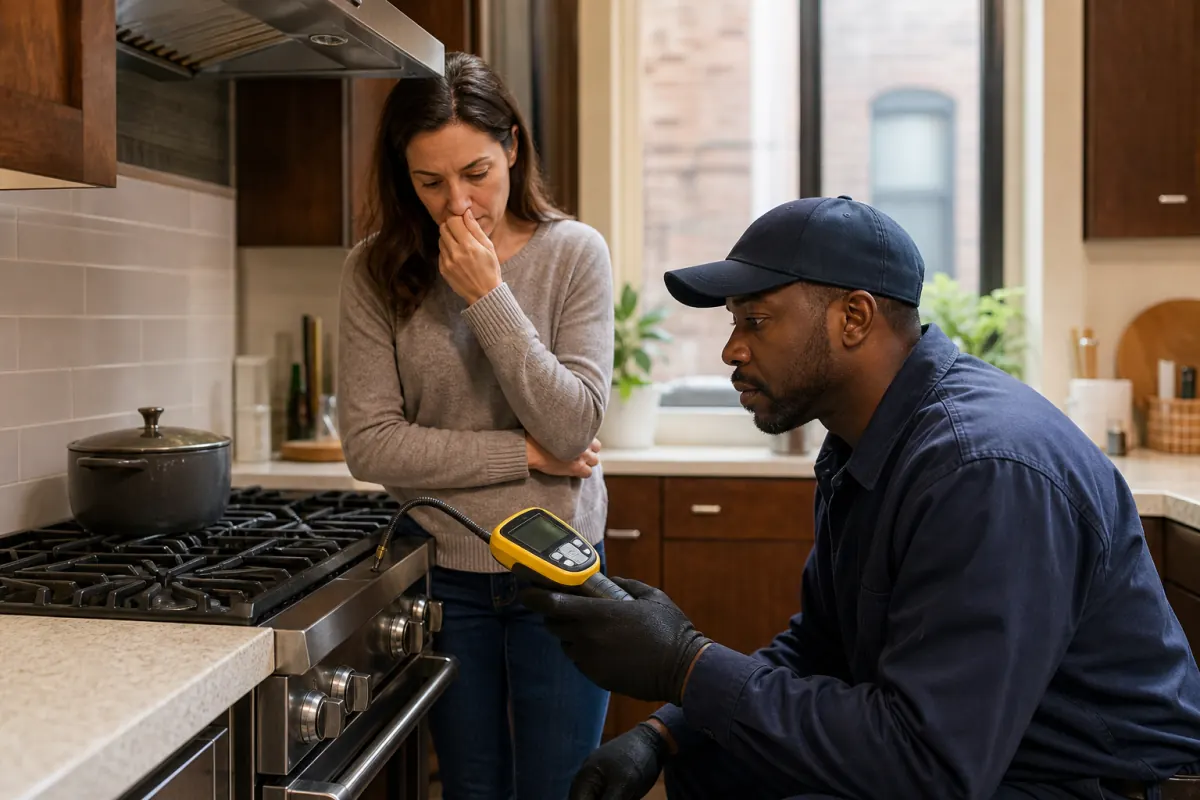
If your basement smells foul, the fastest clue is the character of the odor: natural gas smells like sharp, eggy sulfur added on purpose, while sewer gas smells like rotten eggs mixed with stale sewage. If the smell is strong or you feel dizzy, leave first and call for help.
🚨 Gas Problem in Chicago? Talk to a Licensed Pro
24/7 dispatch across Chicago and the suburbs. If you smell gas right now, leave first and call 911 or your gas utility.
Rotten egg vs. sulfur-and-sewage: the two smells side by side
Here's the tricky part: both of these smells get described as "rotten eggs," which is exactly why so many Chicago homeowners stand at the top of the basement stairs wondering whether to panic. The two odors are genuinely similar, but they're not identical, and the difference matters.
Natural gas has no smell of its own. The gas company adds a chemical called mercaptan so you can detect a leak. Mercaptan smells like sharp, concentrated sulfur, almost like a struck match or a skunk crossed with rotten eggs. It tends to hit you fast and feels chemical and "clean" in a strange way.
Sewer gas is messier. It's that rotten-egg sulfur note layered with something organic and stale, like a sewer, a swamp, or a damp drain. It often comes and goes, gets worse near a drain or toilet, and may smell musty or moldy alongside the sulfur. If the odor is foul but earthy and not razor-sharp, sewer gas is the more likely culprit.
If you want a deeper breakdown of the chemical smell itself, our guide on what a gas leak smells like walks through it in plain English.
Why a dry floor drain mimics a gas leak in your basement
Most basements have a floor drain, and underneath it sits a curved section of pipe called a P-trap. That trap is designed to hold a small amount of water at all times. That little water plug is the only thing standing between your living space and the sewer line below.
When a basement floor drain goes unused for weeks, the water in the trap simply evaporates. Once it dries out, the seal is gone, and sewer gas flows straight up into the room. This happens constantly in finished basements, guest bathrooms, laundry rooms, and seasonal homes around Naperville, Oak Park, and Evanston, especially during dry winter months when the furnace is running and the air is parched.
So before you assume the worst, know that a dry trap is one of the most common reasons a basement suddenly smells like gas. It's cheap to fix and usually has nothing to do with your gas line at all.
The 60-second water test for your drain
You can rule the dry-trap theory in or out in about a minute. Here's how:
- Find the floor drain (or any seldom-used drain) closest to where the smell is strongest.
- Slowly pour about a quart to a half-gallon of water down it.
- For extra insurance against fast evaporation, add a tablespoon of cooking oil so it floats on top and slows drying.
- Wait 15 to 30 minutes, then come back and smell the area again.
If the odor fades, you've solved it: the trap was dry, the water re-sealed it, and there's no gas leak. Make a habit of pouring water down rarely-used drains every month or two and you'll likely never smell it again.
One safety note before you do any of this. If the smell is strong, if you hear hissing, or if anyone feels dizzy, nauseous, or short of breath, do not run the test. Leave the house immediately, leave the door open, and once you're outside call 911 or your utility, Peoples Gas in the city or Nicor in the suburbs. Don't flip switches or light anything. Sort out the source only after the home is confirmed safe. Our overview of the signs of a gas leak covers what else to watch for.
When sewer gas really is a gas-line issue
Most sewer-gas smells are plumbing problems. But there's a less-common scenario worth knowing, and it's why a careful diagnosis matters.
Plumbing systems rely on vent pipes that run up through the roof to let sewer gases escape harmlessly outside and to keep water in your traps from getting siphoned away. If a vent is cracked, blocked by a bird's nest, or was never tied in correctly during a remodel, sewer gas can back up indoors and pull trap seals dry, recreating that "is there a gas leak" feeling over and over.
Where this overlaps with the gas side is in older or amateur work. We occasionally see a basement where a gas appliance was installed without a proper sediment trap (also called a drip leg), or where a flex connector, CSST (corrugated stainless steel tubing), or its bonding was done poorly, sitting right next to messy drain venting. When two different problems share one cramped utility area, the smells blur together and a homeowner can't tell which is which. That's when you want a licensed pro who can test the gas piping properly rather than guess.
The only way to know for certain whether gas is in the mix is a real test with a combustible-gas detector. That's the heart of professional gas leak detection, and it removes the guesswork entirely.
Who to call: plumber or gas fitter?
Here's the simple rule of thumb:
- Smell fades after the water test, or it's clearly tied to a drain or toilet? That's a plumbing job. A plumber handles dry traps, broken vent stacks, and blocked sewer lines.
- Sharp, chemical, struck-match smell that doesn't fade, or any hissing near a meter, appliance, or pipe? That's a licensed gas fitter, and it's urgent.
- Honestly can't tell, or both smells seem present? Start with the gas test for safety, then address the plumbing. Ruling out a leak first is always the right order.
Midwest Gas Pipe Repair handles the gas side across Cook, DuPage, Lake, and Will counties, from Schaumburg and Arlington Heights to Hinsdale, Joliet, and Glenview. We're licensed, insured, and dispatch mobile pros 24/7, usually reaching homes within 30 to 60 minutes for emergencies. If permits or a JULIE (811) dig-locate are needed for any outdoor or buried line, we coordinate that for you.
If you smell gas, trust your nose and leave. It is always better to step outside and make a call you didn't need than to second-guess a real leak.
As for cost, simple gas repairs start from $199, but the price depends on what we find, how the piping is run, and whether permits apply. Sewer-side work is quoted separately by a plumber. Either way, get a written quote, every home is different.
Frequently Asked Questions
Is it gas or sewer gas in my basement?
Natural gas smells sharp, chemical, and eggy from the added mercaptan and hits you fast. Sewer gas smells like rotten eggs mixed with stale, swampy sewage and usually gets worse near a drain. If the smell is strong or you feel unwell, leave first and call 911 or your utility before investigating.
Can a dry floor drain really smell like a gas leak?
Yes. A basement floor drain has a water-filled trap that blocks sewer gas. When the basement goes unused, that water evaporates and sewer gas rises into the room. Because both odors share a rotten-egg note, homeowners often mistake it for a gas leak. Pouring water down the drain usually fixes it.
How do I test whether it's a dry drain trap?
Pour about a quart of water down the seldom-used drain nearest the smell, add a spoonful of cooking oil to slow evaporation, then wait 15 to 30 minutes and smell again. If the odor fades, the trap was dry and there's no gas leak. Skip the test and leave if the smell is strong.
Should I call a plumber or a gas company for a basement smell?
If the smell fades after the water test or is tied to a drain or toilet, call a plumber. If it's sharp and chemical, doesn't fade, or you hear hissing near a meter or appliance, call a licensed gas fitter right away. If you can't tell, rule out gas first for safety, then handle the plumbing.
What should I do if I smell gas right now in my Chicago home?
Leave the house immediately, leave a door open, and don't flip switches or light anything. Once outside, call 911 or your utility, Peoples Gas in the city or Nicor in the suburbs. After the home is confirmed safe, a licensed pro can locate and repair the private-side line.
Need a licensed gas pro in Chicagoland?
Licensed, insured, 24/7. Call now or request a callback and a dispatcher will route your job.