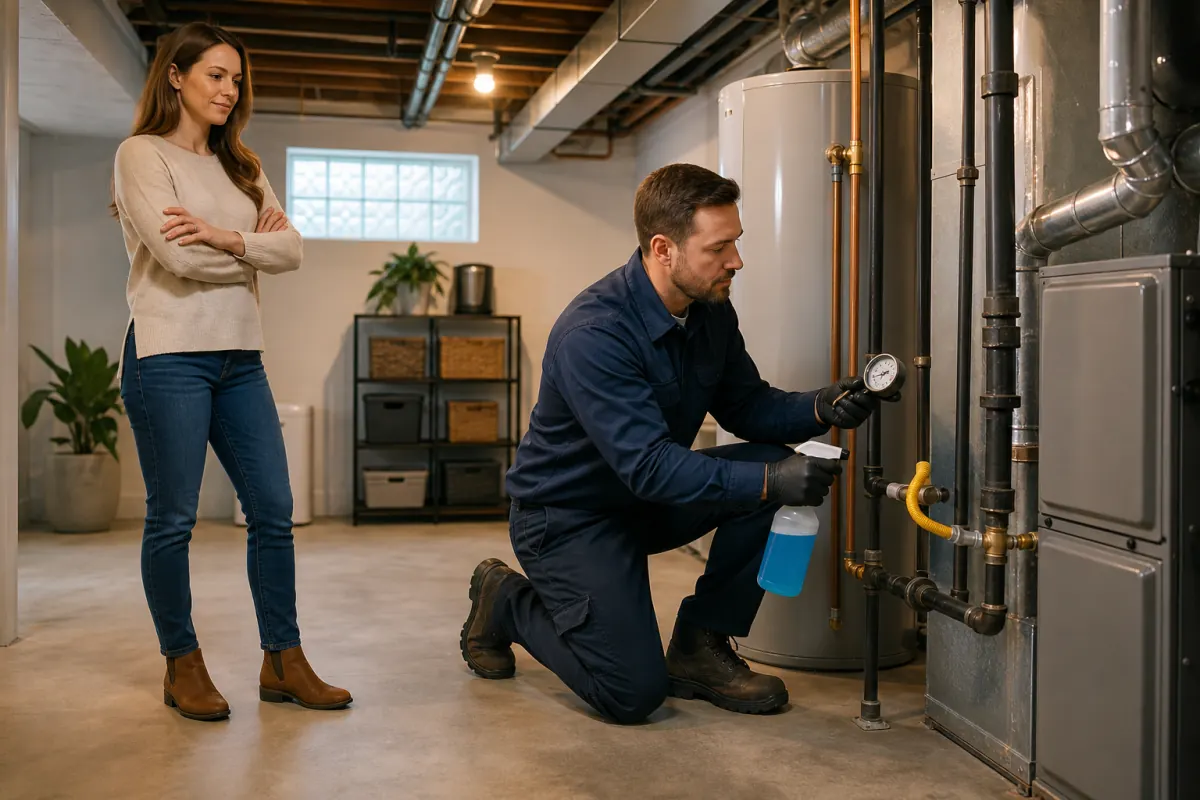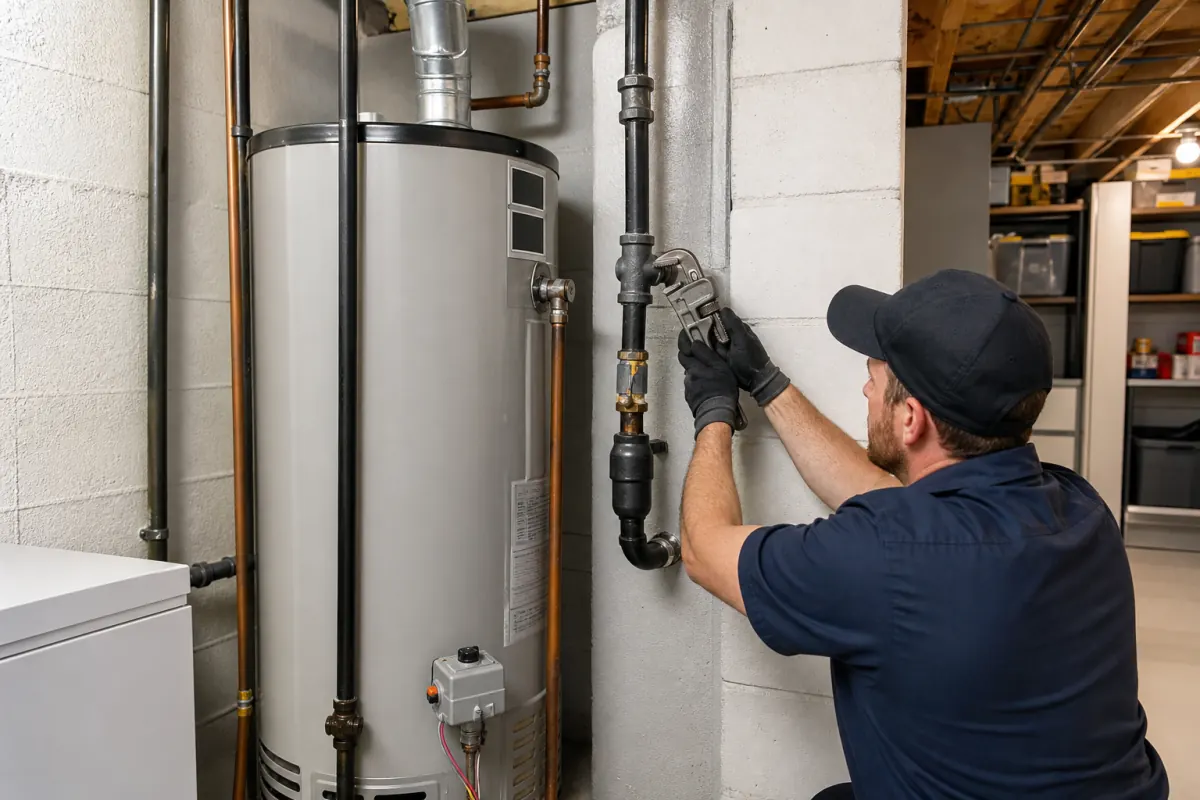
Light surface rust on a gas pipe is usually cosmetic and can be cleaned and painted. Deep pitting, flaking, or scale that thins the wall is dangerous and means that section should be replaced. The fix depends on how far the rust has eaten into the steel, not how ugly it looks.
🚨 Gas Problem in Chicago? Talk to a Licensed Pro
24/7 dispatch across Chicago and the suburbs. If you smell gas right now, leave first and call 911 or your gas utility.
Surface rust vs. pitting: the visual test
You went downstairs for a box of holiday decorations and noticed your gas line looks orange and crusty. First, take a breath. The black steel pipe (we call it black iron) that carries gas to your furnace and water heater is tough, and a little rust on the outside is one of the most common things we see in Chicago basements. The real question is not whether there is rust, but how deep it goes.
Start with a simple look. Surface rust is a thin, even orange-brown film. It wipes and rubs off, and underneath you find solid gray steel. This is almost always cosmetic. Pitting is different and more serious. Pitting shows up as tiny craters, flaking scabs, or rough, bubbly scale that does not wipe away. When rust digs little pockets into the metal, it thins the pipe wall from the outside in, and that is where strength is lost.
One safety note before you touch anything: if you ever smell gas, that rotten-egg odor comes from mercaptan, a scent added to natural gas so you notice a leak. If you smell it, do not investigate. Leave the house, then call 911 or your utility from outside (Peoples Gas in the city, Nicor in most suburbs). Have the leak addressed first; any private-side pipe work comes after the area is safe.
Why Chicago basements rust faster (humidity plus age)
If your gas line looks worse than your neighbor's brother-in-law's place in Arizona, you are not imagining it. Chicago basements are a perfect storm for rust. Our humid summers, hard freezes, lake-effect moisture, and the spring water table all keep below-grade concrete damp. Steel pipe sitting in that air picks up condensation, and condensation plus oxygen equals rust.
Age stacks on top of that. Plenty of homes in Oak Park, Evanston, and the Chicago bungalow belt still run their original mid-century black-iron gas piping. That steel has had decades to collect moisture, especially near the floor, around the meter, and at low spots where a drip leg (a short capped pipe that catches sediment and water before it reaches your appliance) is doing exactly its job. Newer additions may use CSST, a flexible yellow corrugated stainless tubing that resists rust differently, but most basement runs we inspect are still classic threaded steel.
The wire-brush test we use before recommending replacement
Here is the honest, hands-on check our licensed technicians do before we ever suggest spending a dollar. We take a stiff wire brush to the rusted area and clear away the loose, flaky material. Then we look at what is left.
If the brush reveals smooth, solid steel and the rust was just a coating, that pipe is structurally fine. If the brush exposes deep pits, the wall feels rough and uneven, or material keeps crumbling away, the steel has lost thickness and that section is a candidate for replacement. We pay extra attention to threaded joints, fittings, the flex connector at the appliance, and the sediment trap, because those spots concentrate moisture and are where small problems hide.
The wire brush tells the truth faster than any guess from across the room. Clean steel underneath means relax; crumbling pits mean it is time to plan a repair.
Can you paint over it? (and the right paint)
Yes, in the right situation painting is the correct fix, not a cover-up. If the wire-brush test shows solid steel under light surface rust, sealing it actually protects the pipe. The key word is preparation. Paint over loose rust and you just trap moisture and buy yourself a few months. Done properly, you brush the area down to clean, dull metal, wipe away dust, then apply a rust-inhibiting primer made for metal followed by an enamel or paint rated for the job.
A few rules matter here. Never paint over a fitting, valve, or connector so thickly that you hide a future leak or freeze the threads. Keep paint off the gas meter and regulator entirely; those belong to Peoples Gas or Nicor. And remember that painting cures rust on the surface only. It does nothing for a pipe that is already pitted through, which is the difference between a tidy afternoon and a real safety issue. When you are unsure, that is exactly the kind of thing we check during a visit, often alongside the basics in our guide to yearly gas line maintenance.
When rust means replace-the-section vs. monitor-it
Most rusty pipes we see do not need a full re-pipe. They need an honest assessment and, often, just one section swapped. Here is how we sort it.
- Monitor and protect: Light, even surface rust over solid steel. Clean, prime, paint, and keep an eye on basement humidity. A dehumidifier near the meter does real good.
- Replace the section: Deep pitting, flaking scale that thins the wall, rust weeping at a threaded joint, or any spot where the brush keeps finding craters. We cut out the compromised length and install new pipe.
- Call right away: Any hissing, a persistent gas odor, or rust combined with a connection that looks wet or stained. Treat it as a possible leak and follow the safety steps above first.
Rust near a water heater deserves special attention, since the appliance, the connector, and the BTU demand all sit close together; we cover that in detail in our piece on water heater gas piping replacement. For a clearly pitted run, the safe answer is professional gas pipe replacement by licensed, insured pros who pull the right Cook, DuPage, Lake, or Will County permit, call JULIE (811) before any digging, and pressure-test the work when finished. We do this every day across Naperville, Schaumburg, Hinsdale, and the rest of Chicagoland, with mobile dispatch and 30 to 60 minute emergency response.
What does that cost? It depends on the length of pipe, the fittings involved, access in your basement, and your local permit. Section repairs start from $199 and run higher for longer or harder runs, while a larger re-pipe sits well above that. We will not quote a real number sight unseen, because guessing helps no one. Get a written quote — every home is different.
Frequently Asked Questions
Is rust on a gas pipe dangerous?
It depends on the depth. Light surface rust over solid steel is cosmetic and can be cleaned and painted. Deep pitting, flaking scale, or rust that has thinned the pipe wall is dangerous and means that section should be replaced by a licensed pro.
How can I tell if my gas pipe rust is just surface or something worse?
Use the wire-brush test. Brush off the loose rust and look underneath. Smooth, solid gray steel means it is cosmetic. Deep craters, pits, or material that keeps crumbling away means the wall has lost thickness and the section needs evaluation.
Can I just paint over the rust on my gas line?
Only after proper prep. Brush down to clean dull metal, then use a rust-inhibiting metal primer and a suitable enamel. Painting over loose rust traps moisture and hides problems. Never paint the meter or regulator, and never paint over a pipe that is already pitted through.
Why does my Chicago basement gas pipe rust so fast?
Chicago basements stay humid from lake-effect moisture, freeze-thaw cycles, and a high spring water table. Damp air plus oxygen rusts steel, and many homes in areas like Oak Park and Evanston still have decades-old black-iron piping that has had years to collect condensation.
I smell gas near the rusty pipe. What should I do?
Leave the house immediately and do not touch switches or the pipe. From outside, call 911 or your utility, Peoples Gas in the city or Nicor in the suburbs. Have the leak made safe first. Any private-side pipe repair happens only after the area is cleared.
Do you need a permit to replace a rusty section of gas pipe in Illinois?
Yes. Gas pipe replacement in Cook, DuPage, Lake, and Will counties typically requires a permit, and licensed pros call JULIE (811) before any digging and pressure-test the new work. This keeps the repair safe, code-compliant, and properly documented.
Need a licensed gas pro in Chicagoland?
Licensed, insured, 24/7. Call now or request a callback and a dispatcher will route your job.

Related Reads
Water Heater Gas Piping Replacement
Water Heater