The best gas line maintenance is a yearly walk-down: look over every exposed pipe for rust and damage, exercise your shutoff valves so they don't seize, drain the drip leg, and book a licensed inspection when something looks off. If you ever smell gas, leave first and call for help.
🚨 Gas Problem in Chicago? Talk to a Licensed Pro
24/7 dispatch across Chicago and the suburbs. If you smell gas right now, leave first and call 911 or your gas utility.
Why a yearly look matters in older Chicago homes
A lot of Chicago and suburban homes have been heating with natural gas for decades, and the black-iron pipe behind your furnace or water heater has probably been there longer than you have. The good news: gas lines are tough, and a little attention once a year goes a long way. None of this requires tools or know-how you don't already have. You're not fixing anything yet, just looking, and you'll be surprised how much you can catch early.
One rule before we start. Natural gas is given a rotten-egg smell on purpose (a chemical called mercaptan) so you'll notice a leak. If you ever catch that smell, this is not a maintenance moment. Leave the house, and from outside or a neighbor's, call 911 or your utility, Peoples Gas in the city or Nicor in most suburbs. Any checking, tightening, or repair on your private lines comes after the air is clear and a pro has cleared the home.
1. The yearly walk-down: what to look at on every exposed pipe
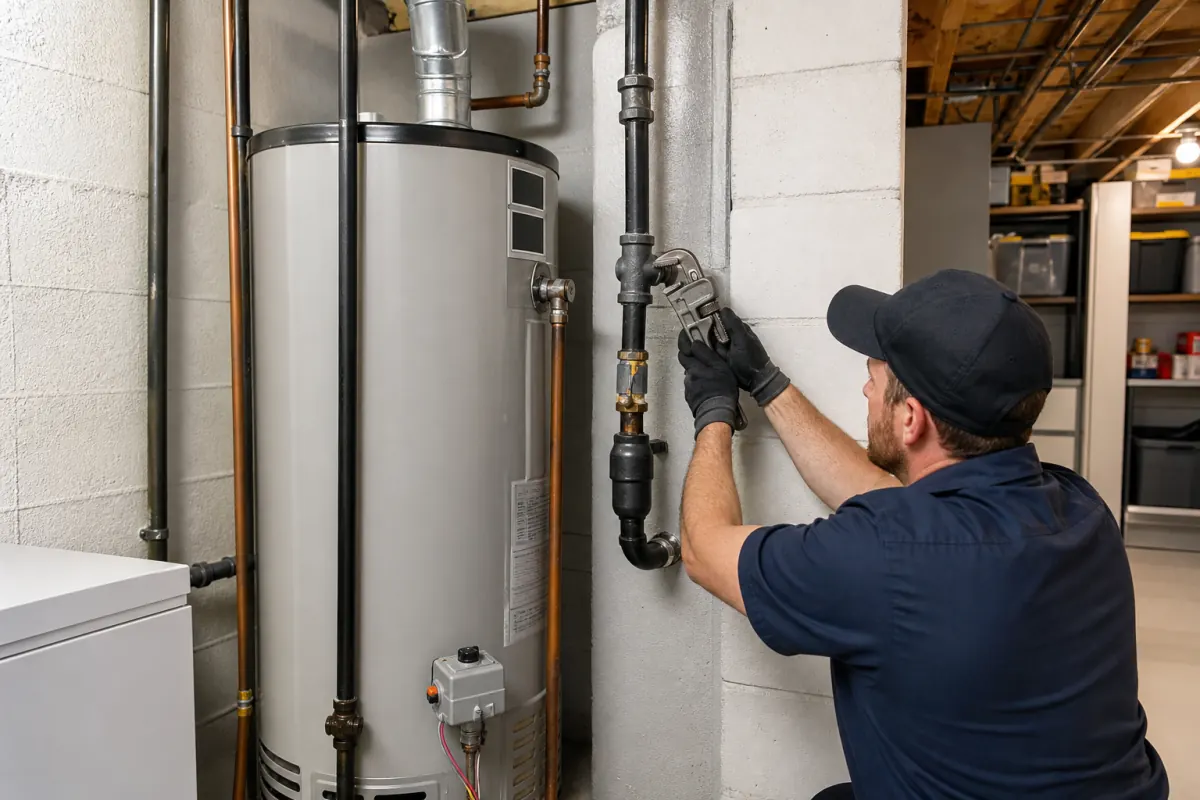
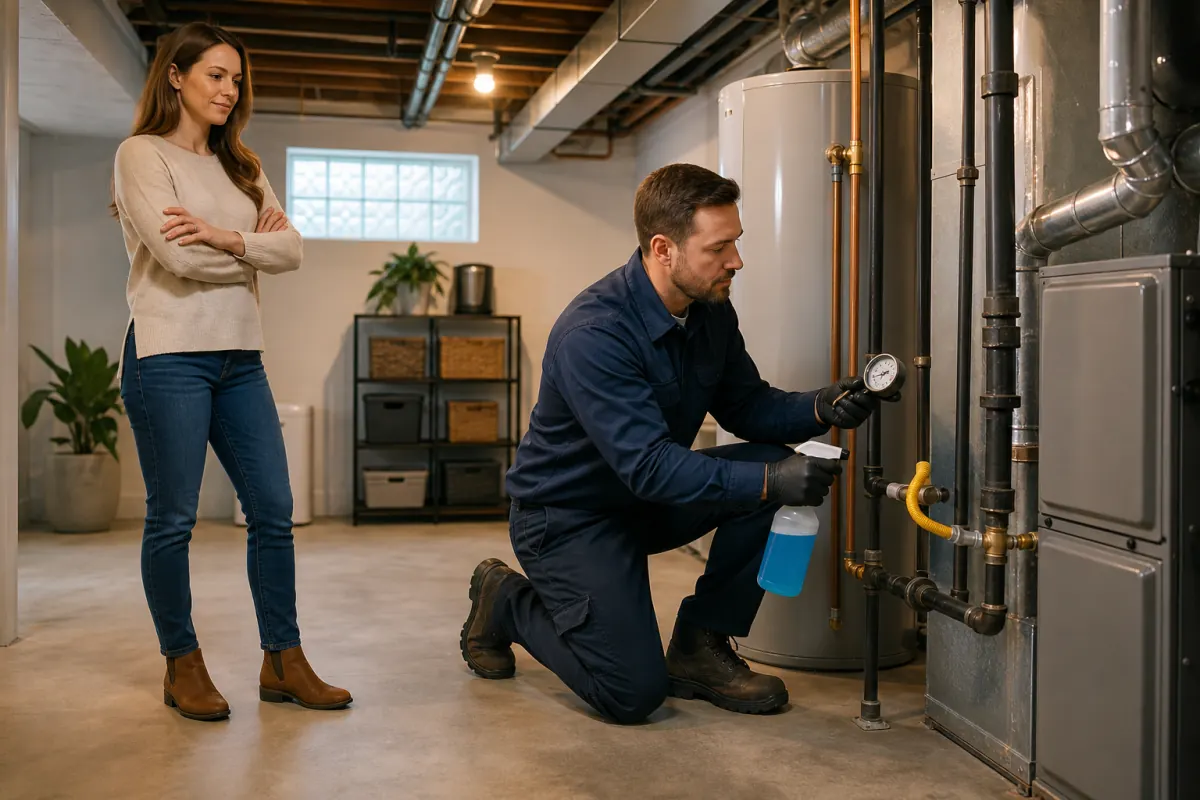
Pick a quiet afternoon and follow your gas piping with a flashlight, from the meter inward. You'll usually find exposed runs in the basement, the utility room, behind the dryer, near the water heater, and at the furnace. You're looking for the obvious: pipe that's been bumped or bent, fittings where something's hanging or pulling on the line, and that ribbed stainless tubing (called CSST) being used as a handhold or a place to hang storage. Pipe should be supported, not sagging, and nothing heavy should be resting on it.
Also notice the flexible metal connector behind appliances, the flex connector. It should have a gentle curve, not a sharp kink, and shouldn't be stretched tight. If you slid the stove or dryer out to clean and pushed it back hard, that connector can get crushed. Note anything that looks wrong and move on. You're building a list, not making repairs.
2. Rust spots, paint flaking, and the "is this still safe?" test
Surface rust on black-iron pipe is common, especially in a damp basement, and a light dusting of orange usually isn't an emergency. What you're watching for is pitting (rough, flaking metal where the surface is actually eating away), heavy scale at threaded joints, and rust right where the pipe meets a fitting. Run a finger over a suspect spot, gently: smooth discoloration is one thing, crumbly or pitted metal is another. If paint is peeling and flaking off in sheets near a joint, that joint deserves a closer look from someone licensed.
We dig into the details in our guide on whether rust on a gas pipe is dangerous, but the short version: light surface rust, keep an eye on it; deep pitting or rust at a connection, get it inspected. Never sand, wire-brush aggressively, or repaint a gas pipe to "fix" rust yourself, because that can hide the very problem an inspector needs to see.
3. Shutoff valves: exercise them or they seize
Every gas appliance should have its own shutoff valve nearby, and there's a main valve at the meter. The problem is that a valve sitting untouched for ten years can corrode into place, which is exactly the wrong time to discover it (when you need to shut the gas off fast). Once a year, find each appliance valve and confirm you can see it and reach it. If it's buried behind boxes in a Naperville basement or a packed Oak Park utility closet, clear the path now.
For appliance valves, you can gently turn the handle a quarter-turn and back to keep it from seizing, then leave it in the "on" position (handle in line with the pipe). If a valve is stiff, frozen, or weeps when you move it, stop and have it looked at. The main valve at the meter is best left to the utility or a licensed pro. The goal isn't to shut things down, it's to know everything moves before an emergency forces the question.
4. Drip-leg drain check (and why nobody does it)
Here's the maintenance step almost no homeowner knows about. Near your furnace or water heater, look for a short vertical capped stub of pipe pointing down off the gas line, just before it enters the appliance. That's the drip leg, also called a sediment trap. Its whole job is to catch moisture, rust flakes, and debris before they reach the appliance's valve, where they cause rough flames, pilot trouble, and premature wear.
You don't have to open it yourself, and honestly most folks shouldn't, because reopening it correctly and leak-checking the cap matters. But you can confirm it exists, that it's not cracked, and that nothing is leaning on it. If your home is older and you can't find a drip leg at all, mention that to your technician; missing sediment traps are common in homes from a few decades back, and adding one is a worthwhile upgrade. When a pro drains it, they're emptying out the grit that's been collecting since the day it was installed.
5. When to schedule a pro inspection (and what to ask for)
Some things are simply a licensed technician's job. Book a professional inspection once a year if your home is older, if you've added or moved an appliance, or any year your walk-down turns up pitted rust, a stiff valve, a damaged connector, or a flame that burns yellow instead of crisp blue. It's also smart before you buy or sell, and any time you've had work done by someone you're not sure was licensed.
When you call, ask for a few specific things: a full leak check on accessible piping, a look at every shutoff valve and connector, a drip-leg service where one exists, and confirmation that any newer ribbed CSST tubing is properly bonded and grounded (an electrical-safety detail that protects against nearby lightning strikes). A good tech will also confirm whether any planned work needs a permit, which varies across Cook, DuPage, Lake, and Will counties, and whether digging means a JULIE (811) locate first. To make the visit smooth, our walkthrough on preparing for a gas line inspection covers what to clear and have ready.
6. Watch your flames and your bills
Your appliances tell you a lot for free. A healthy burner flame is steady and mostly blue; lazy, flickering yellow or orange flames, soot around a burner, or a pilot that won't stay lit can all point to a fuel or airflow problem worth a professional look. A gas bill that jumps with no change in usage can be another quiet signal. None of these alone means a leak, but together with anything from your walk-down, they're a good reason to pick up the phone rather than wait.
7. Keep a simple maintenance record
Last one, and it's easy. Jot down the date you did your walk-down, anything you noticed, and when a pro last inspected the system. A note on your phone is plenty. Over a few years this record makes patterns obvious (a rust spot that's slowly growing, a valve that's getting stiffer) and it's genuinely useful when you sell, because buyers and inspectors love seeing a maintained system.
What this routine is, and isn't
This yearly habit is about catching problems early, not doing the repair. Tightening fittings, opening drip legs, replacing connectors, and anything involving the meter belong with a licensed, insured technician. Doing those wrong can turn a small issue into a dangerous one, and in Illinois, gas work often requires permits and proper procedure for a reason.
If your walk-down turned up pitted rust, a seized valve, a kinked connector, or a flame that won't burn blue, that's your cue to bring in a licensed pro rather than wait for next year.
When you're ready, Midwest Gas Pipe Repair handles licensed, insured gas line repair and installation across the Chicago area, from Evanston and Schaumburg to Joliet, Hinsdale, and Arlington Heights, with 24/7 emergency response. Costs vary with the type of repair, the pipe, and how accessible the line is, so expect a range rather than a flat figure, and always confirm scope before work begins. Get a written quote — every home is different.
Frequently Asked Questions
How often should I do gas line maintenance?
A homeowner walk-down once a year is the right rhythm: look over exposed pipe, check that shutoff valves move, and note anything that looks off. Pair that with a licensed professional inspection annually if your home is older or your walk-down turns up rust, a stiff valve, or a damaged connector.
What should I do first if I smell gas?
Leave the house right away, don't flip switches or light anything, and from outside or a neighbor's call 911 or your utility, Peoples Gas in Chicago or Nicor in most suburbs. Any inspection or repair on your private gas lines happens only after the home has been cleared as safe.
Is surface rust on my gas pipe dangerous?
Light surface rust on black-iron pipe is common in damp basements and usually isn't urgent. The warning signs are deep pitting, flaking metal, and rust right at a threaded joint or fitting. Don't sand or repaint it yourself, since that can hide the problem; have a licensed pro evaluate anything beyond light discoloration.
What is a drip leg and do I need to drain it?
A drip leg, or sediment trap, is the short capped stub of pipe near your furnace or water heater that catches moisture and debris before they reach the appliance valve. You can confirm it exists and isn't damaged, but draining and resealing it correctly, and leak-checking the cap, is best left to a technician during your yearly service.
Can I work on my own gas lines in Illinois?
Visual checks and gently exercising appliance shutoff valves are fine for a homeowner. Actual repairs, connector replacement, opening drip legs, and any work at the meter should go to a licensed, insured pro. In Cook, DuPage, Lake, and Will counties this work often requires a permit, and digging requires a JULIE (811) locate first.
How much does a gas line repair cost in the Chicago area?
It depends on the type of repair, the pipe involved, and how accessible the line is, so costs are best given as a range after an inspection rather than a single number. Repairs start from around $199 for straightforward jobs and rise from there. Get a written quote — every home is different.
Need a licensed gas pro in Chicagoland?
Licensed, insured, 24/7. Call now or request a callback and a dispatcher will route your job.

Related Reads