Don't panic, and don't rush to back out. A flagged gas leak is one of the most common — and most fixable — inspection findings. Most are minor fittings tightened in under an hour. The smart move is a real diagnosis within your inspection window so you can negotiate from facts, not fear.
🚨 Gas Problem in Chicago? Talk to a Licensed Pro
24/7 dispatch across Chicago and the suburbs. If you smell gas right now, leave first and call 911 or your gas utility.
Your inspector handed you a report with three scary words highlighted: "possible gas leak." Your stomach dropped, and now you're wondering if this house is a money pit you should walk away from. Take a breath. After hundreds of inspection calls across Chicago and the suburbs, we can tell you that most flagged gas leaks are small, well understood, and fixable for far less than buyers fear. The danger isn't usually the leak itself — it's making a six-figure decision without knowing what you're actually dealing with.
First, the only thing that matters right now: if anyone smells a strong, persistent rotten-egg odor (that's mercaptan, the scent added to natural gas so you can detect it), hears hissing near a line, or feels lightheaded — leave the house immediately and call 911 or the utility from outside. For Peoples Gas in the city or Nicor in the suburbs, report it before anyone goes back in. A private-side repair like ours always happens after the area is confirmed safe.
What home inspectors actually detect vs. what they miss
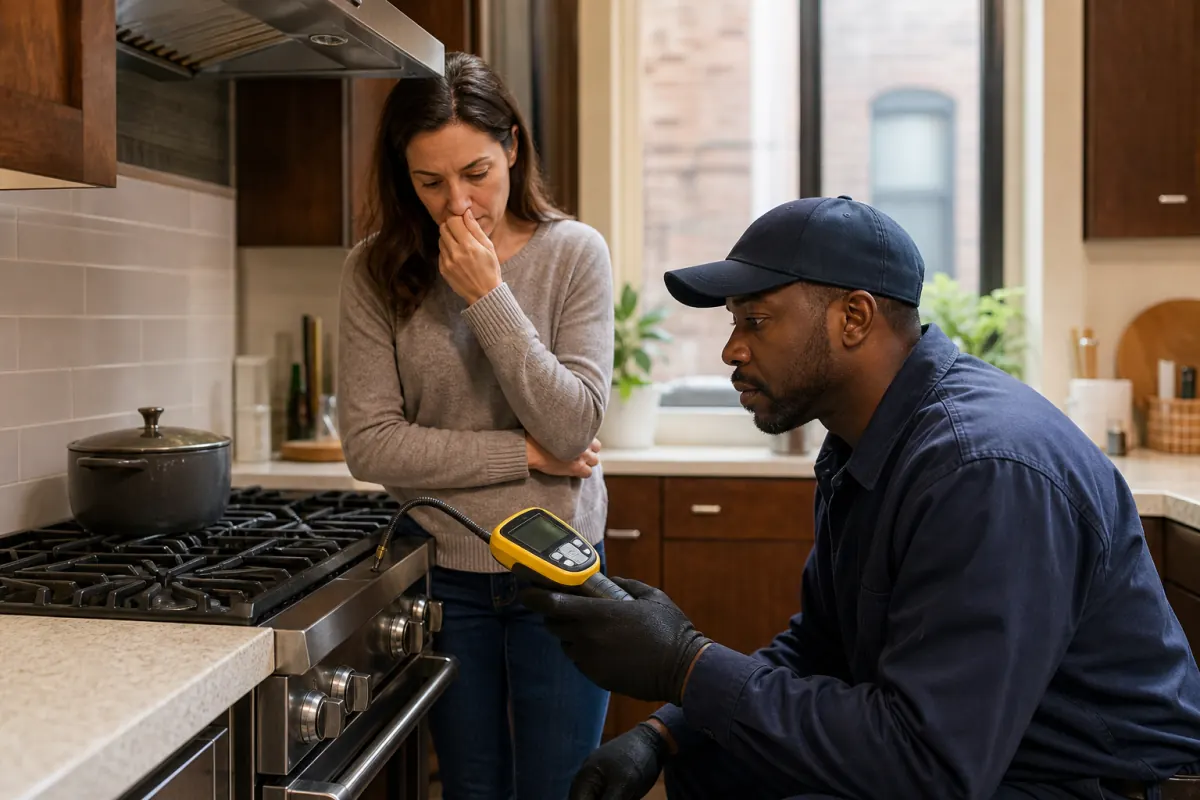
A general home inspector is a generalist, not a licensed gas technician. Most carry a handheld combustible-gas "sniffer" and use it to wave over visible piping, the furnace, the water heater, and the range. That tool is genuinely useful — it catches the leaks that matter most, the ones near appliances and accessible joints. But it has real limits, and understanding them changes how you read that report.
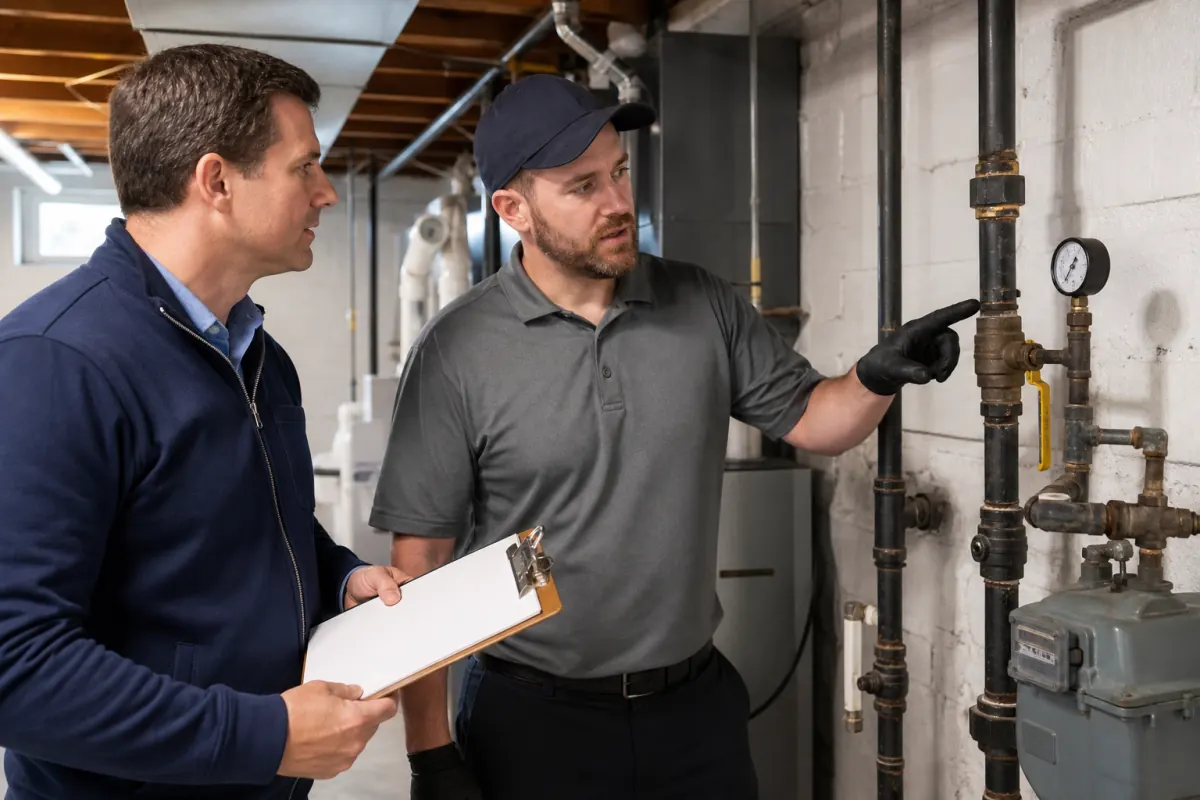
Here's what an inspector typically catches: a loose appliance connector behind the stove or dryer, a weeping joint at the water heater, an aging shut-off valve, or a fitting that never got tightened properly after a past repair. Here's what they usually can't assess: lines buried inside finished walls, gas piping running under a slab or in the yard, the true condition of older black-iron pipe behind drywall, or whether a leak is a pinhole or a system-wide problem. They also can't legally pressure-test your system or pull a permit. So a report that says "gas detected at furnace connection" is a flag to investigate — not a verdict on the whole house.
Three leak severities — tighten-the-fitting vs. re-pipe-the-basement
Not all flagged leaks are equal. When a licensed tech follows up, findings almost always sort into one of three buckets:
- Minor — tighten or replace a fitting. A loose appliance connector, a tired flare fitting, or a valve that needs new packing. This is the most common outcome by far. Often it's a 30-to-60-minute fix with a fresh joint compound seal and a leak test to confirm zero loss.
- Moderate — a component swap. A corroded shut-off valve, a missing drip leg (the small downward pipe stub that catches moisture and debris before it reaches an appliance), or a failed section of flexible connector. Still routine work, just with a part or two and a bit more labor.
- Major — re-pipe a run or replace older material. Heavily corroded black-iron pipe, improperly installed CSST (corrugated stainless steel tubing — the yellow or black flexible line common in newer builds, which has specific bonding and grounding rules in Illinois), or multiple failing joints across a basement run. This is the rare case, and even then it's a defined, quotable job — not a reason to assume the house is unsafe to own.
The point: "gas leak" on a report could mean a five-dollar part or a basement re-pipe, and you cannot negotiate intelligently until you know which. That's the gap a real diagnosis closes.
How to get a real diagnosis in 48 hours during your inspection window
Your 5-to-10-day inspection window is tight, so move fast. The step that turns a vague flag into a decision is a licensed tech performing professional gas leak detection — typically a calibrated electronic sniff, a soap-bubble test on suspect joints, and where appropriate a pressure or manometer test on the line. That tells you exactly where the leak is, how bad it is, and what it takes to fix it.
We dispatch licensed pros across the metro — Naperville, Oak Park, Evanston, Schaumburg, Joliet, and the rest of Cook, DuPage, Lake, and Will County — usually same-day, because we know buyers are racing a contract clock. The deliverable you want from that visit is a written diagnosis and a repair quote you can hand to your agent and the seller. If you want to see how a flagged line gets resolved end to end, we walk through fixing a gas line flagged at inspection in a separate guide. With a real number in hand, the question stops being "should I back out?" and becomes "who's paying for a known, fixable repair?"
Who pays — buyer, seller, or split (and how to negotiate it)
In Illinois real estate, a safety-related defect flagged at inspection is squarely on the negotiating table, and gas typically gets taken seriously by both sides. Your leverage depends entirely on having that written diagnosis. Common outcomes we see:
- Seller repairs before closing. Best when the fix is moderate-to-major; you get a permitted repair done by a licensed pro of your approval, with documentation at closing.
- Seller credit at closing. You take a dollar credit and handle the repair yourself after you own the home. Buyers often prefer this for minor fixes so they control who does the work.
- Split the cost. Common when the leak is genuinely small or the home is otherwise priced aggressively.
On cost, repairs span a wide range depending on which bucket above you land in — a minor fitting is at the low end, a basement re-pipe at the high end. We always quote ranges because access, pipe material, and permit requirements differ house to house. Get a written quote — every house is different.
What we put in writing so your lender and insurance accept the fix
A repair only protects your purchase if it's documented the way lenders and insurers expect. A handshake fix from an unlicensed handyman can stall your closing or void coverage later. Here's what a proper paper trail includes:
- A licensed, insured invoice describing the exact work, the components replaced, and a post-repair leak test confirming zero loss.
- A permit and inspection where required. Cook, DuPage, Lake, and Will municipalities vary, but gas work often needs a village or city permit and a final sign-off — and your lender may ask to see it.
- JULIE / 811 locates on any work involving buried or yard lines, so digging is documented and code-compliant.
- A clearance letter or re-inspection note your agent can add to the file at closing.
The buyers who sail through closing aren't the ones with zero issues — they're the ones who turned a scary flag into a documented, permitted, paid-for repair.
That documentation matters beyond the closing table, too. If a future claim ever touches the gas system, having a licensed repair on record is exactly what carriers look for — we cover that in our guide on whether insurance covers the repair.
So — should you back out? Almost never because of a flagged gas leak alone. The right move is to get a licensed diagnosis fast, learn which of the three buckets you're in, and negotiate from a written number. If your inspection window is ticking in Naperville, Oak Park, or anywhere across Chicagoland, call (708) 381-2959 and we'll get a licensed pro out to give you the facts you need before your deadline.
Frequently Asked Questions
Should I back out of a house because the inspector found a gas leak?
Rarely. Most flagged gas leaks are minor fittings fixed in under an hour, and even larger repairs are defined, quotable jobs. The smart move is a licensed diagnosis during your inspection window so you can negotiate a repair or credit instead of walking away from a home you want.
How fast can I get a gas line checked during my inspection window?
Usually same-day across Chicago and the suburbs. With a 5-to-10-day window, call right after you get the report. A licensed tech runs an electronic and soap-bubble leak test, locates the issue, and gives you a written diagnosis and quote you can hand to your agent and the seller.
Who pays for a gas leak repair found during a home inspection?
It's negotiable in Illinois. Common outcomes are the seller repairing before closing, giving a credit at closing, or splitting the cost. Your leverage comes from a written diagnosis showing exactly how serious the leak is and what the repair will run.
How much does it cost to fix a gas leak flagged at inspection?
It ranges widely. A loose fitting or connector is at the low end and often a quick fix, while re-piping a corroded basement run sits at the high end. Cost depends on pipe material, access, and permit requirements. Get a written quote — every house is different.
Do I need a permit to repair a gas line in Cook or DuPage County?
Often, yes. Municipalities across Cook, DuPage, Lake, and Will County vary, but gas work commonly requires a village or city permit and a final inspection. A licensed pro pulls the permit, and that documentation is exactly what your lender and insurer may want to see.
What's the difference between what a home inspector finds and a real gas diagnosis?
A general inspector waves a handheld sniffer over visible lines and appliances — useful, but they can't pressure-test the system, assess pipe inside walls or underground, or pull permits. A licensed tech performs calibrated leak detection and pressure testing to tell you the exact location, severity, and fix.
Need a licensed gas pro in Chicagoland?
Licensed, insured, 24/7. Call now or request a callback and a dispatcher will route your job.