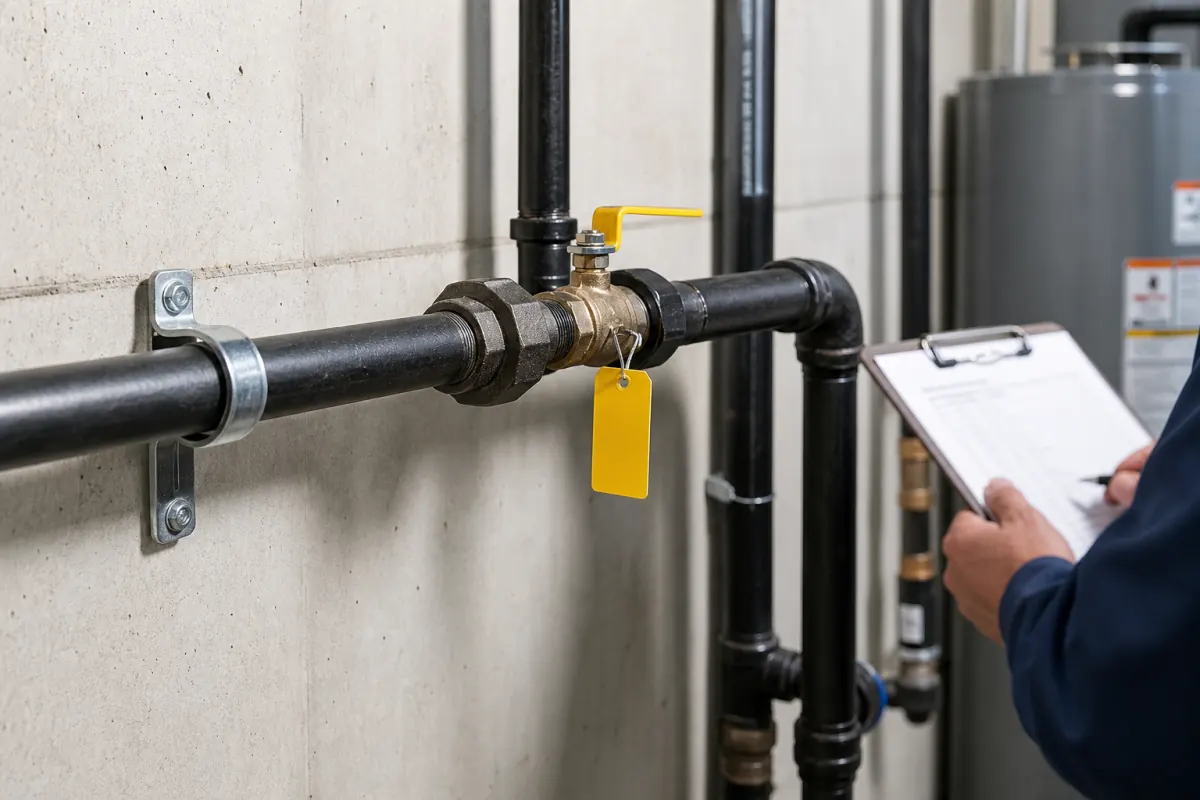
Both black iron pipe and yellow flex (CSST) are code-legal in Chicago and the suburbs, and both can run your home safely for decades. Black iron is the tough, time-tested classic; CSST is faster to route through finished walls. The right pick depends on your house, your project, and how it gets installed.
The 30-second answer: both are allowed here
If you are standing in your basement staring at two kinds of gas pipe and wondering which one is "right," here is the reassuring news: in Chicago and the surrounding suburbs, both black iron pipe and yellow flexible gas line are code-legal when installed correctly. Neither one is a shortcut or a knockoff. They are simply two proven ways to carry natural gas from your meter to your furnace, water heater, range, or dryer.
That yellow flexible tubing has a real name — CSST, short for corrugated stainless steel tubing. The rigid dark pipe most of us picture when we think "gas line" is black iron (sometimes called black steel). Both can deliver plenty of gas — measured in BTU, the unit that describes how much heat an appliance can pull — and both pass inspection across Cook, DuPage, Lake, and Will County when the permit and the workmanship are right.
So this is not a safe-versus-unsafe question. It is a fit question: which pipe fits your house, your remodel, and your budget. Let's walk through each one like we would at your kitchen table.
One thing first, because it matters more than any pipe choice: if you ever smell that rotten-egg odor (that's mercaptan, the scent added to natural gas so you can detect a leak), do not investigate the pipe. Leave the house, then call 911 or your utility — Peoples Gas in the city, Nicor in most suburbs — from outside. Private-side repairs come after the area is confirmed safe, never before.
Black iron: the tough classic in a Chicago basement
Black iron pipe is what most older Chicago homes were plumbed with, and there is a good reason it has stuck around. It is rigid, thick-walled steel that shrugs off bumps, leaning ladders, and the occasional stored bike handlebar. In a working basement or utility room — exactly where gas lines tend to live — that ruggedness is a genuine advantage.
The pros are straightforward. Black iron is extremely durable, it handles being exposed without much worry, and it has a very long service life. A properly installed, dry black iron line in a typical Chicago basement can easily last 40 to 50 years or more. It also pairs naturally with the fittings most homeowners already recognize, like a sediment trap (sometimes called a drip leg) — that little capped stub below an appliance that catches debris and moisture before they reach the burner.
The cons are mostly about labor and conditions. Every joint is threaded and sealed by hand, so a long run with many turns takes time and skill. Black iron can also rust if it sits in a damp or flood-prone basement, and water down here is not rare in older Chicago and inner-suburb homes. Surface rust is usually cosmetic; the concern is years of moisture working at a threaded joint. Good installers route it to stay dry and inspect the joints — which is part of why this work belongs with licensed pros rather than guesswork.
Yellow flex (CSST): fast to route, and the bonding rule everyone misses
CSST — that flexible yellow (or sometimes black-jacketed) tubing — changed how gas gets run inside finished homes. Instead of threading a rigid pipe around every corner, an installer can snake CSST through joist bays and wall cavities much like flexible wiring, using far fewer fittings. For a remodel where you would rather not open up every wall, that flexibility is the headline benefit.
The pros: it installs quickly, it bends around obstacles, and fewer joints can mean fewer places to ever fuss over. It is a strong choice for additions, finished basements, and appliance moves in homes around Naperville, Evanston, and Schaumburg where tearing into drywall is the part nobody wants.
Now the part too many people miss: bonding. Because CSST is thin-walled stainless steel, it must be electrically bonded and grounded to protect against damage from a nearby lightning strike — and Chicago-area storms are no joke. This is not optional and it is not a detail you can eyeball. A proper bonding clamp and conductor, sized and connected to your home's grounding system, is required by code, and a missed or sloppy bond is one of the most common things that fails an inspection. Older "first-generation" CSST is more sensitive here than newer arc-resistant jacketed products. If your home already has yellow flex line and you have never heard the word "bonding," that alone is worth a professional look. You can read more about what local rules require in our guide to Chicago's gas piping code.
Cost, install time, and remodel-friendliness compared
Homeowners always want the number, so let's talk honestly about cost — in ranges, because real prices depend on your house. By the foot, the bare materials for black iron and CSST are often in the same ballpark; CSST tubing can cost a bit more per foot, while black iron uses more fittings and more labor on a winding run.
Where the real difference shows up is total install time. On a long, twisty path through finished space, CSST can go in noticeably faster because the installer is not stopping to thread and seal a joint at every turn. On a short, straight run to a single appliance, black iron is quick and economical. So the "cheaper" pipe genuinely flips depending on the job.
For remodel-friendliness, CSST usually wins for routing through closed walls, while black iron wins for exposed runs that need to take abuse. A practical example: relocating a gas dryer in a finished Oak Park basement often leans CSST; replumbing an exposed mechanical room in Arlington Heights or Joliet often leans black iron. Either way, anything that crosses into your yard means a JULIE / 811 dig-locate before a shovel touches the ground, and most of this work needs a permit in your municipality. Our gas line installation visits start with a real look at your space, and repairs start from $199. Get a written quote — every home is different.
What we put in our own homes — and why
People ask us the fair question: forget the brochure, what would you run in your own house? The honest answer is "it depends," and that is not a dodge.
For exposed mechanical runs in a basement or garage — where the pipe might get knocked, leaned on, or live near moisture — we lean toward black iron for its sheer toughness and long life. For threading new gas to a kitchen island, a finished basement, or an addition without gutting walls, we reach for properly bonded CSST and the right flex connector at the appliance. Many of the homes we service around Hinsdale, Glenview, and Bolingbrook end up with a sensible mix of both.
The pipe matters less than the hands and the permit behind it. A well-installed, bonded, inspected line of either type will quietly do its job for decades.
One last word for the DIY-curious: gas work in Illinois is not a weekend project, and the rules about who may legally do it are strict. We cover that fully in our guide on whether you can install your own gas line. If you would rather have a licensed, insured pro handle it, we are mobile across Chicago and the suburbs 24/7, usually on-site in 30 to 60 minutes for emergencies. Call (708) 381-2959 and we will help you choose the right pipe for your home — and install it right.
Frequently Asked Questions
Is yellow CSST gas line safe, or should I be worried it's in my house?
CSST is code-legal and safe in the Chicago area when it's installed correctly — which critically includes proper electrical bonding and grounding to protect against lightning. If you have yellow flex line and have never heard it was bonded, have a licensed pro verify it. Newer arc-resistant jacketed CSST is more robust than older first-generation tubing.
Which lasts longer, black iron or CSST?
Black iron has the longer track record — a properly installed, dry line in a Chicago basement can last 40 to 50 years or more. CSST is newer but, when correctly installed and bonded, is also built for a long service life. The bigger lifespan factor for black iron is keeping joints dry, since standing water in older basements can work at the threads over time.
Is one cheaper than the other?
It depends on the run. Materials are often in the same ballpark per foot, but CSST usually installs faster on long, twisty paths through finished walls, while black iron is quick and economical on short, straight, exposed runs. The cheaper option genuinely flips by project. Get a written quote — every home is different.
Can I install gas pipe myself in Illinois?
Gas line work in Illinois is tightly regulated and generally must be done by a licensed professional, with a permit and inspection in most municipalities. Mistakes carry real safety and code consequences. See our separate guide on whether you can install your own gas line for the full picture before you consider DIY.
What should I do if I smell gas before any of this matters?
Leave the house immediately — don't flip switches or hunt for the source — then call 911 or your utility (Peoples Gas in the city, Nicor in most suburbs) from outside or a neighbor's. That rotten-egg smell is mercaptan, added so you can detect a leak. Any private-side pipe work happens only after the area is confirmed safe.
Do I need a permit and JULIE/811 to add a gas line?
For most gas line installations you'll need a permit from your municipality in Cook, DuPage, Lake, or Will County, and any work that goes underground in your yard requires a JULIE / 811 dig-locate first. A licensed installer handles the permit and the locate as part of the job.
Need a licensed gas pro in Chicagoland?
Licensed, insured, 24/7. Call now or request a callback and a dispatcher will route your job.