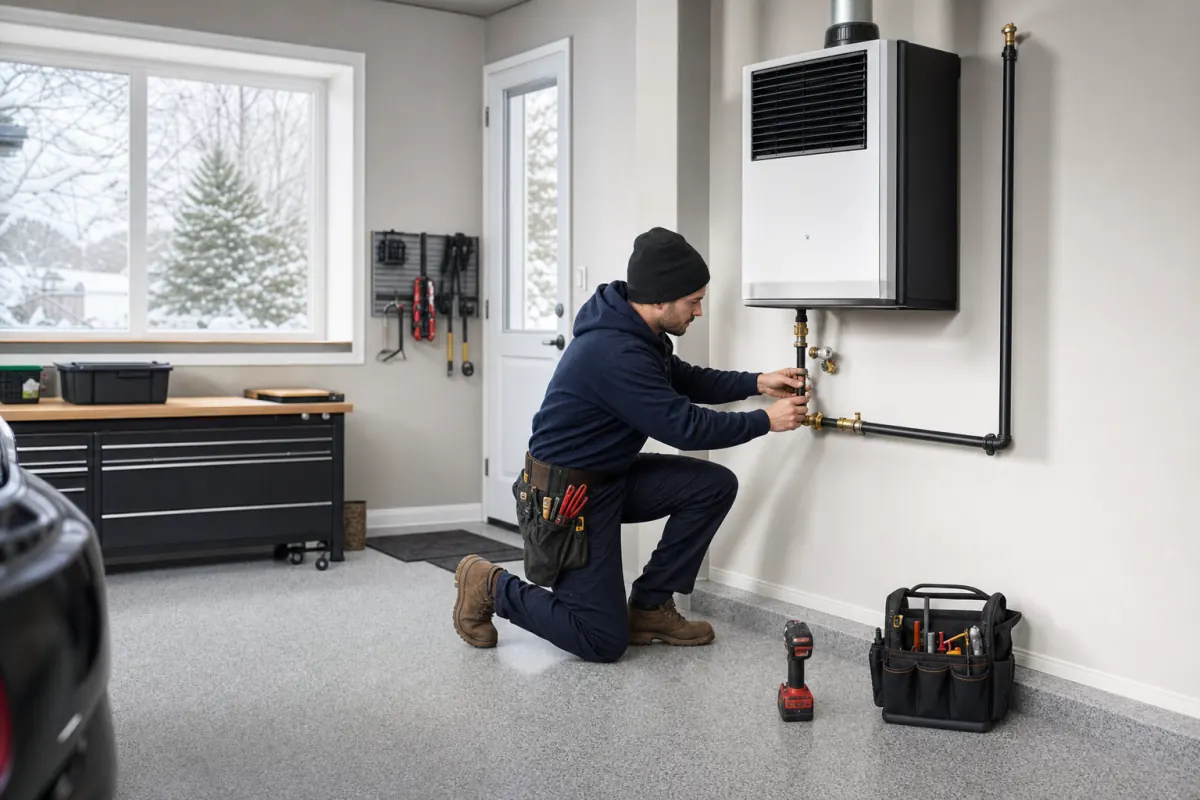
In most of Illinois, a homeowner can legally work on the gas line in a single-family home they own and live in, but only with a permit and a passed inspection. In Chicago, the rules are tighter and licensed work is usually required. Either way, the line must be inspected before gas flows.
🚨 Gas Problem in Chicago? Talk to a Licensed Pro
24/7 dispatch across Chicago and the suburbs. If you smell gas right now, leave first and call 911 or your gas utility.
The Illinois plumbing-license rule (and the exemption homeowners often miss)
Here's the short version: gas piping in Illinois is regulated work, and the people who run it for a living are licensed. The Illinois Plumbing License Law generally requires a licensed plumber for plumbing and gas-piping work, which is why your contractor pulls a license number every time. That's the rule most DIY-curious homeowners run into first.
But there's an exemption a lot of folks overlook. Illinois law has long carved out a "homeowner exception" for a person doing plumbing or gas work on a single-family home they actually own and occupy. In plain English: if it's your house and you live in it (not a rental, not a flip, not a two-flat you don't live in), the state generally lets you do the work yourself.
That exemption is not a free pass, though. It almost always still requires a permit from your local building department, and the finished work still has to pass inspection just like a licensed pro's would. The exemption changes who can hold the wrench; it does not change the code the line has to meet. So "can I install my own gas line in Illinois?" usually answers as: yes, on your own home, with a permit, inspected, and built to code.
Chicago vs. suburb permit rules side by side
Where your house sits changes the answer a lot. The city and the collar suburbs do not play by the same book.
In the City of Chicago, the rules are stricter than the statewide norm. Chicago runs its own plumbing code and is historically protective about who touches gas and plumbing inside city limits. In practice, gas-piping permits in Chicago are usually pulled by a licensed plumber, and homeowners often cannot self-permit gas work the way a suburban homeowner can. If you want the full picture of what the city expects materials- and inspection-wise, we break it down in Chicago's gas piping code requirements.
In the suburbs, each municipality runs its own permit desk, so a homeowner in Naperville, Oak Park, Evanston, or Schaumburg should call their village or city building department before buying a single fitting. Many Cook, DuPage, Lake, and Will County towns will issue a gas permit to an owner-occupant, sometimes after a short homeowner-affidavit or a basic competency conversation. Others quietly steer all gas work to licensed contractors. The fee, the inspection schedule, and the paperwork differ town to town, even between neighbors like Oak Park and Berwyn.
One thing is constant everywhere: before any digging for an exterior or underground line, you call JULIE at 811 to locate buried utilities. That's free, it's the law, and it keeps a shovel from finding a Peoples Gas or Nicor main the hard way.
What an inspector requires you to prove if you self-install
An inspector isn't there to admire your fittings. They're there to confirm the line is safe and meets code. Whether you're a homeowner or a pro, expect to demonstrate the same things:
- A pressure (air) test. The new piping is capped and charged with air to a set pressure, then watched on a gauge to prove it holds with no drop. A falling needle means a leak, and that fails on the spot.
- Correct, approved materials. That means proper black iron or approved CSST (corrugated stainless steel tubing), the right pipe sizing for your appliance load, and approved joint compound rated for gas, not random hardware-store tape.
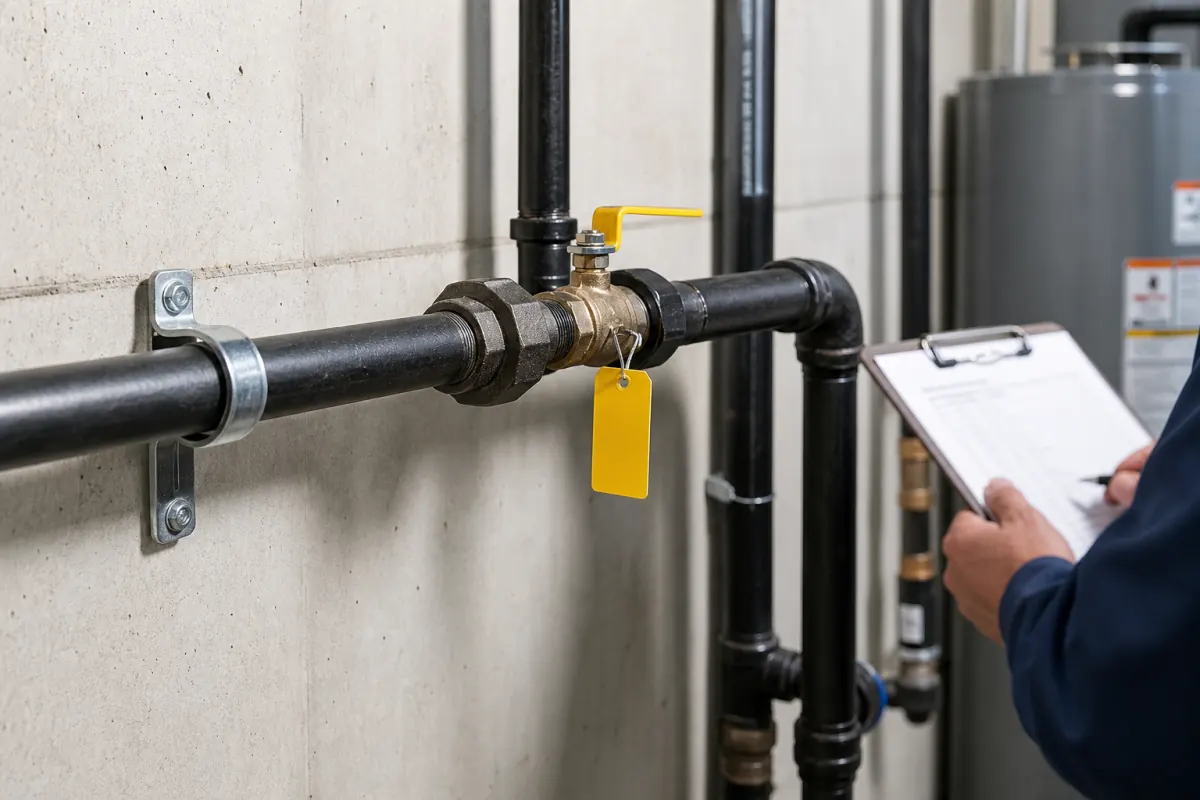
- Required safety details. Inspectors look for a sediment trap (the "drip leg") at appliances, an accessible shutoff valve, and a proper appliance connector where flexible connection is allowed, rather than a connector buried inside a wall.
- Proper support and protection. Pipe has to be strapped and run so it can't be crushed, and protected where it could be hit.
The work is also inspected before it's covered. If you wall it up or bury it before the inspector signs off, expect to open it back up. Plan the inspection into your timeline, not after it.
The jobs where homeowners actually pass inspection (and the ones they don't)
Some gas projects are genuinely homeowner-friendly. Others go sideways fast. After years of suburban Chicago calls, here's the honest split.
Jobs homeowners more often pull off: a short, straight extension to a new gas range or dryer in an open basement, swapping an appliance connector, or adding a shutoff where everything is accessible and easy to test. Simple runs, good access, easy to pressure-test.
Jobs that tend to fail or stall: long runs with undersized pipe (the most common mistake we see), gas lines fished through finished walls and ceilings, exterior or underground lines to a pool heater or detached garage, and anything that touches the meter or utility side. A detached-structure heater line in particular trips people up; we walk through that scenario in garage heater gas line permits.
And one safety line that overrides everything: if you smell gas right now — that rotten-egg odor is mercaptan, added so you can detect a leak — don't troubleshoot it. Leave the house, and from somewhere safe call 911 or your gas utility (Peoples Gas in the city, Nicor in the suburbs) first. Private-side repair happens after the immediate danger is handled, never before.
The cheapest gas job is the one that passes the first inspection. The expensive one is the line you finished, walled up, and have to tear out.
Insurance and resale consequences of an unpermitted line
Say you skip the permit and the line works fine for years. The bill still comes due in two places: your insurance and your closing.
Insurance. Homeowners policies generally expect work to be done to code and permitted. If an unpermitted gas line is ever tied to a fire or a leak, an insurer can question or deny the claim, and that's a far bigger number than any permit fee. You're trading a small, known cost for a large, unknown one.
Resale. Buyers' inspectors flag gas work, and many suburbs require a point-of-sale or transfer inspection before you can close. Unpermitted gas piping can stall a sale, force you to retroactively permit and correct the work on the buyer's timeline, or become a credit you hand over at the table. What felt like a weekend savings becomes a deduction from your sale price.
On cost: a straightforward interior appliance line is on the lower end, while long runs, underground work, repiping, or anything needing wall repair lands higher, and permit fees vary by town. We always quote in ranges because access, distance, pipe sizing, and your municipality all move the number. Get a written quote — every house is different.
If you'd rather have it permitted, tested, and signed off the first time, our licensed team handles gas line installation across Chicago and the suburbs, from Cicero to Hinsdale to Bolingbrook, with the JULIE locate and the inspection built into the job. And if you ever smell gas, get out first and call 911 or your utility — then call us at (708) 381-2959 for the repair.
Frequently Asked Questions
Can I install my own gas line in Illinois?
In most of Illinois, yes, on a single-family home you own and live in, thanks to the homeowner exemption to the plumbing-license law. You still need a permit from your local building department and the line must pass inspection. In Chicago the rules are stricter and gas work is usually done by a licensed plumber.
Do I need a permit to run a gas line in the Chicago suburbs?
Almost always, yes. Each suburb runs its own permit desk, so a homeowner in Naperville, Oak Park, Evanston, or Schaumburg should call the village or city building department first. Many Cook, DuPage, Lake, and Will County towns will issue a homeowner gas permit; others require a licensed contractor. Before any digging, call JULIE at 811.
What does a gas line inspection check?
An inspector verifies a pressure (air) test that holds with no drop, approved materials and correct pipe sizing, a sediment trap or drip leg at appliances, an accessible shutoff valve, and proper support. The work must be inspected before it's covered, so don't wall it up or bury it until it passes.
What happens if my gas line was never permitted?
Two risks. An insurer can question or deny a claim if an unpermitted line is tied to a fire or leak. And at resale, inspectors flag gas work and many suburbs require a transfer inspection, so an unpermitted line can stall the sale or force retroactive permitting and corrections. The permit is cheap insurance.
What should I do if I smell gas?
Leave the house right away. From somewhere safe, call 911 or your gas utility first, Peoples Gas in the city or Nicor in the suburbs. Don't flip switches or hunt for the leak yourself. That rotten-egg smell is mercaptan, an added odorant. Private-side repair happens only after the immediate danger is handled.
How much does a gas line installation cost in the Chicago area?
It depends on the job. A short interior appliance line is on the lower end, while long runs, underground lines, repiping, or work that needs wall repair costs more, and permit fees vary by town. Access, distance, and pipe sizing all move the number. Get a written quote, every house is different.
Need a licensed gas pro in Chicagoland?
Licensed, insured, 24/7. Call now or request a callback and a dispatcher will route your job.