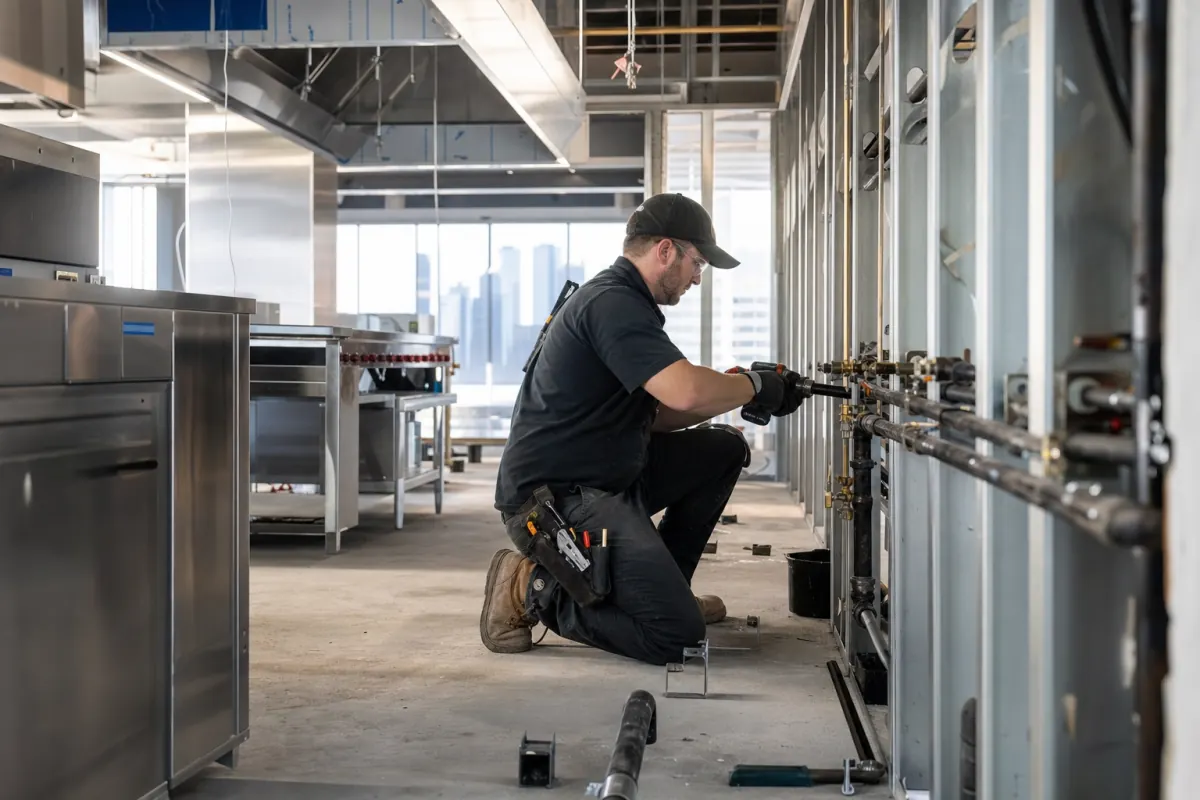
Restaurant Gas Line Installation in Chicago: Equipment Planning, Permits & Downtime Control
Opening, remodeling, or adding restaurant equipment?
Book commercial kitchen gas piping help for ranges, fryers, ovens, make-up air units, water heaters, and inspection-driven restaurant projects.
Restaurant gas line installation is not just another plumbing task. In a working kitchen, the gas piping supports the equipment that makes revenue possible: ranges, fryers, griddles, ovens, charbroilers, steamers, water heaters, boilers, rooftop units, and make-up air systems. If the line is undersized, routed poorly, missing shutoffs, or not ready for inspection, the opening date can slide. If a remodel is already underway, one gas piping mistake can hold up the hood contractor, equipment installer, building inspector, and utility coordination. This guide explains how Chicago restaurant owners and operators should plan a gas line installation so the project stays on schedule, passes inspection, and the kitchen opens on time.
People searching for “restaurant gas line installation Chicago,” “commercial kitchen gas piping near me,” or “gas line for fryer installation Chicago” are usually close to hiring. They may have a new lease, a failed inspection, a new piece of equipment, or a general contractor asking for a gas contractor. The best content for that search should answer practical buyer questions: What information is needed? How is pipe sizing handled? What causes delays? How can downtime be reduced? What should be checked before the technician arrives?
The most important starting point is the equipment schedule. Every gas appliance has a BTU input rating, connection size, clearance requirement, and installation manual. A single new fryer may seem simple, but adding several appliances can change the required pipe size, branch layout, regulator needs, and meter capacity. Restaurant gas piping should be planned from the appliance list backward, not guessed from whatever pipe happens to be nearby.
Start with the appliance list and kitchen layout
Before booking installation, gather the make and model of each appliance, the BTU rating, the connection point, and the desired location. Include existing appliances that will remain in service, not just the new equipment. A line that worked for an older range may not support a larger range plus fryers, ovens, and a water heater. Undersized gas piping can create poor equipment performance, nuisance shutdowns, burner issues, and inspection problems.
The kitchen layout matters too. Gas lines should be routed for safe access, protection from damage, serviceability, and clear shutoff locations. Equipment that moves for cleaning may require approved connectors and restraint systems. Fixed equipment may need a different connection approach. If the equipment is under a hood, coordinate with the hood, fire suppression, and make-up air planning. A restaurant gas line installation is easiest when the installer can see the full picture instead of being called after everything else is already bolted in place.
Permits, inspections, and code-ready installation
Chicago-area restaurant projects often involve multiple parties: owner, landlord, architect, general contractor, health department, building department, equipment vendor, hood contractor, fire suppression company, and utility. Gas piping has to fit into that schedule. Code-ready installation usually includes proper materials, supports, accessible valves, sediment traps where required, pressure testing, labeling, and safe clearances. The exact requirements depend on the property, scope, and local authority having jurisdiction.
The common mistake is treating permits and inspection as paperwork that can wait until the end. They are part of the schedule. If the project needs a pressure test before walls close, before equipment startup, or before gas service is restored, that test needs to be planned. Waiting until opening week can create expensive downtime. A technician who understands commercial gas line installation can help identify likely inspection friction points before they become failed inspection notes.
Downtime control for operating restaurants
For an existing restaurant, downtime can cost more than the pipe work. That is why the installation plan should identify whether work can happen before opening, after close, during a scheduled maintenance window, or in phases. Some projects require full gas shutdown. Others can isolate a branch while keeping unrelated equipment online. The answer depends on the existing piping layout, shutoff locations, and what equipment is being changed.
Communication is a major ranking-to-rent conversion point because restaurant owners want certainty. They need to know whether lunch service is at risk, whether the gas will be off overnight, whether equipment can be staged before the technician arrives, and whether a re-test is needed. A good intake form or phone call should capture the operating hours, desired deadline, equipment list, inspection status, and whether the property has previous failed gas piping notes.
Common restaurant gas piping projects
High-intent projects include adding a fryer bank, replacing a commercial range, installing a pizza oven, connecting a combi oven, adding patio heaters, upgrading a water heater, replacing old shutoff valves, extending a line to a new prep area, and correcting inspection violations after a remodel. These jobs are valuable because they are tied to revenue and deadlines. The owner is not browsing for fun; they need the kitchen to work.
That makes internal linking important. A restaurant installation article should point visitors to the restaurant gas line repair page, commercial gas line repair page, gas pressure testing page, and contact form. It should also reinforce service areas such as Chicago, Joliet, Crest Hill, Lockport, Plainfield, Romeoville, and surrounding suburbs. Those links help search engines understand the site’s topical authority and help visitors move from research to request.
How to make the service visit faster
Take clear photos of the equipment nameplates, current gas piping, meter area, shutoffs, mechanical room, hood line, and the proposed equipment location. Save appliance manuals as PDFs if available. Tell the dispatcher whether the equipment is already on site, whether old equipment must be removed, and whether the work is connected to an inspection or opening date. If the landlord or general contractor controls access, make sure the right person is available to approve route decisions.
Most delays come from missing equipment data, blocked access, unclear scope, undersized existing lines, and surprise inspection requirements. The more complete the intake, the better the technician can prepare fittings, pipe, valves, supports, and testing equipment. For a restaurant owner, that preparation can be the difference between a smooth install and another week of waiting.
Frequently asked questions
What information is needed for restaurant gas line installation?
The appliance make and model, BTU ratings, equipment locations, operating hours, inspection requirements, and photos of existing piping help the technician plan the work accurately.
Can gas piping be installed without closing the restaurant?
Sometimes. If the existing layout allows branch isolation, some work can be phased around service hours. Other projects require a full shutdown and pressure test. The site conditions determine the safest plan.
Why does pipe sizing matter for commercial kitchen equipment?
Undersized gas piping can starve appliances, cause performance issues, and create inspection problems. Proper sizing starts with the full equipment load and distance from the gas source.
Need gas line help now?
Get routed to the right gas line repair, installation, or pressure testing service page and request help today.