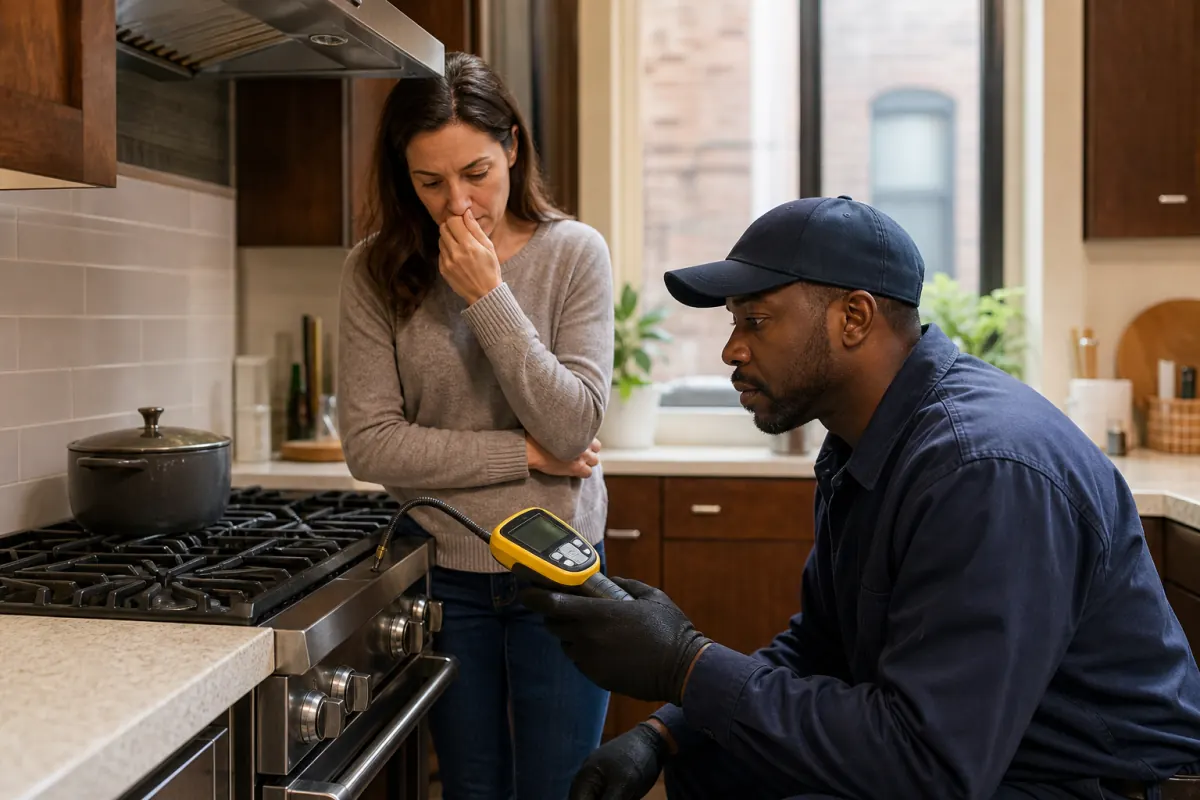
Basement gas smell or hissing near gas pipe? Learn warning signs, safety steps, and when to call for gas leak detection and repair.
Quick Answer
A basement gas leak may show up as rotten-egg odor, hissing, dead pilot lights, rusted pipe, physical symptoms, or a detector alert. If you smell gas indoors, leave immediately and call 911 or the utility. After it is safe, schedule leak detection and private-side repair.
Need licensed gas help now?
If you smell gas right now, leave first and call 911 or the utility. For private-side repair, testing, and documentation, call Midwest Gas Pipe Repair.
Common basement leak points
Chicago-area basements often contain older black iron pipe, water heater branches, furnace lines, unions, valves, and appliance connectors. Any of these can develop leaks from age, movement, corrosion, or improper past work.
What not to do
Do not stay inside searching for the leak, do not flip switches, and do not try to tighten gas fittings yourself while gas odor is present. From outside, follow the gas leak emergency safety steps before arranging private-side detection or repair.
Repair and verification
After the leak source is found, the failed component is repaired or replaced and the system is tested so the line is not put back into service on guesswork.
Related service pages
Frequently Asked Questions
Why are basement leaks serious?
Basements are enclosed and may collect gas around utility rooms, water heaters, furnaces, or old exposed gas lines.
Can rust cause a gas leak?
Surface rust is not always a leak, but pitting, flaking, wet corrosion, or threaded-joint deterioration can become unsafe.
What does the technician inspect?
The technician checks exposed pipe, valves, appliance branches, unions, connectors, and pressure-test results when needed.
Want us to look at it?
Call the 24/7 dispatch line and ask for the exact gas service you need.
CALL (708) 381-2959