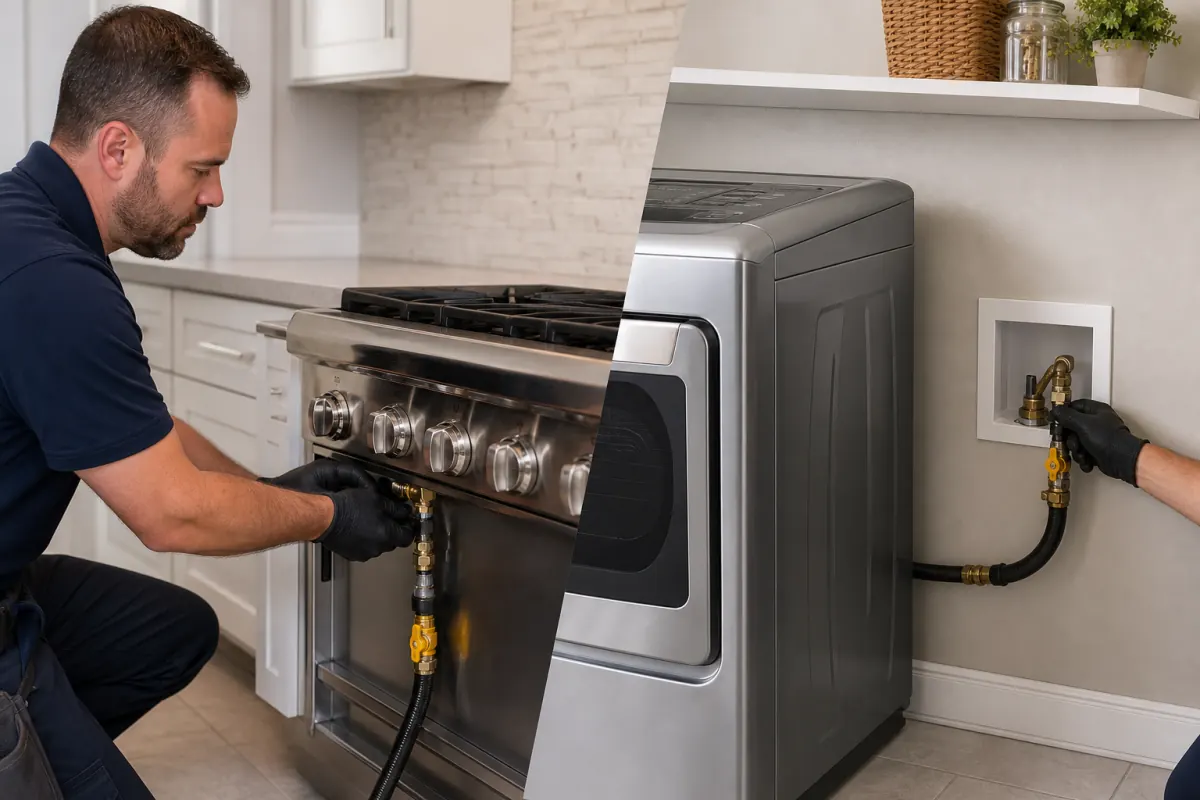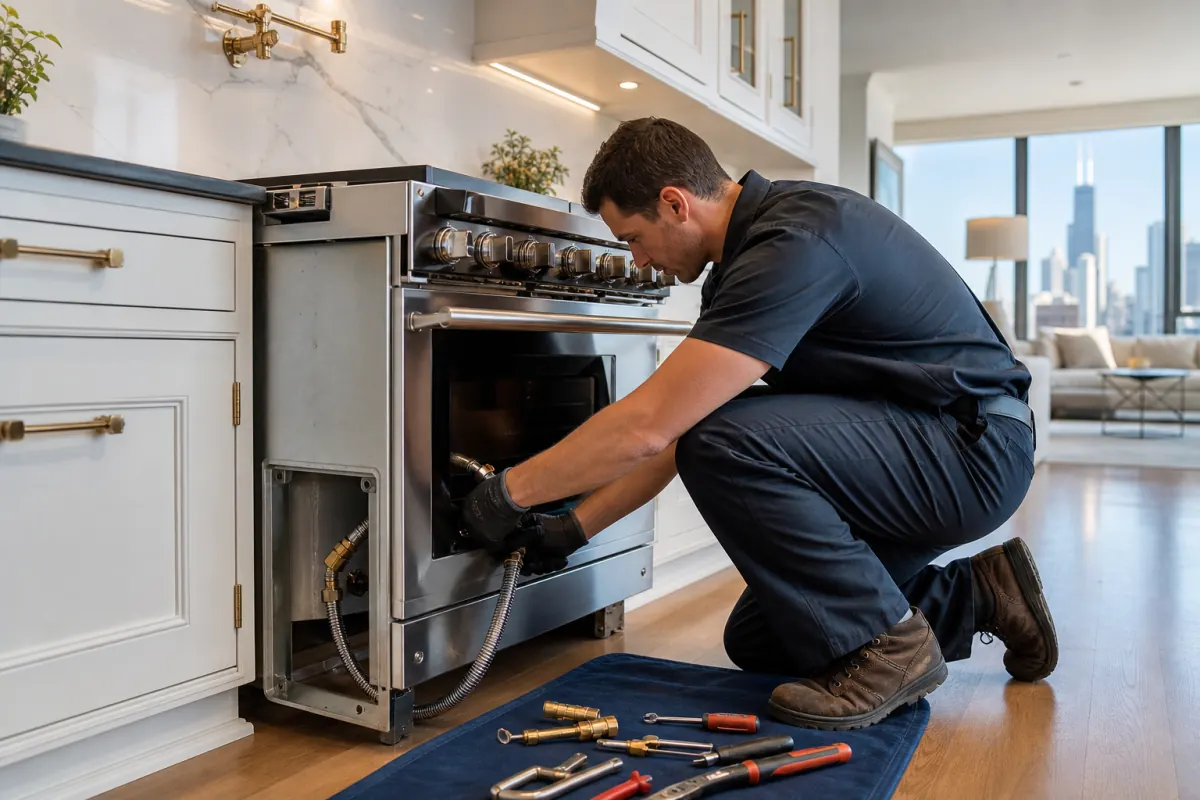
If you've pulled your stove and want to know who to call to cap the gas line, the answer is a licensed gas fitter or plumber, not a quick DIY plug. They install a permanent, leak-tested cap on the pipe, pull a permit where required, and leave you with paperwork that holds up at inspection and resale.
🚨 Gas Problem in Chicago? Talk to a Licensed Pro
24/7 dispatch across Chicago and the suburbs. If you smell gas right now, leave first and call 911 or your gas utility.
Why a "capped" line isn't safe just because you turned the valve off
This is the part that surprises most homeowners. When you shut the little quarter-turn valve behind the stove, you've stopped the gas for the moment, but you haven't capped anything. That valve is a working part, and working parts can be bumped, corrode, or get nudged open by a curious kid or a contractor moving boxes. An open valve with no appliance and no cap on the other end means gas pours straight into your kitchen.
A true cap-off means the open end of the pipe gets a solid, threaded cap (or the line is shut off and capped upstream), sealed with the right pipe compound, and then pressure-tested to confirm it holds. Until that happens, the line is "off," not "safe."
One safety note before anything else: if you smell that rotten-egg odor (that's mercaptan, the scent gas companies add so leaks are noticeable), don't troubleshoot. Leave the house, and from outside call 911 or your utility, Peoples Gas in the city or Nicor out in the suburbs. Any private-side repair or capping happens only after the utility says it's safe.
Permit rules in Chicago and most suburbs for capping vs. removing a line
People assume capping a line is too small to need a permit. In Chicago and most surrounding towns, gas piping work is permitted work, and capping or removing a line falls under that umbrella more often than not.
In the city, gas-piping alterations are governed by the Chicago plumbing and fuel-gas codes, and the work generally has to be done by a licensed plumber. If you want the specifics, our overview of Chicago gas piping code walks through what the city expects. Suburban rules vary by village, but the pattern across Cook, DuPage, Lake, and Will counties is similar: a small cap-off at the appliance stub is sometimes allowed without a standalone permit, while anything involving cutting the line back, removing pipe inside a wall, or altering the system usually triggers one.
A few real examples of how this plays out:
- Capping a stub during a kitchen remodel in Naperville or Evanston is typically rolled into the larger remodel permit.
- Removing an abandoned line back to the main in Oak Park or Cicero is its own permitted job because you're modifying the system.
- Converting from gas to an electric range often needs both the gas cap-off and an electrical permit for the new circuit.
The honest answer is that you don't have to memorize this. A licensed pro pulls the right permit for your town as part of the job, so you're not guessing whether the village will flag it later.
DIY cap vs. licensed cap — what the city inspector actually checks
You can buy a brass cap at any hardware store, and physically threading one on isn't hard. The problem is that a hardware-store cap done by hand rarely passes the test an inspector applies, and it leaves you holding all the liability.
Here's what a licensed cap-off includes that a quick DIY plug usually misses:
- The right cap and the right sealant. Gas piping uses fittings and pipe-thread compound rated for gas, not plumber's tape grabbed from a junk drawer.
- A proper shut-off and cap location. Sometimes the safe move isn't capping at the stub but shutting and capping the line further upstream so there's no live pipe sitting behind the cabinets.
- A pressure test. The inspector wants to see that the line holds pressure with no drop. This is the step that proves there's no leak, and it's the step DIY caps skip.
- Attention to the connector and any drip leg. The old flexible appliance connector gets removed (those aren't meant to be reused), and a properly built line often has a drip leg, a short capped section that catches debris and moisture before it reaches the appliance.
An inspector checking a kitchen will look at where the line is capped, what it's made of (older homes around Berwyn or Joliet may have black iron, newer ones may run flexible CSST, the yellow corrugated stainless tubing), and whether it passed a pressure test. A licensed cap from a pro who handles gas appliance hookups checks every one of those boxes and comes with documentation.
Leaving a capped line in the wall when you sell — what the home inspector flags
This one bites sellers at the worst possible time, right in the middle of a deal. When you sell, the buyer's home inspector will find that capped or abandoned line, and an unverified cap is a common write-up.
What gets flagged most often:
- A line that's capped but with no record that it was ever pressure-tested.
- An old valve left "off" with no cap at all, the exact situation from the first section.
- An abandoned line buried in a wall or under the floor with no documentation of who capped it or when.
A flagged gas line can stall a closing or knock money off your price while everyone waits for a fix. We cover this in detail in our guide to what a home inspector flags on gas lines. The simple fix is to have the cap done right the first time, with paperwork. A licensed cap-off with a permit and a passed test is a clean line item a buyer's inspector can check off instead of holding up your sale.
A cap you can't prove is, in an inspector's eyes, the same as no cap at all. The documentation is half the value of the job.
Cost range and what a typical cap-off visit includes
Cap-off pricing depends on how easy the line is to reach, how far it needs to be cut back, and whether your town requires a separate permit. A straightforward cap at an accessible kitchen stub sits at the lower end. Cutting a line back into a wall, removing an abandoned run, or coordinating a permit pushes it higher.
A typical visit usually includes:
- Confirming the line is the right one and safely shutting off the gas.
- Removing the old appliance connector and capping the line at the correct point.
- Sealing the cap with gas-rated compound.
- Pressure-testing to confirm there's no leak.
- Handling any permit and giving you documentation for your records or your future buyer.
Whether you're in Schaumburg, Hinsdale, Arlington Heights, or right in the city, the scope changes house to house, so a flat phone quote rarely tells the whole story. Get a written quote — every house is different.
Frequently Asked Questions
Who do I call to cap a gas line after removing my stove?
Call a licensed gas fitter or plumber. In Chicago and most suburbs, gas-piping work has to be done by a licensed pro who can install a permanent cap, pressure-test it, pull any required permit, and give you documentation. Midwest Gas Pipe Repair handles this across Chicago and the suburbs at (708) 381-2959.
Can I just leave the shut-off valve closed instead of capping the line?
No. A closed valve still has live pipe behind it and can be bumped, corrode, or get reopened. A proper cap-off seals the open end of the pipe and is pressure-tested so the line is genuinely safe, not just temporarily off.
Do I need a permit to cap a gas line in Chicago?
Often yes. A small cap at the appliance stub is sometimes allowed without a standalone permit, but cutting a line back, removing pipe in a wall, or altering the system usually requires one. A licensed pro pulls the correct permit for your town as part of the job.
Is it safe to cap a gas line myself with a hardware-store cap?
It's risky and usually won't pass inspection. A licensed cap uses gas-rated fittings and sealant, caps at the right location, and includes a pressure test that proves there's no leak. A DIY cap skips the test and leaves the liability on you.
What if I smell gas after removing my stove?
Leave the house immediately and call 911 or your utility, Peoples Gas in the city or Nicor in the suburbs, from outside. That rotten-egg smell is mercaptan added to gas so leaks are noticeable. Any capping or private-side repair happens only after the utility confirms it's safe.
Will a capped gas line cause problems when I sell my home?
It can if it's not documented. Home inspectors commonly flag caps with no record of a pressure test and old valves left off without a cap. A licensed cap-off with a permit and a passed test gives you paperwork the buyer's inspector can clear, keeping your closing on track.
Need a licensed gas pro in Chicagoland?
Licensed, insured, 24/7. Call now or request a callback and a dispatcher will route your job.